

Fast Forward EV Charging Solutions
The transport sector accounts for about a quarter of global CO2 emissions, with a significant portion coming from passenger vehicles. Therefore, decarbonising mobility is a high priority, and the electrification of vehicles is currently a booming technology. Enormous progress has been made, particularly in terms of range, energy density, and battery safety, helping to overcome the challenges faced by battery-powered vehicles. However, one of the biggest challenges for EVs lies outside the vehicle itself. To support the widespread adoption of EVs, consumers and fleets need a robust network of charging locations. Significant investment is required to expand access to reliable charging points. Fortunately, there are various ways to make charging infrastructure fit for the future, with the help of specially designed foams and adhesive tapes.
Reducing the Need to Charge
The first step to addressing the demand on the charging network is to improve the efficiency of the battery pack. Foams and tapes can play a significant role by increasing the power density of battery packs, either in vehicles or in the supporting Battery Energy Storage Systems (BESS). Our compression pads exhibit flat CFD curves, which help optimise pressure on cells during charging and discharging cycles for better cell performance. They also help extend battery life by minimising the relative motion between the cells in the event of shock or vibration, maximising electrical insulation and preventing arcing within modules. High-performance thermal runaway protection materials combine thermal insulation with fire-blocking characteristics and excellent compression set resistance, serving a dual purpose of fire mitigation and acting as a compression pad in lithium-ion batteries. Together with thermal interface materials, cushioning pads and pack seal gasketing solutions, modern battery packs can be designed to travel further and optimise charging cycles, resulting in reduced and more efficient charging needs.
Powering Up EV Charging
We have seen that great potential to optimise EV charging lies in the vehicle battery and its components, but let’s take a look at how the charging infrastructure and its components can be optimised with tapes to meet the growing demand for powering electric vehicles. From renewable energy production to BESS, specially designed foams and tapes can have a significant impact on efficiency and performance. But by taking a closer look at battery charging components like wall boxes, charging stations, or even plugs at home, these materials can offer added value to make charging safer, faster, and more efficient.
A Closer Look at Electric Vehicle Supply Equipment (EVSE)
EVSE refers to the equipment used to charge electric vehicle batteries. Different types of equipment can be installed at station locations. A station location is a site that has one or more EVSE ports at the same address, such as a hotel, shopping plaza, or parking garage. The unit that houses EVSE ports is sometimes called a charging post or column and can have multiple EVSE ports. The EVSE port provides power to charge only one vehicle at a time, although it may have multiple connectors and plug types (such as CHAdeMO or CCS). The connector is what is finally plugged into a vehicle to charge it.
The Difference Between Alternating Current (AC) and Direct Current (DC) Charging
Power from the grid is always supplied as AC, while batteries require DC power to operate. The main difference between AC and DC charging is the location where the power is converted: inside or outside the car. In AC charging, there are also different levels, from slow (Level 1: from 3 to 7 kW, 8–10 hours to charge), typical for residential use, to fast (Level 2: up to 19.2 kW in the USA, or up to 43 kW in Europe, 4–6 hours to charge) for residential or commercial use. DC charging is considered Level 3 and is often referred to as DC Fast Charging.
With AC charging, the vehicle uses an onboard charger (OBC) to convert the supplied power from AC to DC, while a DC charging station converts the power internally. This means it can feed power directly to the car's battery without being limited by the OBC, enabling batteries to charge much faster (< 30 min). DC charging stations are usually more expensive than an AC charging station due to the power output involved and are mainly for commercial use. This results in more demanding requirements due to high voltage or specific environments.
Fast charging requires high-performance solutions
While refuelling vehicles with combustion engines takes only a few minutes, one of the biggest challenges of battery electric vehicles is the time required to charge. Engineers worldwide are working on reducing charging times. While the use of higher power is essential for faster charging, it also places enormous heat and stress on batteries and components.
Thermal interface material solutions
Electronics power modules and electrical components in charging stations are sensitive parts and require strong protection from heat, mechanical, and environmental influences. Thermal Interface Materials such as our gap pads or ThermaCool® TC Series silicone pads with UL94 V-0 rating ensure excellent electrical isolation and reliably dissipate heat from the system to enhance safety, protect sensitive components from overheating, and extend their lifespan. ThermaCool R10404 is a Thermally Conductive Closed-cell Silicone Sponge Rubber, offering thermal conductivity, electrical isolation, and compression set resistance (vibration absorption). Its unique features make it an ideal gap filler for vibration-sensitive heat transfer applications. Thermally Conductive Transfer Adhesives such as ThermaCool TR3 can also be used instead of mechanical fasteners to bond heat sinks to components.
Electrical insulation and shielding solutions
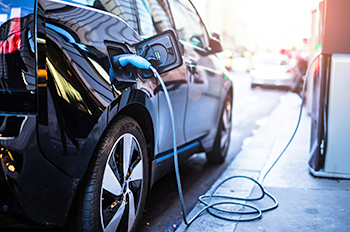
To ensure reliable performance and safety during fast charging, wires and cables within the charging station require high-quality electrical insulation and thermal management. Our full range of UL-specified electrical insulation tapes, including Kapton® and Nomex® materials, provide excellent mechanical, electrical, temperature, and chemical resistance for maximised component protection, safety, and lifespan. High Temperature (UL Class H) Pressure Sensitive Tapes such as CHR® 2255 combine high dielectric and tensile strength in a modified high-modulus PTFE tape for extremely durable insulation. Medium Temperature (UL Class F & B) Pressure Sensitive Tapes such as CHR GL.94 provide high adhesion and abrasion resistance in a glass cloth acrylic tape. Where electronic shielding is necessary, solutions such as CHR C665 (and h-old® SCUT.36, in Europe) are an ideal choice due to their electrically conductive, conformable, and easy-to-apply product features that provide excellent EMI/RFI shielding by reliably isolating components from radiating or leaking interference.

Enclosure sealing solutions
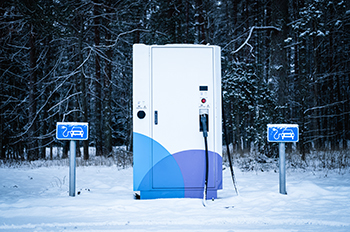
As many charging stations are installed outdoors, the materials used for housing must be resistant to weather, impact, extreme temperatures, dirt, and chemicals. Our premium gasketing materials, which withstand harsh environmental conditions, reliably protect the interior from water or dirt ingress and extreme temperatures. Our soft and lightweight silicone foams, Norseal® F-15 and F-20, provide excellent flame resistance with low toxicity and smoke generation, meeting the highest flame rating of UL94 V-0. Materials such as Norseal 515GF and 520GF offer all the same benefits of silicone foam in an easy-to-apply, pressure-sensitive tape form. Multifunctional materials like our Norseal FS1000 intumescent polyurethane foam combine excellent water- and airtight sealing with high conformability, UV resistance, dampening, and fire protection properties, making them ideal for future designs and demanding environments. For sealing applications up to 70°C, Norseal PS-V0 micro-cellular polyurethane foam is the ideal silicone-free alternative for advanced gasketing applications.
Component attachment and lamination solutions
Multifunctional adhesive tapes not only simplify assembly processes for streamlined manufacturing but also combine excellent shock and vibration absorption with strong weather resistance in a single product. These tapes are ideal for fastener-free attachment of emblems, exterior elements, and structural components, featuring quick-stick application, adhesion to silicones, and low surface energy substrates. Acrylic Bonding Tapes such as translink 80HS FR are designed with a transparent, UL94 V-0 rated acrylic transfer adhesive, offering excellent performance on low surface energy materials. Film-Supported Transfer Adhesives like 8650 and 8822 are specially designed for bonding to low surface energy materials such as silicone. Polyurethane Bonding Tapes like Norbond® V2800 Series combine a black polyurethane foam substrate with a high-performance, pressure-sensitive acrylic adhesive on both sides, allowing energy and stress in the joint to be distributed across the entire bond.
Moving the future together

As the number of electric vehicles continues to grow, the network of charging points is expanding worldwide — and we are not just talking about cars being charged at home, in flats, workplaces, commercial areas, roadside locations, or hotels. Powering electrified work fleets, public transport, industrial fleets, lorries, and marine vessels will require innovative solutions, and our tapes are designed to help address your challenges in shaping the future. Let us support you and contact us today to find the best tape solutions for an electrified future.


