

Enhance EV Motor Performance with Electrical Insulation Tapes
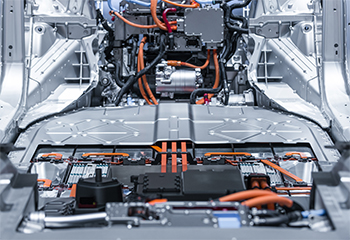
The electric traction motor in an electric vehicle (EV) is the equivalent of an internal combustion engine (ICE) in a traditional vehicle. While the power to run the electric motor comes from the battery pack, the transmission transfers the power from the electric motor to drive the wheels. At the heart of the vehicle, electric motors are playing a significant role in the shift towards more environmentally friendly transportation. While electric motors are not new, their use in an electric vehicle is rapidly gaining momentum. Compared to the industrial motors that have been in use for several decades, motors for EVs demand a new set of requirements for their components.
Electric motors have strict requirements regarding the availability of space, shock resistance and chemical resistance. They must meet the power requirements of an EV, while also occupying a smaller footprint. This means these motors need to be very compact while still providing the power and energy found in high-capacity, larger motors used elsewhere. Compared to industrial electric motors, the designs and demands for electric motors can require a unique combination of electrically insulating materials. The mechanical, chemical and electrical resistance of a tape used in an electric motor must be considered when sourcing the right materials for improved performance.
How Tape Can Affect Electric Motor Performance
From the moment tapes are wound, mechanical performance is critical due to the tension brought on by that process. Performance consistency continues to be necessary for the lifespan of the electric motor as it endures temperature fluctuations, vibrations on the road and much more. Any failure (such as a tear) during the installation can be a costly issue, and any failure during service can lead to an unsafe and expensive electrical short situation.
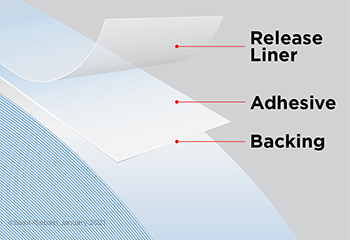
Electric motors are directly connected to the transmission gears, and there is potential for tapes to come into contact with grease/oil that helps them. These grease/oils can attack the tape and cause damage to its structural integrity, which can negatively impact mechanical performance. Choosing the right material combination (backing(s) and adhesive as shown pictorially in Figure 2) that can withstand the specific oil/grease is an important decision.
Mechanical Resistance
Motors used in electric vehicles experience more starts and stops compared to industrial motors, which run continuously. Different tape backings, or a combination of backings, can be used to improve the mechanical integrity of the tape to account for this increased activity. For instance, while taken individually, the mechanical strengths of PET, PI or PEN may not be sufficient for the specific application, but with our expertise in combining these substrates with glass filaments, glass cloth or other filmic materials, exceptional tensile strength can be achieved in this composite structure. H-old® PS.25 is an example of how a PET tape reinforced with glass filaments can achieve outstanding mechanical properties.
Mechanical integrity is also necessary when considering how these insulating solutions are used in electric motors. In many cases, these tapes are required to be converted into die-cut pieces of varying lengths and widths to meet the size constraints of the application. Making a tape capable of enduring the die-cutting process should also be considered when constructing a solution. Sometimes this means developing a bespoke product that addresses the specific needs of the application, ensuring the lasting performance of the electric motor.
Mechanical Resistance
Motors used in electric vehicles experience more starts and stops compared to industrial motors, which run continuously. Different tape backings, or a combination of backings, can be used to enhance the mechanical integrity of the tape to account for this increased activity. For example, while the mechanical strengths of PET, PI or PEN may not be sufficient for the specific application when used individually, our expertise in combining these substrates with glass filaments, glass cloth or other filmic materials allows us to achieve exceptional tensile strength in this composite structure. CHR® PS.25 is an example of how a PET tape reinforced with glass filaments can achieve outstanding mechanical properties.
Mechanical integrity is also essential when considering how these insulating solutions are used in electric motors. In many cases, these tapes need to be converted into die-cut pieces of varying lengths and widths to meet the size constraints of the application. Ensuring that a tape can withstand the die-cutting process should also be taken into account when designing a solution. Sometimes, this involves developing a bespoke product that addresses the specific needs of the application, ensuring the long-lasting performance of the electric motor.
Chemical Resistance
When selecting an electrically insulating tape for electric motors, it is essential to understand the chemicals the tape will encounter in the transmission box and to tailor a solution that is compatible. While the transmission in an EV differs significantly from that of an ICE vehicle, the need for chemical compatibility remains crucial. In scenarios where the drive shaft from an electric motor is directly connected to the gearbox, the tape used will come into contact with the lubricating material; having a solution with proven chemical compatibility will help ensure the longevity of the electric motor's performance.
Compared to the more inert backing component, the adhesive component of insulating tapes has the greatest impact on chemical compatibility. Pressure-sensitive adhesives include rubber, acrylic, and silicone. A relative comparison of chemical resistance for pressure-sensitive adhesives can be shown as Silicone > Acrylic > Rubber, indicating that acrylic-based adhesives offer better resistance than rubber, while silicone-based adhesives provide better resistance than both acrylic and rubber. An excellent example of a product where the backing material enhances chemical resistance is CHR K.30, which combines silicone adhesive with a PEN film, resulting in an exceptional material compared to other films like PET or PI.
Electrical Resistance
As an electric motor accelerates and decelerates, the resulting voltage fluctuations create an operational pattern that differs from the typical steady operation of an industrial motor. While the typical industrial motor is rated for 20,000 hours, the lifespan of an electric motor is still being defined and could demand a much longer useful life. The voltage spikes experienced in EV motors may require a range of breakdown voltage capabilities and corona resistance. Rather than over- or under-engineering, optimal performance can be achieved when the tape material is selected to meet the motor's design and requirements. The choice of backing material, when considering electrical resistance, can be illustrated in a good, better, best scenario: glass cloth is good, Aramid Paper (e.g., Nomex®) / PET (Polyethylene Terephthalate) is better, and Polyimide (PI, Kapton®) / Polyethylene Naphthalate (PEN) is best.
CHR PX.50 and 6601 are examples where different backings are combined to create high-performing products, resulting in excellent flexibility and conformability with outstanding dielectric and mechanical properties.
Customised Solutions for Electric Motors
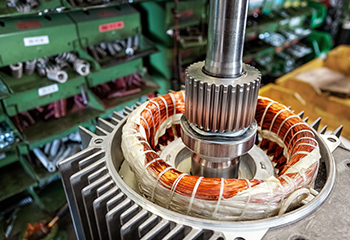
A tailored product that addresses the mechanical, chemical, and electrical stresses placed on an electric motor is often required for optimal performance. Custom tape development is not a complicated task, but it does require technical knowledge of material relationships and the specific application conditions associated with an electric motor. It also demands a strong understanding of available manufacturing methods. Our dedicated global engineering team has extensive experience in specialised product development, making us a reliable partner to deliver a custom-made tape with optimal adhesive, the perfect backing materials, seamless process integration, and superb performance for your electric motor.
A PI film with a glass cloth to enhance mechanical strength while maintaining very high dielectric properties, and an aramid paper with a PI film for an upgraded version of PX.50, are examples of successful co-developed solutions for this market. We can select the best adhesive system from rubber, acrylic, and silicone to design the product to fit specific application needs, and a broad selection of release papers and films is available to provide optimal die-cut processing.
The electrical insulation requirements within the electric motor can vary from one motor to another depending on the vehicle category and OEMs. These new solutions can be custom-developed with different constructions to reflect the unique needs of a particular application.
Saint-Gobain Tape Solutions is committed to developing specialised electrical insulation products to meet the unique requirements of the electric vehicle industry. Learn how we can help address the stresses in an electric motor and improve performance with electrical insulation tapes. Contact us today to discuss your specific needs. Also, discover our complete EV battery pack protection offering.


