
Unlock the Hydrogen Economy with Skived PTFE Films

Artificial intelligence, digital currencies, digitalisation, electrified mobility – the list of reasons for the growing need for energy is almost endless. Alongside this, renewable energy supply is on the rise, and hydrogen could play a key role in decarbonisation. What if the future of clean energy depended not on grand infrastructure, but on the quiet strength of advanced materials? As the world races towards decarbonisation, skived PTFE films are discreetly enabling the hydrogen revolution, making systems safer, more efficient, and ready for scale.
While several infrastructure challenges remain, material science could be the quiet enabler of a hydrogen breakthrough in energy supply. In this article, let us take a closer look at advanced materials – especially skived modified PTFE films – and why they are critical for safe and efficient hydrogen systems.
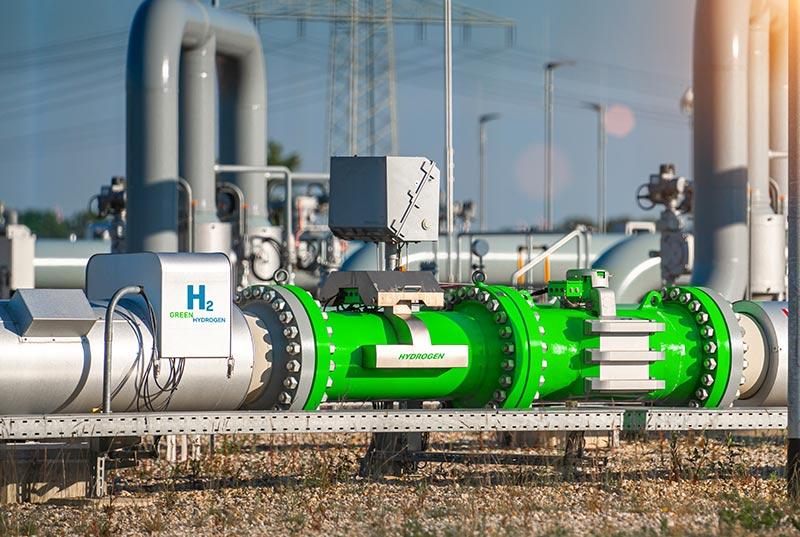
Many countries, such as Japan, and industries have high hopes for hydrogen as the energy supply solution of the future. Particularly green hydrogen, which is hydrogen produced using renewable energy, holds great potential for decarbonising energy supply, as no CO2 is emitted during use. Hydrogen itself is not a primary source of energy, but it can be utilised to store and transport energy to where and when it is needed. Especially during periods of low solar or wind power generation, hydrogen can serve as temporary storage to help achieve net zero carbon emissions. As part of the hydrogen supply chain, hydrogen electrolyzers and fuel cells are central to the global transition towards sustainable energy. The market for frame gaskets in these systems is expanding rapidly:
- The electrolyzer sealing gasket market is forecast to grow from USD 0.34B in 2024 to USD 0.69B by 2033, with a CAGR of 8.3%
- The fuel cell gasket market is anticipated to grow at a CAGR of 11.2% through 2030, with automotive applications currently dominating, although demand from the energy sector is increasing even faster
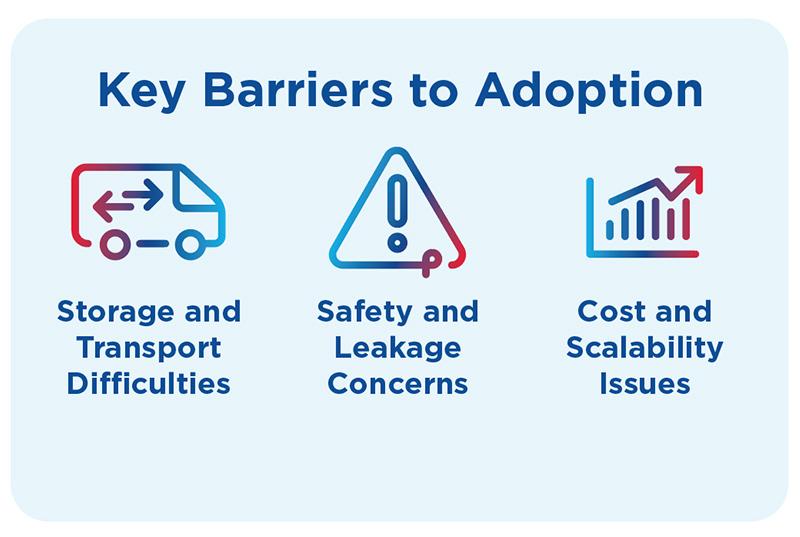
However, there are significant barriers to widespread adoption, including:
- Storage and transportation
- Safety and leakage concerns
- Cost and scalability challenges
These remain among the most pressing issues today.
What makes hydrogen so demanding are primarily the small molecular size with a high permeation risk, leading to tough material and gasketing challenges, as well as extreme conditions such as high pressure, harsh chemicals, and temperatures during production and storage that can cause permanent stress on materials.
Hydrogen systems place extreme demands and specific challenges on gasket materials, where traditional materials often fall short:
- Chemical resistance: Traditional elastomers degrade in the acidic or alkaline environments of electrolysis
- Thermal stability: Operating temperatures can exceed 90°C, requiring materials that maintain integrity under heat
- Mechanical stress: Gaskets must withstand high compression and maintain tight tolerances over long cycles
- Weldability: For large frame gaskets (e.g., 1 × 2 m), materials must be weldable—something most conventional films cannot offer
- Electrical insulation: Short circuits must be prevented at all costs, as they not only reduce efficiency and damage components but also pose safety hazards
- Tolerances: Low thickness tolerances are essential, enabling sealability and preventing leakage
These challenges often render traditional materials like EPDM or silicone unsuitable, particularly in high-performance or long-lifetime applications. This is why high-performance polymers with strong chemical resistance and durability have become increasingly important in hydrogen production to maintain system integrity under stress. Let us take a closer look at skived modified PTFE films, their unique properties, and how they could help address the main challenges facing hydrogen energy supply today.
Skived modified PTFE films are ultra-thin sheets of polytetrafluoroethylene (PTFE) that are produced by skiving thin layers off large, sintered cylindrical PTFE billets of resin using a sharp blade. As PTFE cannot be melt-processed due to its high melting point and viscosity, this skiving process enables the creation of thin films with customisable thicknesses from the rotating billet.
These skived modified PTFE high-performance fluoropolymer films offer excellent chemical inertness, low friction and non-stick properties, high thermal stability even under extreme conditions, and outstanding dielectric and insulation properties, making them ideal for demanding hydrogen applications such as electrolyzers and other hydrogen gasketing requirements. The modification grade of PTFE makes it weldable, which is absolutely essential for creating large-format frame gaskets.
In particular, their low permeability and excellent sealing performance are highly advantageous in hydrogen applications due to the small size of the molecule. Skived modified PTFE films also provide various benefits for the hydrogen infrastructure, such as:
- Safety and Reliability: Preventing leaks and contamination
- Efficiency and Longevity: Reducing maintenance costs and downtime
- Scalability: Supporting large-scale hydrogen deployment
Saint-Gobain® Norgard Films — particularly grades such as 0200H — are designed to address these limitations:
- Material composition: Skived, highly modified PTFE provides outstanding chemical resistance, thermal stability, and mechanical strength
- Weldability: 0200H is weldable, allowing for the creation of large, seamless frame gaskets
- Precision: Tight thickness tolerances and low compression set ensure consistent sealing performance
- Environmental protection: Norgard Films resist degradation caused by moisture, oxygen, and aggressive media, safeguarding sensitive MEA components
These qualities make Norgard Films ideal for both electrolyser and fuel cell applications, where reliability and durability are critical.
There is no indication that the demand for energy is about to decline. On the contrary, there are numerous signs that energy consumption will continue to rise to unprecedented levels. Hydrogen may well be the fuel of the future and play a significant role in energy supply, but it’s the materials working behind the scenes, such as skived modified PTFE films, that make that future achievable.
Speak to your tape experts today and discover how skived films with unparalleled performance in the most demanding environments are helping to fulfil the promise of a cleaner, more resilient energy system.