
Enhance Indoor Living with Bio-based Solutions

How much time do you spend indoors? And, in general, how much time do you think people spend indoors? If you are living a normal life in a developed country, the answer is most likely: Most of the day. According to the NHAPS (National Human Activity Pattern Survey), a resource for assessing exposure to environmental pollutants, Americans spend 90% of their time indoors, inside buildings or vehicles.

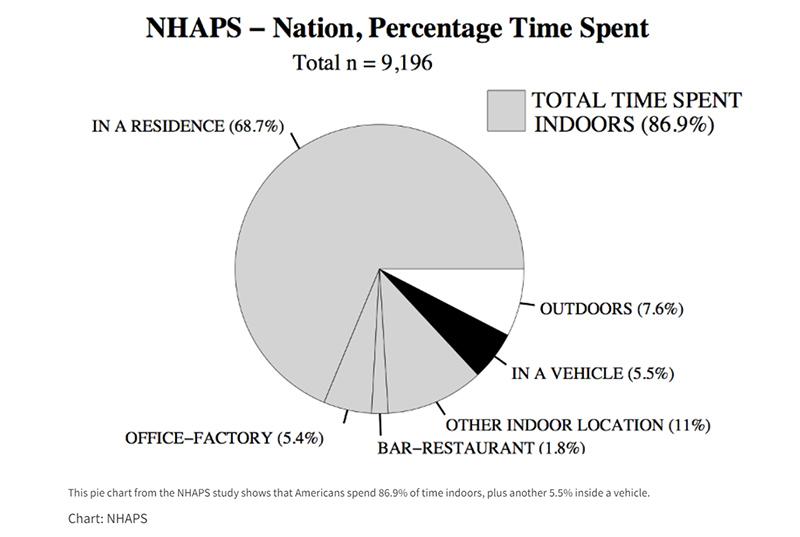
Are you surprised? I am. But I am not surprised that people are already talking about the “indoor generation”. Another result from a Velux study on air pollution was also surprising to me: 80 per cent of Americans are unaware indoor air can be five times more polluted than outdoor air. Many people may think that air pollution is only a thing of the outdoors when living near big factories or high-traffic urban areas.
As current and future generations spend more time indoors, air quality can be challenging. It is good to see that there is a focus on more sustainable construction, energy efficiency and air sealing solutions with gasketing materials to create better indoor environments.
We now see that sealing, energy efficiency and air quality inside buildings, vehicles and mass transportation is crucial. Now, let us dive deeper into some innovative bio-based tape materials that combine outstanding product features with new material approaches.
In this article, we will explore the use of innovative bio-based tape materials in construction and automotive industries, specifically focusing on gasketing solutions. The aim is to demonstrate how these materials can improve indoor air quality and energy efficiency, while also providing outstanding performance and durability. By the end of this article, you will have a better understanding of the benefits of bio-based tape materials and how they can be incorporated into your projects.
A common prejudice is that more sustainable materials are lower performing compared to traditional materials. Obviously, materials must fulfil the application's demands. This is where most solutions based on alternative materials struggle — in many cases, materials based on traditional technologies excel with better performance. The ideal situation would be a combination of superior performance and less impactful materials.
An example where this rare combination applies is Saint-Gobain® Norseal® AGP200. This polyurethane foam provides superior sealing performance to water, dust, wind, and noise, even under extreme environmental and temperature conditions. It provides extremely low fogging and VOC (Volatile Organic Content) emissions, low odour, and flame resistance according to FMVSS 302, making it ideal for direct use in interior applications (Sulphur Free formulations) of buildings, automotive or mass transportation applications where good air quality is key.
Its outstanding water tightness and thermal insulation properties of λ=36mW/m.K can be achieved with only 30% compression due to the low force to compress of this soft material. It has good conformability and this allows for cost savings by using fewer materials to fill the same gap. This allows for superior sealing performance for a broad range of highly demanding gasketing applications in automotive, HVAC (Heating, Ventilation and Air Conditioning) or construction.
But the hearts of many engineers who pay attention to superior indoor air quality and sustainable construction beat even faster since this material is not only free of plasticisers but, its polyol is also largely based on bio-based materials. Let us take a closer look at what bio-based materials mean.
Unlike most products that primarily use oil-based ingredients, Norseal AGP200 delivers excellent performance by predominantly utilising bio-based polyol. To determine the proportion of bio-based carbon content in the AGP foams, the product was tested using ASTM D6866, the standard for quantifying bio-based content. This standard focuses on carbon, and for AGP200, a radiocarbon (C14) report has been produced to verify the “% Biobased Carbon”.
The results show the percentage of carbon derived from “natural” (plant or animal by-product) sources compared to “synthetic” (petrochemical) sources. For reference, 100% Biobased Carbon indicates that a material is entirely sourced from plants or animal by-products, while 0% Biobased Carbon indicates that a material contains no carbon from plants or animal by-products. A value in between represents a mixture of natural and fossil sources.
The analytical measurement is referred to as “percent modern carbon (pMC)”. This is the percentage of C14 measured in the sample relative to a modern reference standard (NIST 4990C). The % Biobased Carbon content is calculated from pMC by applying a small adjustment factor for C14 in carbon dioxide in today’s atmosphere. It is important to note that all internationally recognised standards using C14 assume that the plant or biomass feedstocks were obtained from natural environments.
In summary, bio-based refers to materials in the formulation of AGP200 that are derived from natural sources such as plants or animal by-products.
So, where does Norseal AGP200 stand in terms of verified bio-based carbon? According to tests conducted by an independent, ISO/IEC accredited third-party laboratory, Norseal AGP200 contains 61% (+/- 3% (absolute)) renewable carbon, as determined by ASTM D6866. AGP (Alkyd Grafted Polymer) is partially formulated with bio-based material.
For engineers seeking superior performance and excellent air quality in buildings, vehicles, or mass transportation, these results can be a decisive factor in selecting the ideal materials for HVAC and sealing applications, as well as for sealing windows and doors in buildings or modular construction.
The use of bio-based materials offers environmental benefits, such as reducing reliance on fossil fuels and lowering carbon emissions. It supports the sustainability goals of car or building designers and can also lead to potential cost savings or regulatory advantages in certain industries.
We have seen that solutions which combine excellent performance and bio-based materials, and have the potential to improve life indoors for the “indoor generation,” already exist. Particularly, as people spend so much time indoors, this can be a significant step in terms of health and well-being. However, these materials are not limited to those applications alone.
Do you have specific applications or projects in industries where you see potential for using bio-based materials and have questions about the performance, durability, or suitability of these materials compared to traditional materials? Get in touch with your tape expert today to find out if you can make the world a better home together with bio-based materials.