

Heat Sealing Tapes Improve Manufacturing Efficiency
The value of a high-quality heat sealing tape is a crucial factor in heat sealing machine applications. These machines utilise high temperatures to bond plastic sheets or films, creating air- or water-tight bags or other packaging for food, medical supplies, and various consumer or industrial goods and materials.
A heat sealing machine, equipped with a heat source embedded within a platen, applies pressure and extreme temperatures to the plastic sheets or films, sealing them along seams to form a secure package.
Heat sealing tapes serve to protect the platen from molten plastic. Operators select a tape that is not only resistant to high temperatures and capable of withstanding repeated cycles but also one that does not damage the platen and can be easily removed. Heat sealing machines are significant capital investments that require proper care and maintenance, with heat sealing tapes playing a vital role in the maintenance process.
The optimal tape can enhance productivity and profitability by improving manufacturing efficiency. This includes longer production operating times between tape maintenance and repair intervals, faster heat sealing capability and throughput, higher-quality seals, and reduced operating costs.
Our team of experts assists manufacturers in achieving process efficiencies through industry-leading heat sealing tapes that offer high strength, excellent friction and wear properties, and the ability to operate at high temperatures. Several factors must be considered when selecting the appropriate heat sealing tape to ensure the production of high-quality welded seams and smooth operation of heat sealing machines. These factors, detailed below, include dimensional stability, strength, thermal conductivity, coefficient of friction, abrasion resistance, wettability, peel strength, and temperature resistance.
Key Applications and Industries
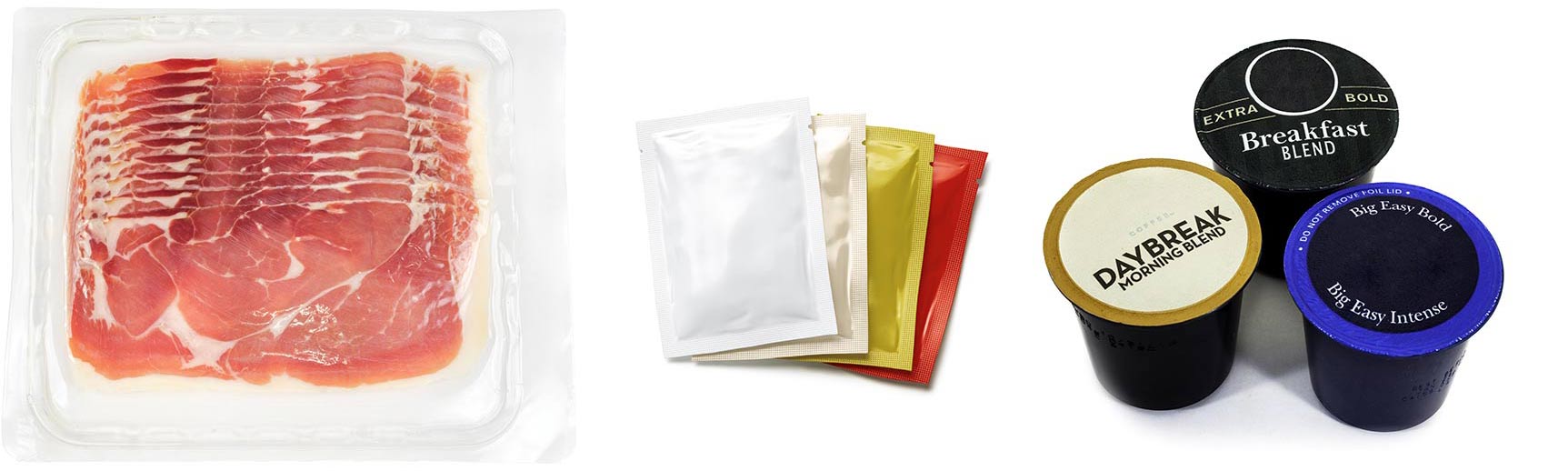
Heat sealing tapes are employed in various applications within the food processing and medical packaging industries. PTFE film tapes are a preferred choice for applications requiring durable seals where dimensional stability is less critical, such as take-away food packaging, condiment sealing, or small sealing surfaces. They are used with large heated platens and narrow sealing hot bar sealers for tray sealing and plastic shrink wrap for packaged meat and cheeses (Figure 1).
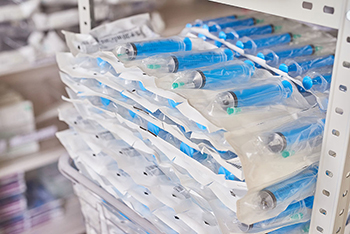
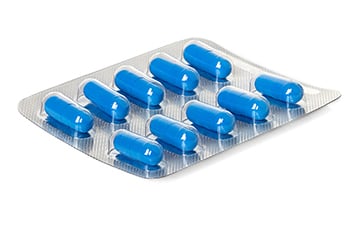
In the medical industry, heat sealing tapes are used to create narrow seals for small packages using highly automated equipment. They are also suitable for producing blister packs for medicine packaging. Additionally, they are useful for packaging household items, where pack sizes can vary significantly, or where the back of the packs is typically made of paper, foil, or laminate (Figure 2).
Heat Sealing Tape Performance
Heat sealing tapes are composed of a substrate, which is the surface that comes into contact with the plastic, and an adhesive, which securely bonds the substrate to the sealing machine. Essentially, heat sealing tapes must transfer thermal energy from the hot platen to the plastic while preventing the plastic from sticking to the tape. The adhesive that bonds the heat sealing tape to the platen must also endure high temperatures without melting or losing adhesion.
The ideal heat-sealing tape substrate material is polytetrafluoroethylene (PTFE), commonly known by the brand name Teflon™, as it offers exceptional non-stick properties and high-temperature resistance. Depending on the temperature range, either acrylic or silicone adhesives may be used.
However, there are several additional requirements to ensure smooth and efficient operation.
Dimensional stability
The substrate must not shrink or expand with changes in temperature and moisture. If wrinkles form, the tape may lose its adhesion to the platen on the heat sealing machine. Reinforcing the substrate with fibreglass is often desirable to prevent wrinkling and enhance the tape's in-plane rigidity.
High strength
The substrate must possess sufficient strength to avoid yielding, breaking, or tearing under tensile and out-of-plane (tearing) loads. This is particularly important during routine maintenance to ensure it does not tear into pieces when being removed for replacement.
High thermal conductivity
The substrate must efficiently conduct heat through the tape's thickness from the hot platen to the plastic. Higher conductivity substrates may be thicker and more durable, while lower conductivity substrates may require thinner tape.
Low surface friction and high abrasion resistance
During packaging operations, the plastic sheets may slide over the substrate until they are correctly positioned for the platen to melt the plastic. The tape must have a low coefficient of friction, allowing the plastic to slide over the tape without causing wear, abrasion, or tears. Low friction is also essential for creating a non-stick surface that repels melted plastic.
Low wettability
When the plastic sheets melt, substandard tape may allow molten plastic to adhere to the substrate, leading to plastic build-up and reduced heat conduction from the platen. This property, known as wettability, can be minimised by using materials with low surface energy relative to the plastic. Like low friction, low wettability is a critical property for ensuring a non-stick surface.
High peel strength
The adhesive in the heat sealing tape must adhere firmly to the heated platen and remain secure during operation. The force required to remove the tape, known as peel strength, should not significantly increase or decrease after repeated exposure to high-temperature cycles.
High temperature resistance
Higher temperatures are often used to achieve faster production sealing rates. Therefore, the adhesive in the heat sealing tape must withstand high temperatures without degrading or losing adhesion.
Saint-Gobain Solutions
Saint-Gobain understands the specific operational needs of manufacturers and heat sealing machines. The company has developed a comprehensive range of heat sealing tapes to help operators maximise productivity, whether using impulse heat sealers or hot bar sealers.
By combining various substrates with different adhesive systems, we provide a range of solutions that balance cost and performance.
...[truncated answer, max output tokens as been reached.]
Backing Material | Product Code | Substrate Grade | Adhesive | Tape Backing Thickness | Operating Temperature ºF (ºC) | Product Features |
|---|---|---|---|---|---|---|
PTFE Glass | SGB6 | Chemlam | Silicone | 0.004 in (0.102 mm), | -100 to 500 | Features Chemlam backing for maximum life |
SGC6 | 0.006 in (0.152 mm) | |||||
PTFE Glass Cloth | A2005 | High | Silicone | 0.003 in (0.076 mm) | -100 to 500 | High temperature adhesion |
SG16-05 | 0.005 in (0.127 mm) | -100 to 500 | High performance, long life & clean release adhesive | |||
SG15 | 0.003 in (0.076 mm), | -100 to 500 | High performance, long life | |||
SG03-03 | Premium | Acrylic | 0.003 in (0.076 mm) | -40 to 350 | Premium, long life & high adhesion | |
SG05 | Silicone | 0.003 in (0.076 mm), | -100 to 500 | Premium & long life | ||
SG23 | Primary | Acrylic | 0.005 in (0.127 mm), | -40 to 350 | Balanced life, cost & high adhesion | |
SG26 | Silicone | 0.003 in (0.076 mm), | -100 to 500 | Balanced life, cost & | ||
SG25 | Silicone | 0.003 in (0.076 mm), | -100 to 500 | Balanced life & cost | ||
SG35 | Industrial | Silicone | 0.003 in (0.076 mm), | -100 to 500 | Economical grade | |
2829 | – | Acrylic | 0.003 in (0.076 mm), | -40 to 350 | Zone tapes with selective | |
Extruded PTFE | 2283-2 | – | Acrylic | 0.002 in (0.050 mm) | -40 to 350 | High adhesion & high heat transfer & |
2265-2 | – | Silicone | 0.002 in (0.050 mm) | -100 to 500 | High heat transfer & | |
2275-2 | – | 0.002 in (0.050 mm) | ||||
2285-2 | – | 0.002 in (0.050 mm) | ||||
High Modulus | 22B5-2 | – | Silicone | 0.002 in (0.050 mm) | -100 to 500 | Resists movement, designed for roller wrap applications & anti-static |
22B5-2HA | – | 0.002 in (0.050 mm) | -100 to 500 | High adhesion & anti-static | ||
Enhanced High | R233 | – |


