
What Challenges Can New Tape Technologies Solve in Automotive Bonding?

There are countless applications where different materials need to be attached to each other, and strong bonds are essential. The issue is that many surfaces are designed to be highly repellent, making it difficult to bond to, as seen in automotive part assembly.
If you want to avoid holes required for mechanical fasteners and other weak points that could lead to water ingress or weaken the structure, bonding offers many advantages. However, in many automotive manufacturing processes, surfaces are pre-treated with chemicals to enable lasting bonding.
In this post, we'll take a closer look at the challenges and problems caused by surface pre-treatment, where it is used, and how new tape technologies can help overcome these challenges to create reliable connections.
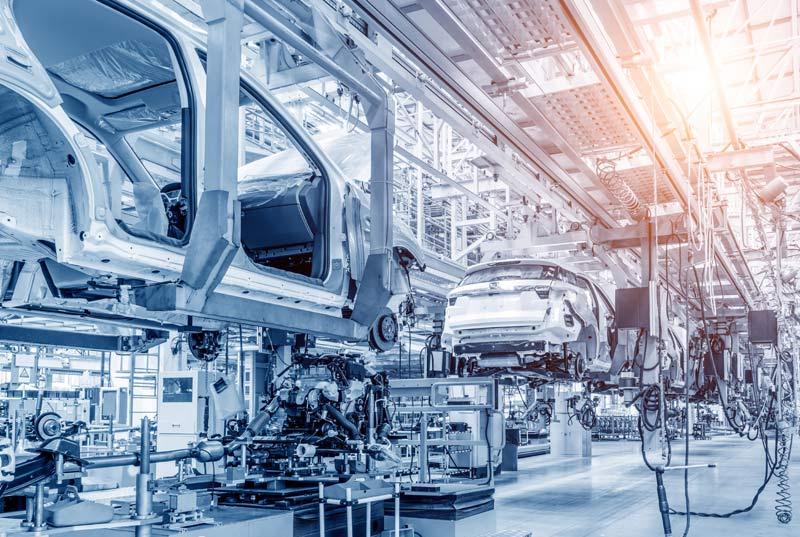
First and foremost, bonding needs to be strong and last throughout the expected lifetime of the product without failure. This may sound straightforward at first, but several factors can make automotive trim assembly a real challenge. Exposure to hot and cold temperatures, UV, moisture and other environmental influences, mechanical stresses, salt, chemicals or detergents are just a few of the stressors bonding must withstand over its lifetime.
However, the main challenge lies in the nature of highly repellent surface designs. These surfaces make it difficult for dirt or any material to adhere to them — including adhesives. To enable lasting bonding with adhesives, surfaces may require pre-treatments with primers. Handling these harsh chemicals demands time, expertise and protective equipment, but there is always a residual risk to workers and the environment. Even when handled correctly, these chemicals must be disposed of properly after use.
Moreover, pre-treatments represent a significant cost factor. The purchasing, storage, disposal, and the additional time and resources required in the manufacturing process and logistics when using primers should not be underestimated.
Given all these challenges associated with bonding to difficult surfaces, it is reassuring to know that there is an alternative.
The alternative we’re discussing in this post is bonding without the need for pre-treating surfaces with primers. Primerless bonding tapes enable reliable bonding performance on challenging surfaces with a single, easy-to-use product.
They are distinguished by their excellent adhesion to low-surface energy (LSE) plastics, such as PP-EPDM, to automotive paint systems or medium surface energy (MSE) plastics, such as ABS and ASA, making pre-treatments unnecessary in many cases.
These materials combine functionality with ease of use, ensuring secure attachment of protective trims, decorative trims, functional parts, and small components, such as those on the car body, door frame, tailgate, or boot.
With Environmental, Social and Governance (ESG) topics becoming increasingly important for the industry, society and the planet, creating better working environments, reducing environmental impacts and at the same time saving time and money underline the importance small parts and changes can have.
Primerless bonding tapes help to streamline automotive manufacturing processes but also provide new ways to enhance customer satisfaction. As bonding tapes can be applied to almost any shape, they allow for maximum freedom of design. In combination with features such as noise and vibration dampening, protection and sealing in one product, these tapes help premium manufacturers meet the highest demands of their customers in a single step.
Surface structures are constantly evolving to meet increasing demands and allow for exciting developments in many applications. The flip side of the coin, however, is that creating a reliable bond can become difficult, especially when LSE materials are involved. We have seen that there are new tape technologies available to solve such challenges and that sometimes small parts can make a big difference.