
Thermalbond® Spacer Tapes Elevate Structural Glazing

When it comes to the architectural design of modern buildings, every detail matters, from sleek aesthetics and structural integrity to energy efficiency. With unmatched bonding strength, aesthetic versatility, ease of installation, and weather resilience, spacer tapes can be an indispensable solution for creating iconic, sustainable building structures that can withstand the test of time.
In structural glazing, glass panels are utilised as the primary exterior of the building. Within structural glazing applications, spacer tapes are a compelling alternative to traditional structural glazing methods. More conventional methods use mechanical fasteners, which can puncture the glass surface and result in challenges such as leakage.
Thermalbond® Spacer Tapes elevate the art and science of structural glazing by forming a strong bond between glass panels and substrates such as composite materials, metal, or aluminium. They have robust bonding capability that not only ensures structural building integrity but also helps protect against wind, thermal stress, or environmental conditions.
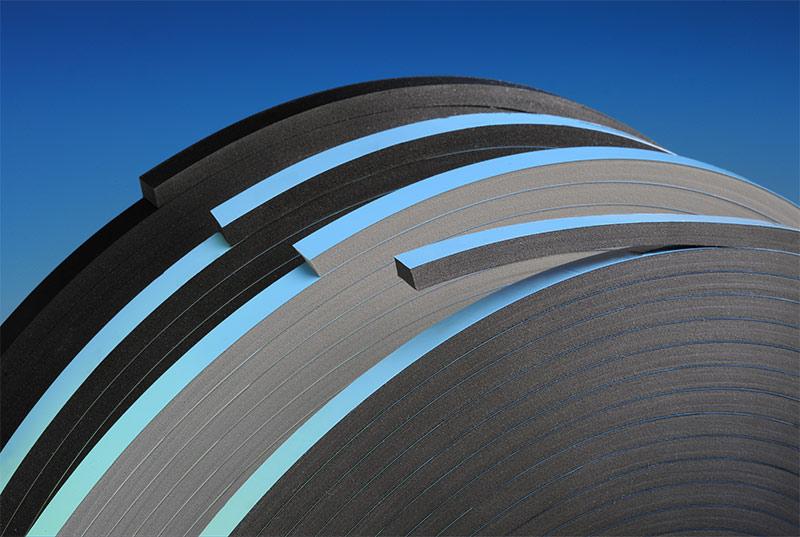
Thermalbond was first introduced to the market in 1979 as a two-sided spacer tape. These tapes ensure consistent spacing between the glazing panel and the structure of the building. A Thermalbond Spacer Tape is an open-cell polyurethane foam tape with pressure-sensitive acrylic adhesive. It is available in both double-coated and single-coated options. With compatibility to all major brand structural silicone sealants and features such as excellent load-bearing ability in both compression as well as shear, Thermalbond is widely successful in securing glass façade construction.
Some of the world’s most awe-inspiring and iconic skyscrapers, such as the Freedom Tower in New York, NATO headquarters in Brussels, or the Burj Al Arab in Dubai, feature these spacer tapes in their curtain wall applications.

Compared to competitive materials like closed-cell PVC foam spacer tapes, the open-cell polyurethane foam core of Thermalbond provides better long-term resistance to environmental influences and loading, enabling longevity for the structural silicone glazed systems.
But why is this the case?
To understand this, we examine the water vapour transmission rate (WVTR), also known as moisture vapour transmission rate (MVTR). WVTR measures how permeable moisture vapour is through foam materials. The minimum desired moisture vapour transmission rate to allow silicone to cure is 1 g/hr•m2. When tested for WVTR, Thermalbond products provide double the minimum desired MVTR compared to closed-cell spacer tapes, while closed-cell spacer tapes fall short of the minimum desired WVTR. This means that closed-cell foams prevent the necessary amount of moisture needed for quick and proper curing from reaching the silicone, resulting in the prevention of full curing and potential movement of glass after installation or even beforehand.
These spacer tapes are the industry standard. Both V2100 and V2200 are available in black or grey colour options. The grey version of these tapes has a light grey foam core with UV-durable grey-pigmented adhesive.
These spacer tapes are comprised of high-strength polyurethane foam. They have low thermal conductivity that reduces the transfer of heat, provides superior resistance to oxidation, environmental factors and inhibits condensation. They are available in various thicknesses (1/8” to 1/2” or 3.2 mm to 12.7 mm) and custom widths to ensure suitability for any application.
V2100 is specially designed for glazing in field applications and it is suitable for two-sided and four-sided systems. This product is often a go-to in applications that utilise heavier units of glass because of its superior load-bearing ability in compression and shear.
V2200 has reduced static load-bearing capability and is designed for shop fabrication only.
Thermalbond Xpress, as the name might suggest, allows for greater flexibility and quicker design changes. While it features the same foam core chemistries as the V2100 and V2200 products, the difference is that Thermalbond Xpress has adhesive on only one side. This adhesive creates a strong bond upon contact, eliminating the need for aluminium channel raceways, which are often used in glazing systems that utilise silicone-compatible rubber pre-formed gasket materials.
With Thermalbond Xpress, there is no need for a liner, which simplifies and speeds up installation. The absence of a liner also helps to reduce the additional waste typically generated from discarding liners, as is often the case with other products.
Xpress features a low-friction coating, which helps to eliminate air pockets and ensures a consistent visual appearance behind the face of the glass.
Thermalbond Tapes are key components in hundreds of silicone structural glazing applications around the world. The reliable performance, secure fixation and ability to withstand a wide variety of environmental conditions is why Thermalbond continues to be the product of choice for architects and façade specifiers looking to bring their dreams and designs to life.
Connect with our team to determine which product is right for your specific application needs.