
Thermal Runaway Protection: Importance & Regulation

One of the most notable drawbacks of battery technology lies in its need to operate within a very defined and narrow temperature range. Batteries’ internal temperatures must be carefully maintained at all times, and any shift outside of the optimum temperature range has the potential to destroy the battery or even cause a fire.
This phenomenon is referred to as ‘thermal runaway’. When thermal runaway occurs in a battery pack, an often irreversible chain reaction takes place, culminating in a cascading chemical reaction inside the battery, which generates additional heat.
Thermal runaway has been the underlying cause of many incidents where mobile phone or laptop batteries have melted or caught fire during use. Many of these incidents have attracted considerable media attention, causing significant reputational damage to manufacturers and issues with consumer trust in the technology.
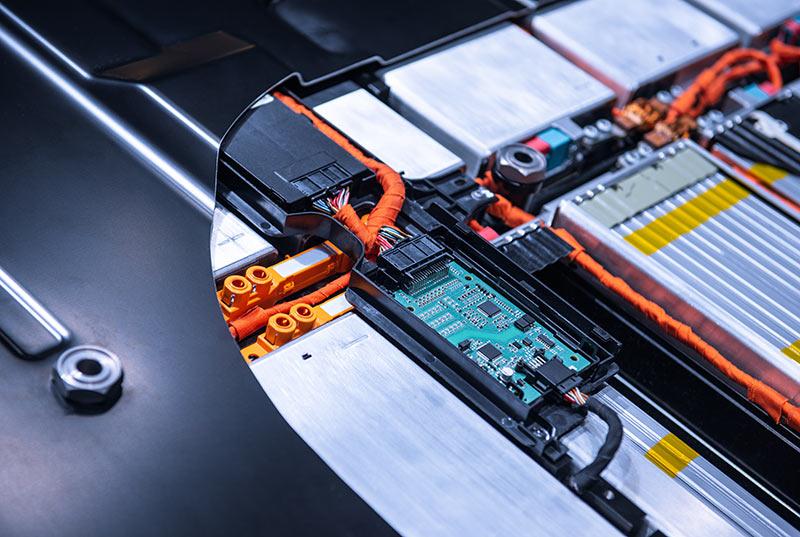
There are a number of potential causes of thermal runaway, ranging from physical damage to battery packs to excessive external temperature, overcharging, internal component failure or poor battery maintenance.
Thermal runaway is an especially important consideration in the battery packs used in electric vehicles.
Lithium-ion batteries – the most common type of battery used in electric vehicles – contain a flammable liquid electrolyte. This flammable liquid electrolyte can become exothermic and even combust at very high temperatures, increasing the pressure in the cell, causing a rupture that leads to smoke, fire and dangerous emissions.
Thermal runaway in a larger battery pack and a self-contained space like an electric vehicle could present a significant risk to drivers, passengers and other vehicles. Most notably, typical electric vehicles contain numerous battery cells, so a thermal runaway issue in one cell could lead to problems in one or more other cells as chemical reactions occur and heat is generated (a process known as thermal runaway propagation).
In order to become a truly practical and commercially viable alternative to their fossil fuel counterparts, electric vehicles – and therefore their batteries – must be able to offer rapid charging, excellent power density and significant range.
These demands are placing increasing pressure on battery manufacturers and OEMs to offer more advanced, efficient battery packs whilst ensuring that safety is maintained at all times.
Technologies and approaches to mitigating the risk of thermal runaway in batteries continue to be developed, although every battery configuration is different, and the development of a ‘one size fits all’ solution has been challenging.
Materials developed to inhibit thermal propagation may be incorporated into battery packs, but this can limit the batteries’ energy density and increase their weight – two factors that would significantly affect the efficiency and range of an electric vehicle.
Approaches to thermal runaway protection can vary in terms of their complexity and their effect on the overall battery design. For example, installing thermal runaway protection materials between cells (cell-to-cell protection) can help stop thermal runaway reactions passing between cells, potentially isolating this to the source cell. This approach, however, results in significant space and weight issues.
A similar method of thermal runaway protection is possible, installing protective materials between battery modules or even between battery packs rather than between individual cells.
Module-to-module or pack-level protections are more affordable and save more space than cell-to-cell protection, but thermal runaway reactions are left with more room to cause damage before being dissipated by an appropriate protection product.
An optimised solution is available in the form of the Norseal TRP Series of foam pads. These foams have been specially designed to offer a combination of mechanical compression protection. This combination accommodates the shift in the physical size of battery cells during charging and discharging while maintaining optimum pressure on the cells – and thermal protection – helping minimise thermal runaway propagation and protecting against thermal runaway.
The Norseal TRP Series dielectric foams are engineered to offer a predictable compression force deflection while being specifically engineered to be heat-absorbent and flame-resistant. This helps protect adjacent cells from going exothermic and helps mitigate the propagation of a thermal event between cells. The foams are also electrically insulating, inhibiting arcing within modules.
The widespread manufacture and adoption of electric vehicles is prompting national and international standards organisations to pay close attention to electric vehicle batteries in terms of safety and efficiency standards, testing methods and product specifications.
Manufacturers and OEMs working with electric vehicle batteries must adhere to a number of standards, particularly if they wish to ship their products internationally. Standards for testing and ensuring the safety of electric vehicle batteries are varied, complex and continue to evolve.
For example, in 2020, the UK National Standards Body, BSI, published two new standards which specifically regulated electric vehicle batteries: PAS 7062:2021 (Electric vehicle battery cells. Health and safety, environmental and quality management considerations in cell manufacturing and finished cell) and PAS 7060:2021 (Electric vehicles. Safe and environmentally-conscious design and use of batteries).
As these standards become more stringently enforced and demands on battery performance continue to grow, it will become increasingly imperative that battery packs destined for use in electric vehicles can offer an optimal balance between efficiency and safety.
Efficient, combination-based solutions such as the Norseal TRP Series will be central to these efforts, as manufacturers and OEMs work to ensure performance and safety while ensuring no tangible risk of thermal runaway in electric vehicle batteries.