
Reducing Glare in Solar Panels with Matte FEP Films

Solar energy production accounts for approximately 75% of all new renewable capacity and is the fastest-growing renewable energy source today. With more panels installed on roofs, walls, and land, reflections and glare are becoming an increasing concern for solar installations near airports, motorways, and urban environments. Engineers require solutions that balance low glare, high efficiency, and long-term durability. Let us explore together how innovative matte FEP solar front sheets could become the next significant development in solar energy production.
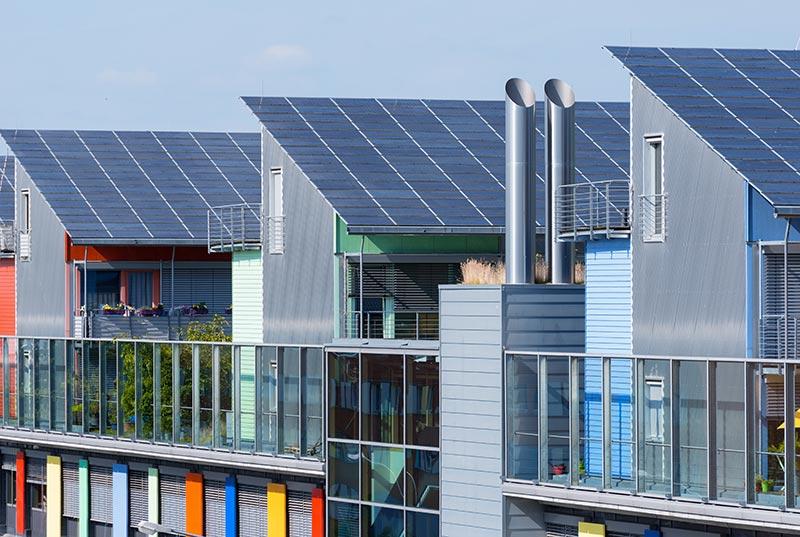
In modern solar panels, approximately 20% of the incident sunlight is absorbed to generate electricity, 4-8% is reflected as glare, and the remainder is lost as heat or other factors (Source: https://www.energy.gov/eere/solar/solar-performance-and-efficiency). While this percentage of reflected sunlight may seem small and negligible, it can be disturbing and uncomfortable to look at. With the increasing number of solar panel installations, glare could pose a safety risk for pedestrians, pilots, and drivers, and may also impact the environment and wildlife.
Alongside aesthetic challenges for architectural integration, engineers and architects require solutions for glare reduction to comply with growing regulatory requirements for glare mitigation, such as FAA (Federal Aviation Administration) regulations in the United States, ICAO (International Civil Aviation Organization) guidance, or EN 50583 (Europe) and UL 7103 (U.S.) for Building-Integrated Photovoltaic (BIPV).
Current anti-reflective coatings are designed to increase light transmission by reducing reflection losses, which can reduce glare to 2-3%. Although this is significant, glare can still be noticeable at certain angles. Textured glass, however, scatters light to reduce glare but can slightly reduce optical transmission to the cells, which can lower the efficiency of the solar panel and lead to a higher levelised cost of energy (LCOE).
Particularly in BIPV applications, architects often require lightweight and bendable materials – conventional approaches could limit flexibility as anti-reflective coatings are applied to glass sheets and are not adaptable to flexible PV modules or irregular surfaces, and would require complex framing or bespoke fabrication. Conventional approaches also add extra thickness and weight to the panels, which increases structural load, resulting in higher installation costs and reinforced mounting systems.
But how can the glare issue be addressed without compromising efficiency or freedom of design? Matte FEP (Fluorinated Ethylene Propylene) front sheets could be the solution. Films such as Saint-Gobain® Norgard® solar front sheets offer high transparency and excellent resistance, enhancing panel efficiency, longevity, and protection.
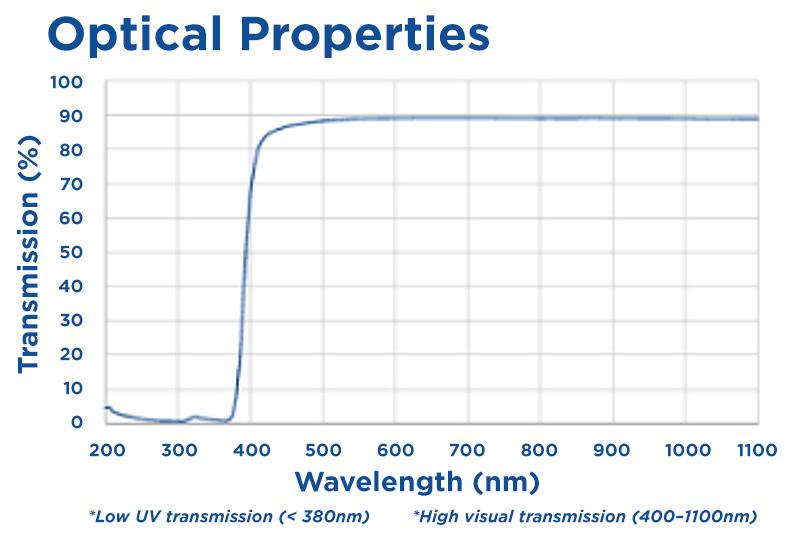
Their low refractive index and high transparency improve light transmission, increasing the overall energy efficiency of solar cells. The excellent ageing resistance ensures long-term durability under harsh environmental conditions, while low surface energy improves cleanability. The textured matte finish enhances cell efficiency, reduces glare, and improves the aesthetics of the solar panel. Specifically, matte FEP films provide superior moisture resistance, withstand atomic oxygen and gamma radiation, and contribute to lightweight system designs while offering significant technical advantages for engineers.
Let us compare FEP and glass properties for better understanding:
| Property | FEP Film | Glass |
| Optical Transmission (%) | ~95 | ~91 |
| Weight (kg/m2) | ~0.45 | ~2.5 |
| Glare Index (lower = better) | 15 | 45 |
| UV Degradation (20 yrs) | ~2% | ~8% |
| Flexibility | High (bendable) | None (rigid) |
| Impact Resistance | Excellent | Brittle |
| Weatherability | Excellent | Good |
- Optical Transmission: These front sheets provide superior optical transmission for excellent panel efficiency
- Lightweight: Ultrathin films add minimal weight to the panel and are highly flexible, allowing installation on complex surfaces and with flexible solar panels
- Glare Index: A significantly lower glare index than glass helps meet stringent regulations
- UV and Mechanical Resistance: Minimal degradation over 25+ years and robust mechanical protection increase the lifetime of the panel and improve cost efficiency
- Compatibility: Works with advanced encapsulants (POE/EPE) and next-generation PV technologies (TOPCon, HJT)
Innovative multilayer film architectures such as Norgard UV PRO deliver exceptional performance in demanding solar environments. Its flexibility and lightweight design enable its use in thin film PV applications and allow for easy processing in roll-to-roll or traditional lamination. In some cases, the product can be used as a glass replacement for PV protection to further reduce weight. Its excellent optical properties make these materials a game changer for solar applications.
The increased installation of solar panels is not only transforming energy production; it is also transforming urban environments and landscapes. With innovative matte FEP front sheets, engineers have a material at their disposal that significantly reduces glare, minimises risks and optical disturbances, and simultaneously enhances efficiency, panel performance, flexibility, and durability. A win-win situation to make the world a better place to live. Learn more about these special materials for a brighter future in solar energy production.