
Protecting Drug Integrity at the Interface: The Role of Norgard® Materials in Pharmaceutical Systems

In pharmaceutical manufacturing, it’s easy to focus on the drug itself. However, it’s often the smallest components that have the greatest impact. Stoppers, syringe plungers, cap liners, and septa may seem simple, yet they play a critical role in how drugs are protected, stored, and ultimately delivered to patients. As formulations become more complex, particularly with biologics, vaccines, and high‑potency therapies, the demands on these components continue to grow. What was once a background consideration is now a key factor in product performance, patient safety, and regulatory compliance, making the drug–packaging interface more important than ever.
To better understand how manufacturers are navigating these challenges, we spoke with Michael Junglas, Global Market Manager, Specialty Films, who works closely with Norgard® Films. Their work with products such as PTFE, ETFE, FEP, PFA, and PFAS-free* polymers is key to helping pharmaceutical customers better understand the role these products can play in real-world pharmaceutical applications.
From enabling ETFE barrier films in vial stoppers & syringe plungers that reduce extractables and improve glide performance, to delivering skived PTFE cap liners and PTFE‑laminated septa systems that enhance sealing integrity and support long‑term drug stability, Saint-Gobain® Norgard solutions are designed to address critical challenges at the drug–component interface.
Now, let’s take a look at six key insights we’ve compiled to consider when evaluating materials for pharmaceutical packaging and delivery systems.
Insight #1: The drug–component interface is a critical risk point.
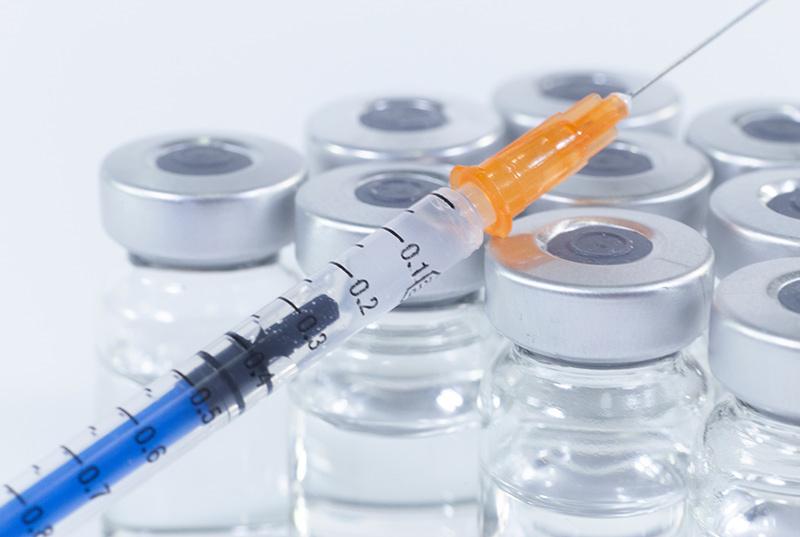
The point at which a drug comes into contact with its packaging or delivery system is one of the most sensitive stages in the pharmaceutical lifecycle. Even slight interactions between the formulation and material can result in extractables, leachables, particulates, absorption, or chemical degradation. These risks are particularly significant in biologics, vaccines, and other sensitive treatments, where maintaining stability is naturally more challenging. What was previously regarded as a secondary packaging option is now central to risk management, directly affecting shelf life, regulatory approval, and patient safety.
Insight #2: Norgard Films create a high-purity, inert barrier where it matters most.
Norgard PTFE and ETFE Films are expertly engineered specifically for pharmaceutical contact surfaces, providing ultra-clean, chemically inert interfaces that significantly reduce interaction with medicinal formulations. These advanced fluoropolymers offer high purity, excellent chemical resistance, and minimal extractables, helping to prevent contamination and degradation. By introducing a stable barrier between the medicine and elastomeric or polymer components, they deliver a controlled environment that protects product integrity throughout the entire lifecycle.
Insight #3: Performance is proven across critical drug delivery components.
Norgard Films are designed to enhance performance across key applications. ETFE barrier films in vial stoppers and syringe plungers reduce the risk of contamination whilst improving glide and dosing consistency. Skived PTFE films used in cap liners provide a non-reactive sealing surface that maintains closure integrity over time. PTFE-laminated septa combine elasticity with chemical inertness, enabling repeated access without compromising purity. Together, these solutions improve sealing, cleanliness, and reliability in demanding pharmaceutical environments.
Insight #4: Built for real-world manufacturing, from sterilisation to scale.
Pharmaceutical components must perform under real production conditions, including sterilisation, high temperatures, and high-speed automation. Norgard Films are designed to withstand common sterilisation methods such as steam, gamma, and EtO (ethylene oxide) whilst maintaining their mechanical and barrier properties. Their thermoformability supports complex geometries and precision manufacturing, helping ensure consistency, reducing defects, and enabling smooth scale-up from development to commercialisation.
Insight #5: Customisation and testing ensure alignment with your exact requirements.
Every application has unique requirements, from chemical resistance and purity to friction control and manufacturability. Norgard solutions can be tailored through variation in thickness, surface treatment, texture, and multilayer construction to meet specific needs. Supported by advanced prototyping, environmental testing, and reliability validation, this approach ensures materials are aligned with both product performance and production processes, reducing risk and accelerating development timelines.
Insight #6: Norgard materials support more than packaging; they enable broader pharma and biotech applications.
Beyond closures and delivery systems, Norgard Fluoropolymer Films are used across the wider life sciences ecosystem. Extruded fluoropolymer films, including FEP and other heat-sealable materials, are ideal for fluid handling and cryogenic sample bags used in biotechnology and genetic research, where chemical inertness and low-temperature flexibility are essential. In laboratory environments, Norgard Surface Protection Films help maintain clean, sterile, and damage-free workspaces by resisting aggressive chemicals such as strong acids and bases while protecting against scratches and abrasion. These applications highlight how the same core material strengths: purity, durability, and chemical resistance, all of which extend across the pharmaceutical workflow.
Insight #7: More than materials: a partner focused on performance, compliance, and the future.
Norgard solutions are backed by the collaborative, partnership-driven approach of Saint-Gobain teams. By working closely with customers to understand their formulations, manufacturing processes, and regulatory requirements, the team helps address critical challenges such as extractables, sealing performance, friction variation, and supply consistency. With global manufacturing capabilities, strong regulatory documentation, and co-development of PFAS‑free* alternatives, Saint-Gobain supports both current needs and future strategies. The result is not just a material solution, but a reliable path to safer, more efficient, and more scalable pharmaceutical products.
As pharmaceutical products become more complex, the need for proven, high-performance materials continues to grow. Managing the drug–component interface is no longer a secondary concern; it is essential for delivering safe, stable, and reliable therapies at scale.
With Saint-Gobain Norgard Films, manufacturers gain more than just material performance; they gain a partner dedicated to solving real challenges, speeding up development, and ensuring long-term success. From closures and delivery systems to bioprocessing and laboratory settings, these solutions help create consistency where it matters most.
When performance, purity, and reliability are non-negotiable, the choice is obvious: select materials designed to protect what matters. Connect with our team today to find out more.
Our PFAS-free* designation means we do not intentionally add PFAS to our formulations during the manufacturing of the product. However, due to certain factors, trace amounts may be present as unintended impurities in the raw materials that we receive from our suppliers. The asterisk (*) reflects our commitment to transparency and scientific integrity, rather than making absolute claims that cannot be guaranteed or verified.