
Open-cell vs. Closed-cell Foam

Foam tapes, with or without adhesives, play vital roles as gap-fillers, providing dampening, sealing, and protective properties in automotive, building and construction, aerospace, or transportation applications. For many, foam is just foam, but there are significant differences.
Although open-cell foam and closed-cell foam may appear similar at first glance, their differing constructions mean they must be treated as distinct product types, as their properties and performance can vary greatly. It would be more like comparing apples to pineapples simply because their names sound somewhat alike.
Therefore, understanding the differences between open-cell, closed-cell, and even micro-cellular foam designs, along with their specific strengths and weaknesses, is crucial to selecting the right solution for your application, saving time and money, and maximising outcomes, value, and benefits for you and your customers. Or, to put it in terms of the comparison above, to avoid the situation where the intended apple pie tastes completely different because a similarly named fruit was chosen.
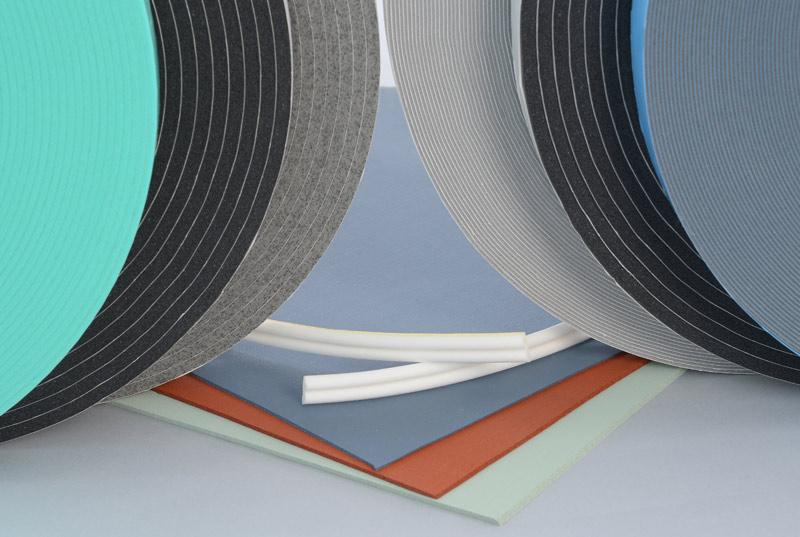
Every foam consists of numerous gas pockets or pores of varying sizes. In addition to the material formulation of the foam, these pores and their structure influence its suitability and features for your applications. In open-cell foams, reactions during the production process cause pockets of gas to expand and break, leaving them ‘open’ and thus allowing air to occupy the space within.
Its porous nature and air infiltration provide excellent thermal and acoustic insulation properties, and its high expansion capability, conformability, and durability make it an ideal choice for sealing and dampening where resistance to liquid, water, or water vapour is not required. The water absorption properties of open-cell foams may also be necessary, depending on the application.
The low-density design of open-cell foam is typically lightweight, soft, and easily returns to its original shape after compression. Its limited compression resistance results in a reduction of this ‘spring’ effect over time. Open-cell foams are often made from Polyurethane, PVC, or EPDM and serve as cost-effective solutions for absorption, dampening, and insulation applications where moisture, air, and water permeability are required or acceptable.
Closed-cell foam is a strong, flexible material where internal pores are intact and filled with gas. The pores are closely packed but not interconnected. Depending on the gas within the pores, it can be highly efficient at increasing the insulation capability of the foam.
Closed-cell foams are usually heavier due to their medium-to-high density, which helps to keep the pores intact and provides excellent sealing properties against water, vapour, liquids, air, dust or other environmental factors.
Particularly when designed with silicone materials, closed-cell foams offer outstanding thermal insulation properties even under extreme conditions and in high-end applications, such as EV battery packs. By adjusting materials, gas, thickness or density, closed-cell foams can be optimised for various interior or exterior sealing, insulation, cushioning, padding and gasketing applications.
Often made from polyethylene, polystyrene, rubber, silicones or polypropylene, the costs of closed-cell foams are typically higher than those of open-cell foams and are best suited for high-end applications in demanding markets such as automotive, EV, industrial, construction or aerospace.
Micro-cellular foams are specialised closed-cell foams where the pores are reduced to a minimal size. These fine cell sizes result in a high-density product with excellent insulation characteristics. Depending on the gas, the foam’s density can range between 5% and 99% of the pre-processed plastic, which has a significant influence on behaviour and performance.
Understanding the differences, strengths, weaknesses and general applications mentioned in this overview is a good starting point for selecting the right material for your needs. Of course, there’s a multitude of variations available, and each foam type can also be modified to meet more specific requirements such as insulation, sealing, fire resistance or flame retardance, densities, thicknesses or weight.
But next time you have foam materials in hand, this overview should help you quickly identify its nature and provide initial ideas for its use. And after all this talk about apples, pineapples and pie, stay curious for other interesting topics in our blog and perhaps enjoy a little snack in the meantime.