
Norgard® ETFE Films, UV Protection and Installation Tapes for Photovoltaic Applications

Market predictions for 2024 indicate that the solar energy landscape will experience remarkable advancements and growth.
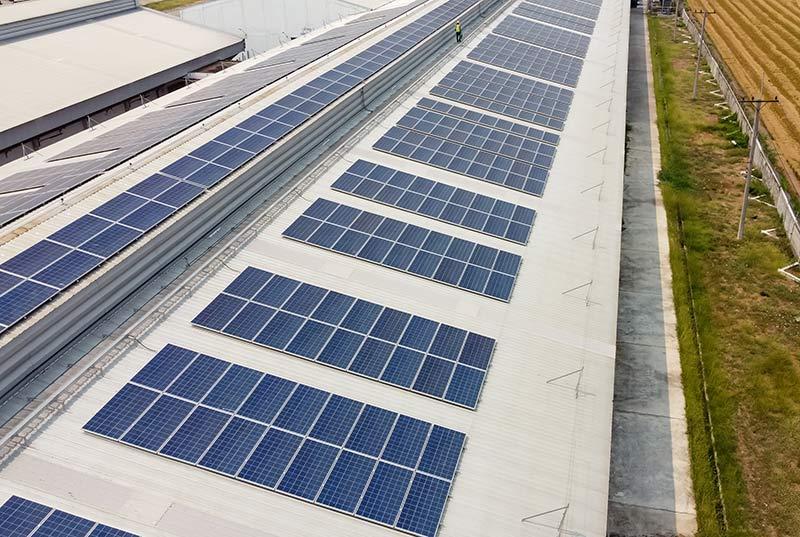
To ensure the success of the solar infrastructure, key considerations in photovoltaic panel applications should include increasing the efficiency of charge transfer, reducing energy losses, cost savings, durability, and enhanced performance in low-light conditions. Due to their properties, our front sheet ETFE films are a go-to choice within photovoltaic panel applications.
We’ve spoken with Eliot Hield-Ryder, Business Development Manager, to explore our newest product, Norgard® UV Pro, a new UV-blocking laminate solution, and how it can help extend the lifespan of solar cells. Additionally, we’ve spoken with Andreas Faber, Product Manager, Extruded Films for Saint-Gobain® Tape Solutions, to learn how and why Norgard ETFE Films benefit the solar infrastructure.
There is a lot of buzz around Norgard UV Pro. Could you explain what it is?
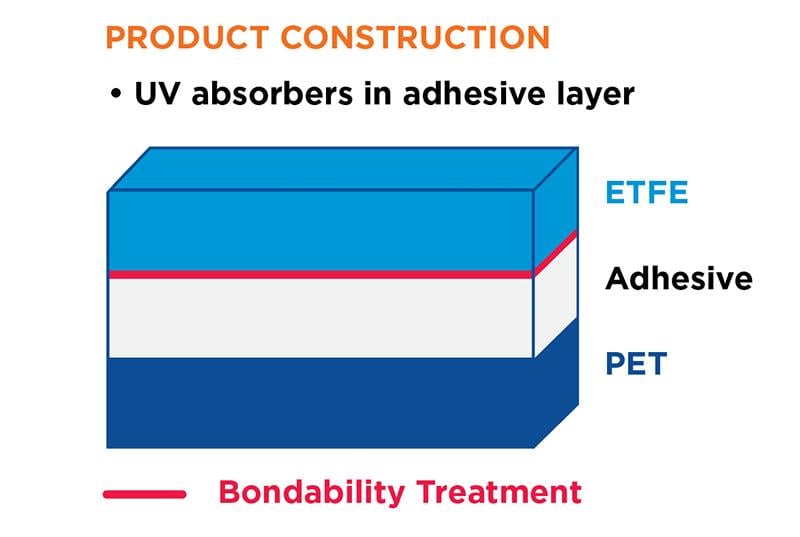
Norgard UV Pro is a laminate of ETFE and PET which consists of a proprietary UV-blocking adhesive. This composite solution offers both superior visual transmission and the ability to block harmful UV light. The ETFE layer provides high levels of resistance to chemicals, enhanced weather resistance, low flammability, and insulating properties.
Could you explain some common applications for this product?
This product is typically used as a photovoltaic front sheet. Due to its flexibility and light weight, Norgard UV Pro is utilised in thin film PV applications and can be easily processed in roll-to-roll or traditional lamination. In some cases, the product can be used as a glass replacement for PV protection of silicon cells.
Norgard UV Pro has excellent outdoor ageing performance (a characteristic of fluoropolymers) as well as UV blocking functionality, both of which allow it to help extend the lifetime of solar cells.
New Tape Innovations: Adhesive Tapes for Mounting Modules
In addition to Norgard UV Pro, could you share some insights into new tape products for mounting solar panel modules, which have the ability to adhere to various substrates?
Yes, Saint-Gobain Tape Solutions has developed two new tapes for the lightweight solar industry. The first is a specialist adhesive tape for adhering solar modules to bitumen or concrete substrates. The key to the success of this tape is that it does not require a primer, whereas competitor products do. It is, therefore, extremely easy to use and it reduces installation time and costs, particularly on large surface areas.
This tape can replace traditional products like butyl. Another benefit is that it can be installed in cold or hot conditions without tape shear or peel being affected. It also has good clean peel versus competitor products.
What about the second tape product you mentioned?
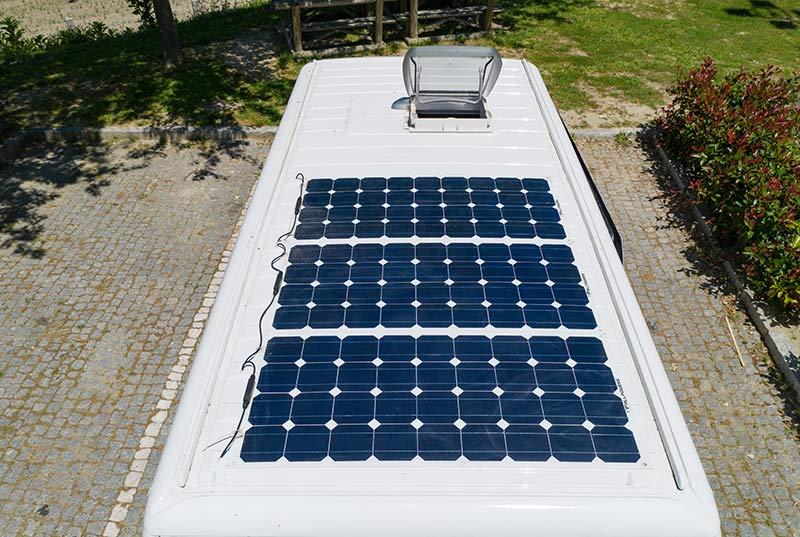
The additional tape is for PVC substrates such as yachts, caravans or motorhomes where plasticisers can become an issue over time. Once again, Saint-Gobain has developed an innovative adhesive solution, called 350HP, suitable for a variety of lightweight modules.
How can customers learn more about these products and who can they discuss their specific needs with?
For additional information regarding these tape products, please contact Eliot Hield-Ryder, Business Development Manager, to further discuss these products at [email protected].
Tell us more about the chemical makeup of Norgard Specialty Films and how they are made?
ETFE stands for ethylene tetrafluoroethylene. As a fluoropolymer, it is chemically inert, meaning it does not react with anything in the environment. It is resistant to corrosion, UV radiation, and extreme weather conditions such as high heat, excessive cold, dust, rain, or other moisture.
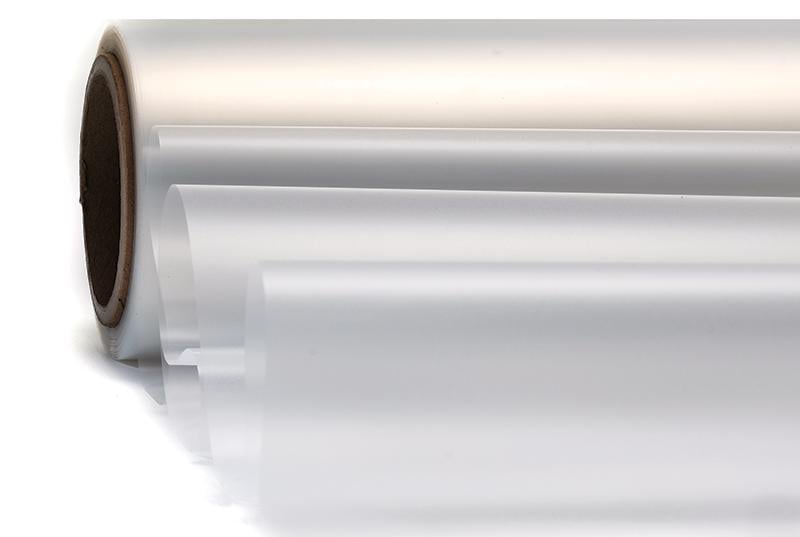
To make ETFE film, the ETFE polymer is melted and forced through a die to form a continuous thin film. This process is called extrusion and can produce products in a wide range of thicknesses. To meet varying application requirements, they can be completely clear, frosted/tinted, or completely opaque.
Why are these products ideal within photovoltaic solar applications?
Within photovoltaic applications, our matte ETFE is often used due to its texture, lightweight properties, and flexibility. The textured surface aids in light absorption, diffusion, and reducing glare from the sun hitting the panel. This also helps to improve the overall efficiency of the solar panel by allowing more light to be absorbed by the solar cell.
With benefits such as outstanding performance in varying temperature extremes, chemical resistance, excellent mechanical properties, low flammability, stress crack resistance, and high light transmittance, these products are becoming increasingly popular in solar photovoltaic applications. These films outperform and outlast alternative solutions such as polyester films or acrylic films. Their lightweight properties also make them superior to traditionally used glass, which is significantly heavier.
Can you explain how these products work to protect and insulate solar cells to allow for increased durability, performance, and longevity?
In addition to the texturing and absorption benefits mentioned earlier, these films can enhance the durability, overall performance, and longevity of solar cells in several ways.
- They can protect the cells from outdoor elements (e.g. moisture, dust, UV radiation) because, through the material's exceptionally low surface energy, they create a protective layer on the solar cell itself.
- Due to their properties, these films can electrically and thermally insulate and protect the solar cell and its components.
- Durability is improved because these films can seal or encapsulate the solar cell, shielding it from any and all factors that could cause damage.
With material consideration, cost is often a key area of concern. Could you share how the price point of these products compares to alternatives that are out there?
Let’s consider a fluoropolymer film of the same thickness. Not only is it less durable than our Norgard ETFE Film, but it is also more expensive. Additionally, because our product lasts longer, modules do not need to be replaced as frequently, further reducing costs.
While comparable in terms of performance, more traditional glass solar systems, as mentioned earlier, are much heavier. The added weight of glass solar systems results in increased costs due to the additional need to reinforce buildings and roofs to support this extra weight.
Our cost-effective manufacturing methodologies also enable us to scale up production to meet demand and facilitate large-scale deployment of solar panels. This scalability itself is highly cost-effective.
With an increased focus on expanding/developing solar solutions, Saint-Gobain has worked with universities and research institutions to help drive success. Have you had any experience with this?
Yes, there are a number of universities we have worked with. Student organisations at engineering universities often enter into build challenges, and we support them by supplying materials such as our films.
One of our more recent collaborations was with Purdue University’s Solar Programme. Their engineering team was working on the development of a solar car, and they reached out to our team for support. Our team joined as a project sponsor and sent them about 30 metres of film free of charge. The Purdue team came back with excellent feedback regarding how our materials performed in comparison to other ETFE types of materials, and they were able to create a successful solar vehicle.
The success of these young engineers helps reinforce our Norgard ETFE Specialty Films as effective solutions for lightweight solar panels.
We support projects like this because they promote sustainable energy. They aid young engineers in developing innovations in efficiency vehicles while exploring solar energy power systems. It is vital to support the next generation of engineers in testing solutions that could power the future!
Saint-Gobain Tape Solutions is committed to keeping our finger on the pulse of innovative solutions that could drive a more sustainable future.
Our teams are ready and eager to explore unique challenges, demanding applications and new technologies to help improve energy production efficiency. Our goal is to help you find cost-effective solutions that work, while providing the versatility, durability and manufacturing scalability needed to support the continuous demand for renewable energy solutions. Get in touch with us today to explore your specific needs for your photovoltaic panel applications.