
The Importance of Building Envelope Sealing

Buildings are more than just a roof over our heads. Whether we’re talking about residential, industrial, commercial, or public institutions, buildings are designed to meet the specific needs of the people inside. Innovative tape solutions can support visionary architects and contractors around the world because they play a key role in helping to deliver the ultimate building envelope.
In this blog article, we’ll explore the importance of the building envelope and the role of foam and tape solutions in creating energy-efficient living spaces for today and the future.
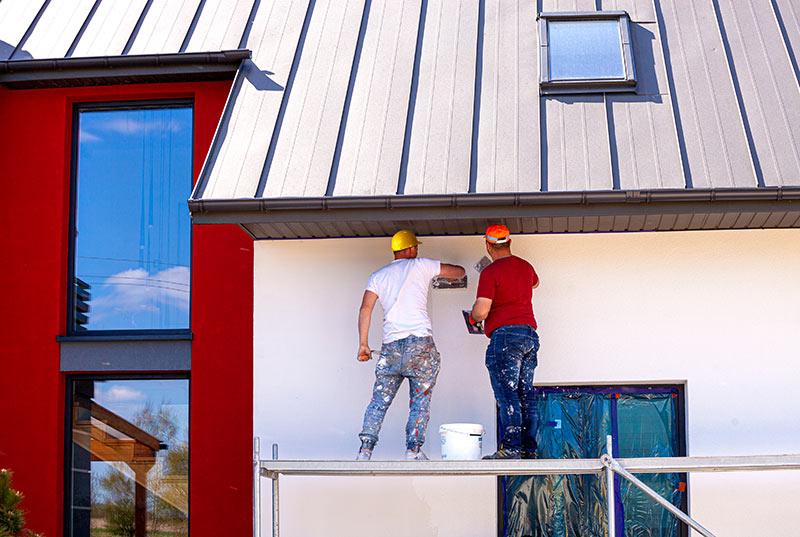
The term “Building Envelope”, or building enclosure, refers to the part of any building that physically separates the external environment from the internal. In other words, the building envelope is a barrier between the inside and the outside of a building and includes walls, the roof, windows, doors, and other components such as insulation and membranes that act as a shield.
The building envelope plays a crucial role in protecting people inside from external influences, ensuring comfortable living conditions and thermal comfort. When considering energy efficiency, it is vital to create an airtight seal that prevents unwanted air exchange. However, resistance to water, heat, light, and noise transfer is also important and cannot be overlooked.
The greatest challenge for a building envelope is enduring its exposure to environmental stresses such as water, wind, extreme temperatures, UV rays, or other substances over an extended period. Material fatigue must also be taken into account to prevent performance deterioration over time.
For Saint-Gobain® Tape Solutions, the vision is to enable comfortable low or positive-energy living spaces that are easily accessible to everyone. Comfort is considered as a whole, with solutions and materials contributing to enhancing quality of life and safeguarding people’s health. Small components like tapes can have a significant impact on making this vision a reality. Let’s explore some of the ways:
- Tapes used for membrane sealing can ensure the reliable connection of membrane sheets. They facilitate membrane assembly and prevent damage or punctures that could compromise tightness. Foam tapes are essential for both traditional and modern lightweight construction. They help decouple structures and fill gaps.
- Tapes can be used to seal flat roofs, windows, doors, and other applications that are more directly exposed to environmental stresses. Their UV, water, and thermal-resistant design ensures durable bonding and attachment, or they can act as reliable barriers to prevent moisture ingress and protect structures even under extreme conditions.
- With the increased use of glass façades as part of the building envelope in modern architecture, spacer tape and specialised glass bonding solutions are becoming increasingly important. They are key components in structural silicone glazing systems, helping to maintain a uniform distance between the glazing panel and the structure. They provide a locating surface for the silicone structural sealant.
These are just a few examples of the crucial role tapes play within the building envelope and modern architecture to ensure durability and functionality.
Foam tapes are highly versatile and can add value in numerous ways and applications. When used between decoupled structures, they help create air- and watertight seals. These seals not only prevent thermal bridges but also act as noise and vibration dampening materials, as well as absorbing materials for optimised acoustic comfort.
In addition to sealing and dampening, foam tapes can be vital components in fire protection. A good example of a product that combines all the essential properties into one is Norseal® FS1000. This intumescent foam is both soft and conformable. It creates a reliable seal that is fire-resistant and capable of blocking smoke, air, and water.
Another benefit of foam tapes is their low VOC (Volatile Organic Compounds) content, which contributes to good indoor air quality and healthier environments. This is particularly advantageous when used in HVAC (Heating, Ventilation and Air Conditioning) systems, where fungicidal properties are a significant advantage.
Ultimately, the right foam materials provide numerous benefits for indoor quality of life, the energy efficiency of buildings, and the long-term value of buildings.
The way we construct future homes and the entire construction sector has a significant impact on people and the environment. At Saint-Gobain, we are pursuing the purpose of “Making the world a better home” with innovative solutions for the building envelope and many other areas. Explore specialised solutions in more detail and discover which foam and tape materials can best address your construction challenges.