
How to Test Bonding Tapes to Determine Ideal Applications

High-performance bonding materials such as OEM-specified polyurethane and acrylic tapes are the preferred method for automotive attachment applications. To select the best tape for your automotive application, tapes need to be compared in terms of properties and performance under several conditions.
We've spoken with Chris Dickens, Global Market Manager, Mobility, to learn more about two Saint-Gobain® automotive tapes, Norbond E500 and Norbond Z3100.
Read on to discover more about their performance under various test conditions and their ideal applications.
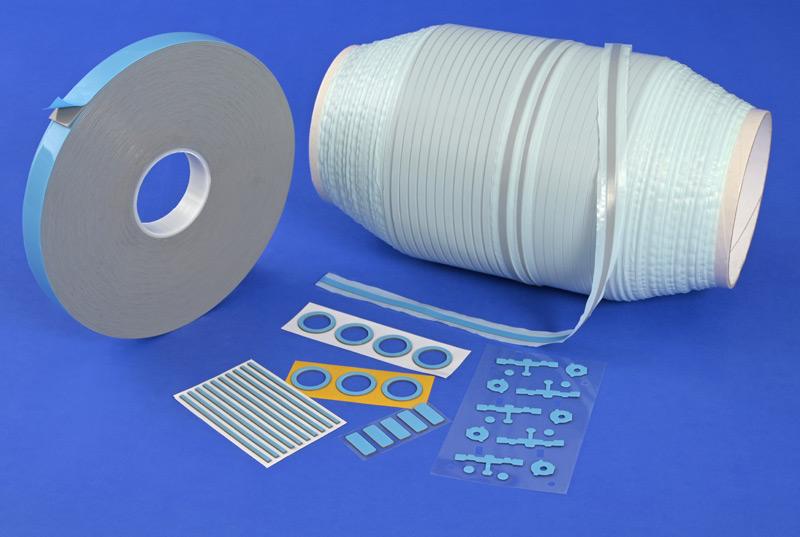
Both of these tapes fall under the Norbond® brand and each has unique advantages. The E500 Series is a black polyurethane foam tape, with a high-performance, acrylic adhesive system on both sides. The Z3100 Series is a dark grey acrylic foam tape with outstanding viscoelastic and adhesion properties and high-performance adhesive systems on both sides. Several test methods and values can be utilised to compare and contrast the general performance of these acrylic and polyurethane tapes.


This test is a characterisation test used to measure the strength and elasticity of the foam core. A tensile testing machine is utilised to pull a cut sample section at a constant speed, typically 20 inches (508 mm) per minute. The extension continues up until the point of breakage, which is considered tape failure. At this point, the stress value and elongation percentage are measured and plotted over the test time to determine the stress-strain curve. In this test, the Z3100 acrylic foam tape demonstrates high elongation but moderate tensile strength at the breaking point. In contrast, the E500 polyurethane foam demonstrates moderate elongation but exhibits relatively high tensile strength at the breaking point.
When we talk about adhesion, we generally refer to the strength of the bond between the adhesive and the substrate. When performing adhesion tests, we need to compare similar tape gauges, understand the importance of dwell time (the time from when the tape is applied to when it is tested), consider test speed, and determine if the samples tested have undergone ageing or been exposed to environmental conditions. Changes to any of these factors can provide different results for the same type of tape. Here are four common adhesion tests:
- Peel Test
Often based on ASTM-D3330, this test is used for comparing the adhesion of the same tape against different substrate panels, such as different paints. A strip of tape, normally 1 inch wide × 6 inches long, is backed with an aluminium film (to prevent stretching and simulate a semi-rigid surface) and bonded to a substrate panel. The tape is then pulled at 90° or 180° to the panel’s surface at a constant rate, normally 12 in (305 mm) per minute. The peak force and average continuous peel force are then measured. When the 90° peel adhesion of polyurethane and acrylic tapes is compared, we see that Z3100 has higher peel strength from a painted panel than the E500 polyurethane tape. This is because acrylic tapes have highly viscoelastic cores, enabling the tapes to elongate more during a peel mode, involving more surface area, and requiring more force to separate.
- Dynamic Tensile Adhesion (Pluck Adhesion)
In this test, the tapes, which are typically cut to 1 inch × 1 inch (25 mm × 25 mm) squares, are bonded between two substrates (generally aluminium T-blocks) and then stressed perpendicular to the bond area. Then, substrates are separated at a test speed of 2 inches (51 mm) per minute while the peak force is measured, usually in pounds per square inch. In tensile and elongation tests like this one, polyurethane cores have lower elongation and high internal strength. In comparison to Z3100 acrylic tape, E500 demonstrates better tensile adhesion strength.
- Dynamic Shear Adhesion
This test is often based on ASTM D1002 test methodology which determines adhesive strength, surface preparation parameters and adhesive environmental durability. The tape is bonded between two overlap panels and stressed parallel to the bond area. This application measures the peak force to separate the two panels, with values reported in pounds per square inch. When comparing dynamic shear adhesion on painted panels after 72 hours, the E500 polyurethane tape has slightly higher resistance to dynamic stress than the Z3100 acrylic tape.
- Static Loading (Creep)
This test is typically based on ASTM D3654 which measures the capability of pressure-sensitive tapes to stay adhered under constant load applied parallel to the surface of the substrate and tape. Unlike the other tests, the ability to resist static loads depends greatly on the geometry part design and the loads encountered, as much as the tape itself.
If we examine two common automotive bonding applications, the tape configurations and adhesion comparison discussed above can help determine which tapes will best fulfil application needs. Let’s take a closer look.
- Emblems and nameplates, normally small and intricate, are bonded to the bonnet or bumper of the vehicle. For this specific application, the design engineer needs a material that can be easily die-cut to match the shape of the part, has good conformability as well as shear and tensile adhesion for stress resistance. Since aesthetics for this type of application are critical, a black colour is preferred to lighter colours that are more apparent. Based on these selection criteria, a polyurethane foam such as E500 is the premier choice.
- Body side moulding applications require parts that can be somewhat flexible with good peel resistance. Since body side moulding parts are often long and can have different thermal expansion rates, the tapes to consider need to have good stress relaxation. An acrylic tape, such as the Z3100, would lend itself well to this particular application due to excellent peel adhesion to automotive paint systems and the ability to withstand systematic cohesive failure under high stress conditions.
While acrylic tapes have excellent viscoelasticity, high elongation peel adhesion and good stress relaxation, tapes with polyurethane cores have good compressibility, ease of die-cutting, high tensile adhesion and good shear resistance. Assessing the properties, characteristics and performance under various test conditions can help you select the right product engineered to provide durable, long-lasting holding power for your automotive bonding needs.