
How Tapes Enable Bi-directional Charging

Electric mobility has seen a significant boost recently, particularly as many limiting factors can be resolved. However, one limiting factor remains unresolved: the widespread adoption of bi-directional charging. Although it provides numerous benefits in various ways, there are still challenges that must be overcome before electric mobility can reach its full potential.
Join me as we explore the power lines of electric vehicle charging to uncover the current challenges and opportunities of bi-directional charging, and the role innovative foam and tape materials can play in shaping the future of mobility.
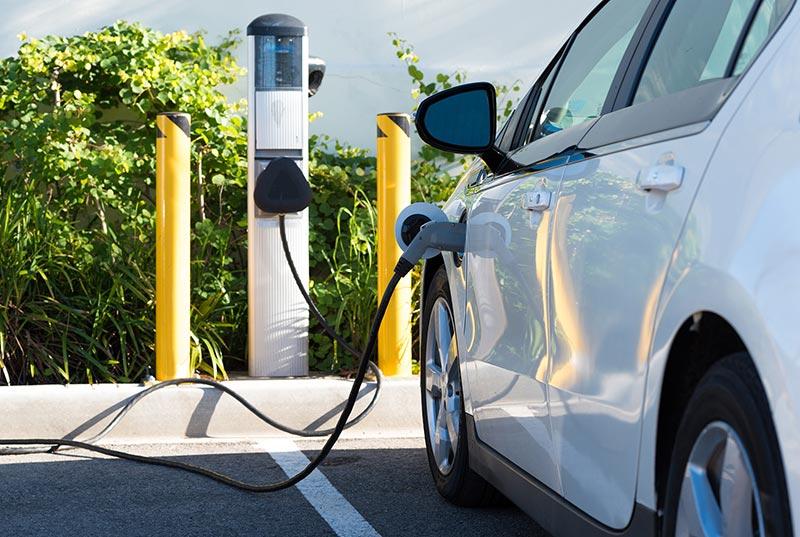
Today, EV (Electric Vehicle) charging is mostly a one-way process where the battery of a vehicle is electrically charged when connected to the grid through plugs, wall boxes or at special charging stations. Bi-directional charging, however, is a more advanced two-way process that allows stored energy from the EV battery to be converted back into the grid for a variety of uses.
This vehicle-to-grid (V2G) technology enables electric vehicles to act as mobile energy storage, with their batteries able to discharge to provide power to the grid during peak demand periods, helping to balance the electrical grid.
What seems logical and simple at first, however, presents engineers with many challenges, which is also reflected in the fact that only a small proportion of the electric vehicles available today support bi-directional charging.
Let us explore why every EV on the market today is not a rolling bi-directional power bank.
In theory, bi-directional charging of electric vehicles offers many advantages. The most obvious is, of course, its ability to store energy from the grid during high-power periods — such as when there is an abundance of wind and sun for renewable energy production — and discharge it back to the grid during peak demand periods or when there is no sun or wind. This helps to avoid peaks, balance the electric grid, and makes planning power supply across the entire grid easier.
For grid operators, one advantage of bi-directional charging is the potential to have decentralised emergency backup power during power outages. Therefore, the greatest interest in bi-directional charging seems to be for “peak shaving.” This means it can return power from the battery to the Grid (V2G) or Home (V2H) when demand and costs are high. The benefit: it can help to “localise” power availability, so electricity doesn’t need to be transmitted over long distances. EVs could help provide critical power to homes and businesses during crucial times.
For EV owners, bi-directional charging could lead to cost savings as it allows them to sell excess energy back to the grid, reducing their electricity bills and potentially generating income. As with smart charging, vehicles will charge overnight when demand and costs are lower.
If there are win-win situations, there must also be challenges that hinder the widespread implementation of bi-directional charging. One challenge relates to the battery technology of EVs, as many of the batteries currently in use are not optimised for efficient and durable bi-directional charging.
On the grid side, bi-directional charging infrastructure is not yet widely available, and significant investments in infrastructure, capabilities, and resources would be required.
As with the various types of connectors available today, there is currently no regulation to serve as a foundation for widespread bi-directional charging.
Lastly, there are remaining safety concerns regarding the overcharging or undercharging of batteries in bi-directional charging, which must be addressed to ensure safe implementation. While tape solutions have little impact on solving the above challenges, innovative foams and tape can help mitigate risks in fast and bi-directional charging. Let us take a closer look at how.
Innovative foam and tape solutions such as compression pads, thermal runaway protection materials, or Thermal Interface Materials provide insulation and other unique properties that can make battery packs and EV charging stations safer, more efficient, and longer-lasting. These material properties can also help address current challenges in bi-directional EV charging.
As with batteries and charging stations, foam and tape materials can be used to insulate and dissipate heat generated during charging and discharging with high voltage and current. They help to reduce thermal management issues and protect sensitive components as well as the entire system.
The electrical insulation properties of high-end materials, combined with strong backings made of Kapton®, Nomex®, PTFE or Mica, make foams and tapes ideal insulation materials to help regulate voltage and prevent overcharging or undercharging of the battery. Furthermore, their proven electrical insulation performance helps to prevent electrical shocks or fires.
However, these applications only consider the actual charging or discharging process. The challenge will be to ensure that all components of the grid – from power generation and transformation, transportation and storage, to the vehicles and back to the grid and battery energy storage systems – work seamlessly together. In all these applications, special tapes are often the unseen heroes that solve bonding, gasketing, and isolation challenges, enabling the efficiency and performance required for the entire energy supply system of the future and making it robust enough to handle bi-directional charging.
Even though only a few EVs support bi-directional charging and there are many open questions, the trend towards V2G technology is clear. The proportion of bi-directional vehicles will increase significantly in the coming years, bringing with it significant improvements and further developments in bi-directional charging.
Overall, innovative foam and tape solutions can play a critical role in ensuring the safety and efficiency of bi-directional charging of EVs. Start talking to your tape expert today to be ready with effective insulation and thermal management solutions that can help you create pioneering bi-directional charging technologies.