
How Special Carpet Tapes Can Take Mass Transport a Decisive Step Further

Transport is currently undergoing massive changes with the shift from combustion to more sustainable solutions. Alongside the trend to electrify vehicles (EVs), new mobility concepts for urban transport, as well as mass transportation in trains, aeroplanes, buses, and ships, are coming into focus, driving innovation in these alternative modes of transport in many areas.
No matter the mode of transport—EV, aeroplane, train, bus, or marine vessels—there are key aspects they all tend to share, such as fast, safe, reliable, and comfortable transport of people and goods. Beyond these similarities, they also need to be cost-efficient, durable, and meet customers' demands for new travel experiences. Did you know that carpet tapes and other flooring tape solutions can contribute to all these requirements? And that the right tape can make a significant difference?
When it comes to flooring solutions in mass transportation, there are various challenges that flooring manufacturers, MRO (Material, Repair & Operation) companies, and vehicle manufacturers cannot simply sweep under the carpet. Join us on a journey to discover how innovative carpet tapes and NTF (Non-Textile Flooring) solutions can make a tangible difference in turning mass transportation into a magic carpet ride.

Aeroplanes, trains, buses, ships and boats are highly developed vehicles based on a well-designed interaction between almost countless components. But why might it be important for manufacturers and MRO companies to take a closer look at flooring applications?
One reason is that flooring solutions are part of the overall safety requirements, and each component, including carpet tape and adhesives, must meet high safety standards, particularly in relation to fire protection.
However, it goes beyond just protecting passengers. Protecting structures, for instance, from moisture ingress can help enhance passenger safety, reduce maintenance efforts, and extend the lifespan of the vehicle.
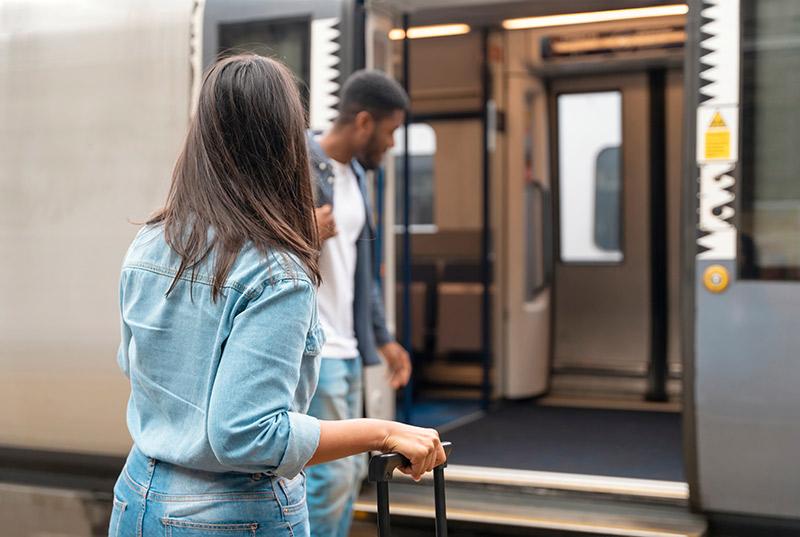
Passengers traditionally place their trust in existing foundational materials, with the focus more often than not being on comfort and the overall travel experience. Flooring solutions and small components like carpet tape can help improve their experience by eliminating bubbles and wrinkles through securely fixed flooring without edge lift, ensuring safe and comfortable boarding or disembarking, even with luggage.
For the manufacturers and MRO companies, the right flooring solution can reduce maintenance efforts, defects, downtime and therefore costs. In addition, innovative materials can help reduce their environmental footprint. How? We’ll examine how in more detail below, but let us look at common challenges and differences in mass transportation flooring applications before we focus on the benefits and added value that new materials provide in addressing these challenges.
There are challenges in flooring applications that all mass transportation vehicles have in common. In NTF applications, such as in kitchens, toilets, bathrooms or entrance areas, water barriers are required to protect against moisture ingress and corrosion. The special flooring covers used must be securely fixed to the panels without gaps or wrinkles.
Across all vehicles, quick installation and secure fixation without wrinkles or bubbles, particularly in high-traffic areas and at edges, can be challenging. However, when flooring needs to be removed or replaced during maintenance, other challenges arise. Strong bonds can result in adhesive residue, require tools to remove carpet or NTF, which is time-consuming and could damage flooring panels or even necessitate costly replacements of composite materials.
Once the flooring cover is removed, separating the components can be difficult, making reuse or recycling challenging. As companies' sustainability goals grow, so does the focus on which components are used and how they can be managed at the end of their life cycle.
However, there are also differences between various flooring applications in mass transportation. For example, in trains and buses, contact adhesives are mainly used to bond floor coverings to the panels. These panels are typically made from cost-efficient plywood, aluminium or FRP (fibreglass-reinforced plastics), whereas in aeroplanes, composite panels and, in most cases, special pressure-sensitive adhesive double-sided carpet tapes are used to bond firmly while avoiding damage to the expensive lightweight composite panels.
All materials used inside mass transportation vehicles must meet high standards, particularly regarding passenger safety. For aircraft, there are different specifications and tests that our flooring tapes pass. For trains, EN445545-2 approval is the most common specification that must be met.
In marine vessels, thicker carpets are often used compared to other vehicles to provide better comfort for passengers. Thicker carpets allow for better NVH (Noise Vibration Harshness) dampening, a more “luxurious feel”, and weight is less of a concern.
Now that we have seen some of the common and varying challenges in flooring applications, how can innovative solutions help to overcome them and provide significant benefits and added value?
Innovative carpet tapes and NTF solutions have successfully elevated aircraft flooring applications to new heights for many years now. They are now set to revolutionise flooring applications in other mass transportation areas such as trains, buses, and marine due to the range of advantages they offer over traditional installation methods. Here’s why:
- Installation: Double-sided carpet tapes like Biolink® relink 2318 are easier to install than contact adhesives. They can be applied quickly without the need for curing time or extensive training, providing immediate fixation. Additionally, they allow repositioning of the carpet to avoid wrinkles or bubbles, enabling easier and faster installation with better end results.
- Secure fixation: Once installed, these carpet tapes provide reliable bonds between the surface panel and flooring. Even in high-traffic areas such as entrances or aisles, their edge protection properties prevent carpet lift, ensuring easier and safer movement. By eliminating shrinking or movement, these tapes keep the flooring securely in place.
- Unparalleled removability: Despite being easily repositionable during installation and offering secure fixation during use, when the flooring cover needs to be replaced, it can be easily removed in one piece without tape tearing, residue, or damage. This simplifies and streamlines maintenance, reduces downtime, and minimises costs as no tools, post-treatments, cleaning, or repairs are required.
- Safety: relink 2318, for instance, meets the highest standards set by the aircraft industry and has been qualified to meet all flammability requirements. Other NTF barrier tapes prevent moisture ingress to protect structures and passengers. For trains, EN 445545-2 approval is one standard flooring solutions must meet to ensure reliable passenger protection.
- Footprint reduction: As lightweight components, flooring tapes are ideal for applications where weight is a concern. Furthermore, as they leave no residue and are easy to separate, they facilitate the recycling or reuse of flooring components, resulting in less cleaning, less waste, and reduced effort.
Even though they are mostly unseen and the focus in modern transport is on other areas of the vehicles, flooring tapes can be considered as the hidden gems to enhance performance, save time, effort and money in trains, buses, aeroplanes and marine vessels. Thinking creatively as we design future solutions, it's worth looking under the carpet. If you too want to make amazing discoveries beneath the surface, and benefit from the advantages of modern carpet tapes, find out which tape innovation is best for you.