
How to Improve Aircraft Safety with Body Protection Tapes

Air travel is considered the safest mode of travel, with a significantly lower risk compared to other forms of transport. It often adheres to strict safety standards, including regular maintenance checks and advanced technology. But did you know that small items like adhesive tapes can also play important roles in ensuring people and goods reach their destinations safely?
Every product used inside an aircraft cabin, such as flooring and carpet tape or products for wires and cables, must meet the highest safety standards, particularly in terms of fire resistance, smoke, and gases. In this article, we will highlight various types of tapes that are designed to protect the hull and structural integrity of an aircraft: Body Protection Tapes.
Discover more about how these specialised tapes can enhance safety in aviation and how new tape technologies provide significant advantages over existing products, improving efficiency and saving time.
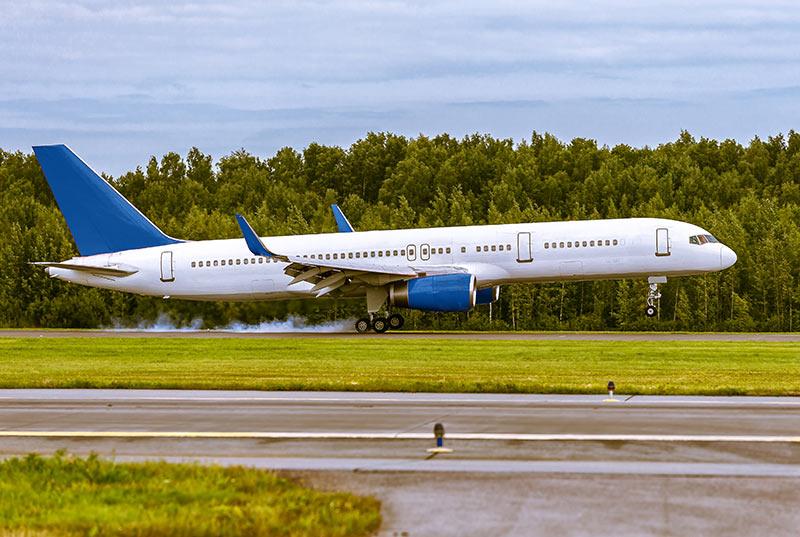
Essentially, the term "Body Protection Tape" is largely self-explanatory: Body protection tapes, also referred to as belly tapes or belly armour, are protective tapes used in the aviation industry to safeguard the underbelly of aircraft from damage caused by debris, gravel, and other foreign objects that may be encountered during take-off and landing.
Applied to the underbelly of the aircraft with an adhesive backing, their purpose is to minimise the risk of damage to the aircraft's belly and other critical components, such as fuel tanks and hydraulic lines. Body protection tapes are typically made of a tough, puncture-resistant material, such as polyurethane or polyurea, which can withstand impact and abrasion.
These tapes made from polyurethane are known for their flexibility and durability, making them an excellent choice for applications requiring impact resistance, while polyurea-based tapes are suitable when exceptional resistance to abrasion and chemical exposure, such as in harsh environments, is required. If additional strength or strong puncture and tear resistance is necessary, materials like aramid and fibreglass can also be used in these types of tapes.
Like other materials used within aircraft, body protection tapes must meet specific standards and regulations, such as those set by the Federal Aviation Administration (FAA) or the European Union Aviation Safety Agency (EASA).
We have seen that different kinds of protective tapes exist depending on the application requirements. However, the difference is not only in the materials they are made of. Just like with human body protection, different kinds of materials have different effects on the skin!
Some key features that make the difference for body protection tapes include:
- Durability: Superior body protection tapes are designed to withstand harsh environments and resist damage from impact and abrasion. Investing in high-performance tapes can pay off in many ways due to their improved protection performance, which can help reduce costly repair damages and result in fewer in-flight delays or cancellations.
- Easy installation: Special body protection tapes can be easily applied to the aircraft's underbelly using an adhesive backing. Depending on the surface structure, the adhesive can be formulated for easy repositioning during application and for providing superior and lasting bond strength.
- Customisable: With our local and global research and development capabilities and many years of expertise, our belly protection tapes can be customised to fit the specific surface and contours of the aircraft's underbelly for ideal performance.
- Removable: Body protection tapes designed with removable adhesives can be easily replaced without damaging the aircraft's paint or other components and offer significant replacement cost advantages over traditional technologies. Instead of replacement with sandblasting, these tapes can be removed by hand and thus minimise material and process costs. This also helps avoid negative effects on the aircraft body caused by the destructive nature of removing the current products commonly used in the market.
Just like for the human belly, consuming the best materials is a key factor — but not the only one. High-performance belly protection tapes have the potential to save time, costs and effort, reduce maintenance and repair costs, and provide increased aircraft availability and reliability. These are a great step towards a nice belly.
But there are a few other things that should be considered. Proper installation and maintenance of body protection tapes is essential for ensuring optimal aircraft safety and compliance with industry regulations. Technical engineers and other professionals responsible for aircraft maintenance should follow best practices and consider any special considerations related to their specific aircraft and operating conditions.
Where special considerations apply in installation or maintenance, such as operating in extreme temperatures or humid environments, you need a partner that understands the requirements and can customise special adhesives or coatings to ensure optimal performance. Similarly, aircraft with unique shapes or contours may require customised tapes to ensure proper fit and coverage.
Body or belly protection tapes can play important roles for the safety of aircraft, and we have seen that innovative solutions can outperform cheaper alternatives and offer significant cost and time advantages. Contact your tape expert and find out how special removable technologies that combine strong adhesion with easy lift and replacement can bring your aerospace body applications to the best shape.