
Extend Cell Life with Customised Compression Properties

Most electric vehicles today are powered by lithium-ion-based battery cells. Applying defined pressure on these cells provides significant advantages by increasing the performance of the cells and extending their lifespan significantly, by more than 100% in some cases. Finding the right pressure for specific designs is not straightforward, especially as these cells undergo dimensional changes, or breathing and swelling, during charge/discharge cycles.
Weilin Deng, Senior Research Engineer at Saint-Gobain® Research North America, will share insights into why external pressure plays a key role in LIB (Lithium-Ion Battery) lifetime performance and why tailored pressure is essential.
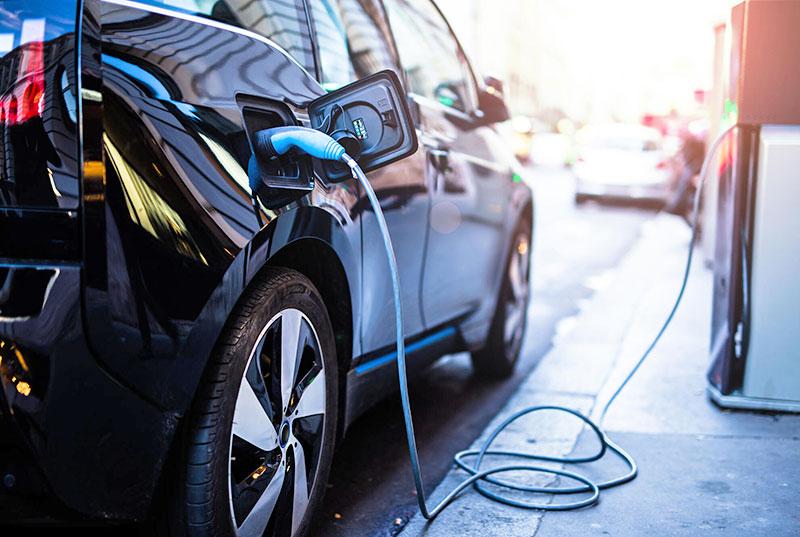
Like muscle fibres powering human movement, lithium-ion cells in modern EV batteries are the engines that propel electric vehicles. And just like muscle fibres, lithium-ion cells undergo expansion and contraction cycles, the so-called breathing of the cells. This is a reversible dimensional change during a charge/discharge cycle caused by lithium ions moving back and forth between anode and cathode.
When muscle contraction works against resistors, the muscle tends to increase in volume over time. While this mechanism is often desired as an adaptation to training, engineers try to avoid or minimise a similar mechanism for battery cells. Unfortunately for engineers, the expansion of cells is not fully reversible — after many charging/discharging cycles, the cell volume and thickness increase irreversibly, the so-called swelling. Several factors can contribute to swelling including solid electrolyte interface (SEI) growth, lithium plating, gas formation, etc. This cell swelling is a concern for the cycle life, safety and performance of today’s lithium-ion batteries as it leads to cell ageing and capacity degradation over time.
LIB cell breathing and swelling cannot be fully avoided today. However, by applying pressure on the cells, not only can the cell expansion and swelling be reduced, but their performance can also be maximised, resulting in an extended cell lifespan. Insufficient pressure has limited effects, while excessive pressure can damage cells, reduce their performance, and pose safety risks. Thus, finding the ideal compression force for specific battery designs is important.
Weilin, what is meant by customised compression properties of compression pad and how do they differ from standard properties?
To find the ideal pressure on LIB cells, cell chemistry and the specific design of the battery module/battery pack need to be considered. There is no “one-size-fits-all" solution. After analysing the specific application requirements, we can start optimising material properties in different ways. By changing material formulations, e.g., adjusting resin formulation, varying crosslinking density, or using different filler types and loading, the material can be tuned and tailored to certain extents.
Together with innovative material design such as the combination of different materials, varying geometries and material of corrugated or patterned structure, microstructure of polymer foam (e.g. open vs closed cell, pore size, wall thickness, etc.), and other parameters, standard properties can be modified to achieve significant advantages through customised solutions.
What are the benefits of customised compression properties?
The most important benefits of customised compression solutions are that these materials fulfil the requirements of the application best and allow for maximised performance of the cells, reduced cell swelling through exactly defined pressure, and therefore extended lifetime of the battery pack with high power output even towards the end of the battery's life.
Customisation does not necessarily mean developing the most expensive materials. It is about finding the right materials, which can also help avoid over-engineered solutions.
How does Tape Solutions fulfil these customisation requests?
Of course, I cannot go into the details here, but through material characterisation testing related to EV battery applications, we identify which materials from our broad portfolio would fit best as a starting point. With accurate mechanical models, a digital twin can be developed.
Sophisticated digital tools help to recommend the “ideal” material and thickness based on a specific battery module design to achieve the target compression properties.
What is a digital twin and what added value does it provide for customers?
A digital twin allows for more efficient material screening by emulating the application in digital simulations. This helps to explore a large design space, such as varying material type and thickness, and recommend optimal material and thickness without the need for physical tests at this stage.
These tools help to identify suitable options faster, which can then be further processed for final designs.
This offers significant advantages as it saves time and costs for testing in laboratories and provides a quick turnaround in RFI/RFQ processes. By verifying simulated results with testing actual materials in our state-of-the-art research and development centres in-house, we ensure customers benefit from our EV expertise and fast solutions.
Can you provide examples of applications where customised compression properties are essential for extending cell life?
Of course. For pouch and prismatic cells with liquid electrolyte, customised compression is important as repeated expansion and contraction of the electrode material will cause separation among their stacking layers if no pressure is applied. Tailored compression can also minimise the risk of high local current density and accelerated side reactions in the cell. On the other hand, if the pressure is too strong, the crystal structure of electrode materials can be distorted, SEI layers could be damaged, and ion transport paths could be hindered.
Therefore, optimal pressure helps to ensure good contact between battery components (anode, cathode, separator) and to prevent excessive swelling and thus avoid potential delamination, while it does not lead to battery component failure.
In lithium metal anode-based batteries, customised pressure can suppress the growth of lithium dendrites (needle-like structures) that could cause internal short circuits and safety hazards. Customised cell pressure helps mitigate this risk.
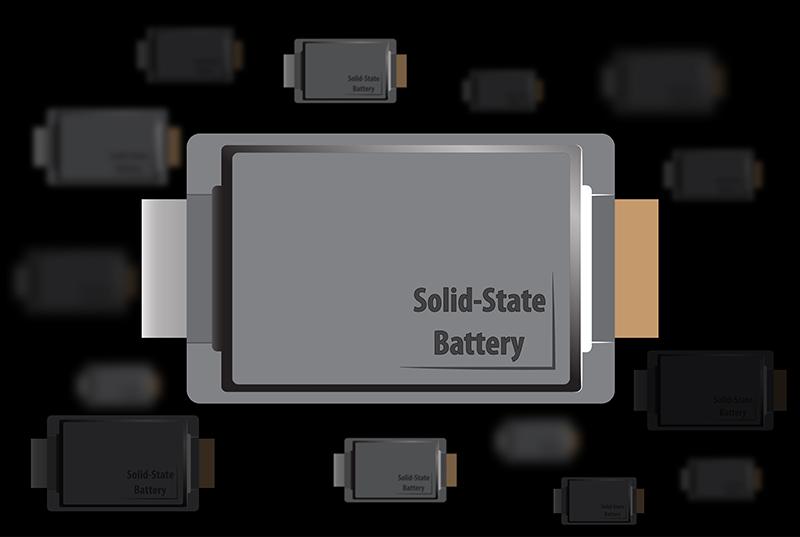
In solid-state-battery (SSB) applications, customised pressure helps to ensure adequate contact between solid-state electrolyte (SSE) and electrode to establish a low-impedance interfacial connection for better Coulombic efficiency. However, excessive compression forces can lead to detrimental effects such as SSE structural fractures and premature short circuits.
Thank you very much, Weilin, for helping to understand how customised compression materials can be designed to resist permanent deformation (compression set) and continue providing tailored support throughout the battery cell's life, ensuring that battery cells function optimally over time.