
Are Alternative Battery Chemistries Reinventing Battery Energy Storage?

Global energy systems are undergoing a structural transition: renewables now account for roughly 30% of the global energy mix, with solar and wind driving most of the growth, according to the International Energy Agency (IEA). In Europe, renewables supplied 54% of the EU’s electricity in Q2 2025—a milestone where solar generation surpassed nuclear power for the first time.
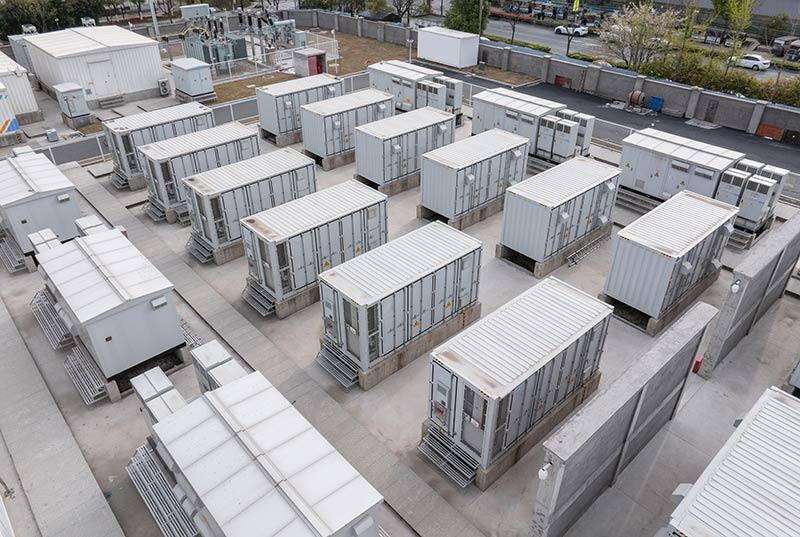
This rapid expansion of variable renewable sources introduces grid stability challenges, making Battery Energy Storage Systems (BESS) essential for balancing supply and demand. While lithium-ion technology dominates today’s BESS landscape, engineers are increasingly exploring alternative chemistries such as sodium-ion, lithium-sulphur, and zinc-air. These options promise improvements in cost, sustainability, and energy density. In this article, we examine why these chemistries matter, what design considerations they bring, and how innovative tape solutions could help design even more efficient BESS. As renewables surge, the pressure mounts to store energy safely, affordably, and sustainably. The next battery breakthrough could reshape how we power our cities and protect our planet.
In this article
Lithium-ion (Li-ion) batteries dominate today’s BESS for good reasons. They offer high energy density, relatively long cycle life, and proven scalability from small residential systems to large grid-scale installations. Li-ion technology has enabled rapid deployment of renewable energy by providing fast response times and efficient charge-discharge cycles, which are critical for stabilising grids with variable solar and wind inputs.
With the help of innovative tape materials, engineers can further improve the safety, performance and lifespan of Li-ion-based BESS. Advanced compression pads that apply continuous pressure to the cells with optimised CFD (Compression Force Deflection) help extend load cycles and lifespan. Microcellular polyurethane foams like our Norseal® PF100 or PF47 Series allow more cells inside a pack and therefore increase its performance, while the Saint-Gobain® Norseal TRP Series with fire-blocking characteristics minimises the risk of adjacent cells going exothermic and helps to prevent the propagation of a thermal runaway event from one cell to another, protecting the battery system.
Aside from safety concerns due to high energy density, Li-ion is not without limitations and challenges. They require various high-end materials and some, like lithium and cobalt, face supply chain volatility, geopolitical and sustainability risks. Even though lithium prices could fall further due to the discovery of a massive geothermal brine source in Germany, Li-ion systems still represent a significant investment, and recycling remains technically challenging.
Emerging alternative chemistries such as sodium-ion, lithium-sulphur, and zinc-air aim to address these limitations. They promise:
- Lower Material Costs: Sodium and zinc are abundant and widely available.
- Improved Sustainability: Reduced reliance on critical minerals and easier recycling pathways.
- Enhanced Performance for Specific Applications: Lithium-sulphur offers ultra-high energy density for EVs, while zinc-air and sodium-ion provide cost-effective solutions for long-duration grid storage.
Let’s take a closer look at these technologies and where advanced materials, such as high-performance tapes for insulation, thermal management, and chemical resistance, become critical enablers for safe and efficient integration.
Sodium is abundant and widely distributed, making these batteries less vulnerable to supply chain volatility compared with lithium-based systems. This translates into lower overall system costs and improved sustainability. As sodium-ion cells generally operate at a lower risk of thermal runaway than Li-ion, there are fewer safety concerns, and less advanced cooling systems and insulation materials are needed. Also, many sodium-ion designs are highly compatible with existing manufacturing, making it possible to utilise existing Li-ion production lines for simplified scale-up.
However, sodium-ion batteries typically store less energy per unit weight than Li-ion, which limits their use in space-constrained applications such as EVs. They can also degrade in humid environments, requiring robust sealing solutions. The good news is that specialised tape solutions with outstanding sealing properties in humid and challenging environments can help engineers improve reliability and longevity, and protect against chemical degradation caused by humidity.
By integrating advanced tape materials as electrical insulation or to support consistent heat dissipation during charge-discharge cycles, engineers working on sodium-ion systems can achieve greater durability and safety, making them a strong candidate for stationary, long-duration storage where cost and sustainability are critical.
As a high-end solution, lithium-sulfur (Li-S) batteries take centre stage thanks to their exceptionally high theoretical energy density — up to five times that of conventional Li-ion. This makes them ideal for applications where weight and energy storage are critical, such as electric vehicles and aerospace systems.
Their ultra-high energy density sets engineers' hearts racing, as it enables lighter battery packs for EVs and drones. In addition, they have the potential to be cheaper, as sulfur is abundant and inexpensive compared with cobalt or nickel. Unfortunately, these advantages come at a price. In particular, the Polysulfide Shuttle Effect — the dissolution and migration of polysulfides during cycling — can cause capacity fade and reduced service life.
In addition, the high thermal instability of the technology and significant volume changes during operation can pose challenges and require sophisticated thermal management and resistance to mechanical stress.
Fortunately, engineers rely on specialised tapes and foams to overcome these challenges. Adhesive tapes with strong chemical resistance can withstand harsh environments, such as sulfur compounds, and compression pads and sealing foams can accommodate volume changes during charging and discharging cycles. By integrating high-performance tapes with controlled thermal conductivity to stabilise cell temperature, engineers can design solutions that bring Li-S batteries closer to commercial viability, offering lightweight, high-capacity storage for next-generation mobility and aerospace applications.
While most other battery energy storage systems are closed systems that need to be sealed from external environments, Zinc-air batteries are partially open designs that use oxygen from the air as a reactant. This significantly reduces weight and complexity compared with closed-cell designs. The combination of long-duration energy storage, extremely high theoretical energy density and low material costs makes this technology a highly interesting alternative to Li-ion.
The non-toxic materials used are very abundant and inexpensive, making these systems attractive for large-scale use. Especially when used to store energy from renewable sources, Zinc-air batteries allow greater footprint reduction as they are much easier to recycle at the end of their life compared with Li-ion batteries.
Before they can become standard in BESS, challenges caused by exposure to air and moisture that can degrade performance over time need to be addressed. The open design requires precise sealing to control airflow and prevent contamination — and this is where special tapes can make the difference.
Innovative sealing materials like Saint-Gobain Norseal products withstand harsh environmental conditions, moisture and temperature fluctuations, can be water- and airtight and conform to complex shapes, and act as barriers or fill gaps, which is essential for precise and reliable control of airflow.
These examples show that different technologies are currently under development to make large-scale energy storage more efficient, reliable and safe. The race for better batteries is on. Will sodium, sulphur, or zinc lead the charge? One thing is certain: the future of energy storage is being built today, one innovation at a time. While each technology has its own advantages and challenges, all have in common that special tape solutions can help engineers overcome these challenges. Talk to your tape expert today and find out what works best for your specific needs.