
Understanding the Benefits of Mica Tape in EV Applications

Did you know that mica materials are often utilized to enhance vehicle safety due to properties such as great thermal resistance and strong dielectric properties?
Mica has electrical insulator properties allowing it to serve as a good insulator to the battery compartments as well as its charging components. It can be combined with pressure-sensitive adhesive tapes to provide great adhesion performance to substrates such as stainless steel or aluminum while still maintaining an outstanding flame resistance and the ability to help mitigate the severity of battery thermal runaway in EV battery packs.
In this article, we interviewed Patricia Adame, EV Applications Engineer at Saint-Gobain® Tape Solutions to explore one key product, CHR FR1000. We discussed its features, benefits and learned more about how it is utilized and applied.

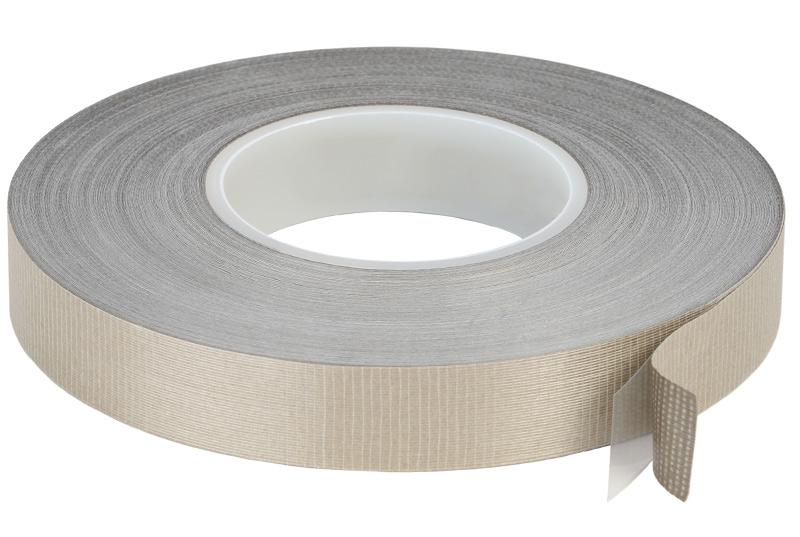
What is CHR FR1000?
CHR FR1000 is a tape constructed of 3 different layers. The first layer or the top layer is comprised of mica with glass fiber reinforcement, the second layer (middle) is comprised of silicone pressure sensitive adhesive and the third or bottom layer is made up of disposable protective liner.
Because CHR FR1000 Tape is manufactured on a mica substrate with high-temperature silicone adhesive, it is very suitable for applications that require flame mitigation.
What is the purpose of this tape?
The intention of this tape is to provide both excellent electrical insulation as well as flame mitigation. A key benefit of this tape is that it can resist temperatures of up to 1000°C, making it a premium solution for aiding with thermal runaway protection.
CHR FR1000 is a robust, thin gauge solution for enhancing thermal protection in certain areas such as solid surfaces, corners that need bending of a substrate or design areas with vulnerable holes. In other words, this product has been specially engineered to help mitigate the severity of battery thermal runaway in EV battery packs and also to fill the requirements of a high-performance electrical insulation under normal operating conditions.
How is this tape applied?
Upon applying this tape to any substrate, design engineers need to first understand the tape’s nature and construction so that a smooth application can be achieved.
Prior to application, it is critical to store the tape in a controlled environment, away from direct sources of heat and sunlight, preferably at a room temperature of 72°F. If this tape is stored at higher temperatures, there is an increased probability for liner lock, which will also impact how easily the liner gets released from the tape.
Next, for a successful bond to occur, the mating surface must be prepared. It must be cleaned of any oils or debris which can be done by using a clean cloth and a 50/50 or 70/30 cleaning mix of isopropyl alcohol and distilled water. Bonding strength is generally achieved within about 20 minutes and improves over the remaining 72 hours.
Finally, during application, the operators need to avoid contamination of the pressure-sensitive adhesive by avoiding the touching of the exposed adhesive layer. If contamination occurs, the adhesion could fail. To achieve a good wet out to the mating substrate, the operator should apply the tape either by hand or with a soft foam or rubber roller.
Please reach out to your Saint-Gobain Tape Solutions rep to confirm the adhesive used on CHR FR1000 is compatible and will create a good bond to the intended mating surface.
Does Tape Solutions have any peel strength data related to the performance of this tape?
Yes, the Applications Engineering team has developed and collected data related to peel strength on aluminum substrates both at RT and after environmental aging. Upon request, our team is happy to connect with you to further review and discuss the results of this data.
How should the liner be removed?
The liner needs to be removed at an angle and the operator should provide some tension. If the operator tries to separate the tape from liner without any tension, there is a potential risk of breaking the bond between the mica layer and the reinforcement which will potentially translate into scrap material.
What is the protocol for testing these products to ensure they can satisfy challenging customer demands?
Our teams perform various mechanical and electrical insulation tests to ensure they can stand up to the challenging demands and conditions required. Upon customer request, we can also test the addition of abrasive particulate options. Our most common test methodology is the 1000°C torch test, 800° hot plate or UL94 test.
Our team is committed to helping provide a wide array of products to aid in the challenging issue of thermal protection in and around the EV battery pack. Undoubtedly, due to its specific properties, CHR FR1000 is a product worth considering when it comes to improving both battery performance and insulation.
With continued research, customer collaboration and co-development, we are dedicated to bringing to you products that can meet today’s demanding requirements and provide complete EV battery pack protection. Connect with our teams today to discuss this product or alternative solutions that might best fit your specific needs.