
Silicone Rubber Solutions to Provide HVAC Efficiency and Indoor Comfort

HVAC (heating, ventilation and air conditioning) systems consume a significant portion of the total energy of a building — about 40–60%! This makes them a prime target for impacting the sustainability of modern-day buildings. To achieve both optimal performance and energy savings, design engineers need to look at the materials used in and around the HVAC system. Silicone foam and sponge materials can be utilized to aid in reducing carbon emissions and to help provide energy savings.
In this blog, let’s take a look at several advantages of silicone sponge and foam rubber in HVAC applications.
-
Providing Tight Sealing
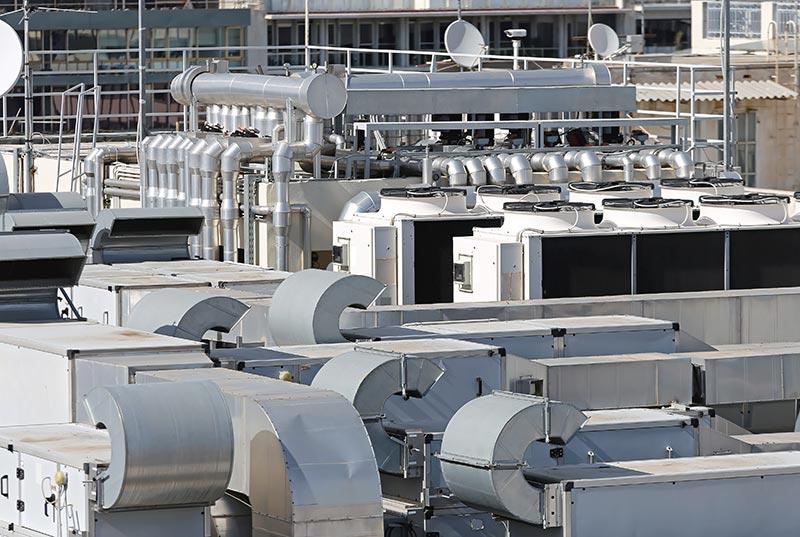
With both compressibility and resilience, silicone rubber gaskets provide the leak-tight sealing needed to accommodate dimensional tolerances and thermal cycling in metal ductwork. These sealing properties are vital for maintaining energy efficiency within HVAC ductwork. Silicone sponges and foam rubbers retain their resilience even after prolonged exposure to high and low temperatures and high mechanical load.In outdoor installations, HVAC systems are exposed to environmental conditions such as water, dust, sunlight and extreme temperatures. Because silicone gasketing materials have exceptional resistance to UV, moisture, freezing temperatures and high heat, they are effective and durable sealing solutions in outdoor applications. For example, centralized HVAC systems, which are common in commercial buildings, rely on components like Air Handling Units. These units are often located on the rooftops of buildings and require robust sealing solutions to withstand common stressors and ensure efficient operation. With exceptional flame retardancy, low toxicity and resilience to environmental factors, premium silicone materials such as Norseal® F-20 are a top choice for outdoor sealing applications such as this.
- Reducing Vibration Transmission
HVAC fans and motors are sources of vibration that can impact an entire building. Because of their cellular structure, silicone gasketing materials can aid in isolating this vibration. Designed gasketing solutions can help prevent noise complaints from building occupants.
- Minimizing Energy Consumption
Modern HVAC systems have dampers that modulate temperatures based on airflow and zone temperature sensors. These dampers stop air from flowing into spaces that do not require heating or cooling and, in this way, help to conserve energy. By preventing unwanted air leaks into and out of HVAC system boundaries, silicone gasketing and sealing materials result in lower energy bills.
Products such as Norseal F-12 are often utilized in applications such as ventilation control dampers. With low compression set, high-temperature stability, general inertness, and the ability to be die-cut, these products contribute to an efficient HVAC system design.
- Enhancing Indoor Quality
Silicone solutions can aid in providing an improved indoor environment. Due to high sealing performance, building occupants can enjoy cleaner air and greater health benefits due to limited exposure to dust and other pollutants.
Optimizing HVAC efficiency begins at the design stage when engineers are tasked with selecting the right components for optimal performance and energy savings. When making material selections, factors such as temperature resistance, compression and environmental conditions influence the choice of gasketing materials. There is no one-size-fits-all solution.
Connect with our team to learn more about which solutions can provide long-lasting durability, minimize the need for repairs and ensure indoor comfort, safety and energy savings.