
How Foam Tapes Can Help Maximize Acoustic Comfort

“The Sound of Silence” is not only a popular song but silence is often the sound many of us like to hear when we need to focus, relax or step away from daily distractions.
Feeling good in living spaces or during travel is essential and there are common conditions that influence comfort, which can vary throughout the day or in changing environments. Space configuration as well as the materials utilized within living spaces contribute directly to the sense of wellbeing people feel. For example, noise isolation can be crucial for ensuring quality sleep, good health as well as reducing stress levels and fatigue.
With a growing number of noise sources, creating acoustic comfort is becoming increasingly important for improving daily life.
In this post, let’s explore how innovative foam tapes can enhance comfort and wellbeing at home, in the office, in the car, in airplanes or wherever we are!

Acoustic comfort is the perceived state of well-being and satisfaction with the acoustical conditions in an environment.
Source: Sciencedirect.
Sound can have positive and negative effects on people. If it reaches a level outside one’s comfort zone, it becomes noise. If people are exposed to noise over a longer time, it becomes noise pollution.
In living spaces, noise pollution comes from many sources: traffic, people walking and talking, appliances, etc. To limit interior and exterior noise pollution, special isolation and acoustic correction solutions and materials are available. Using these materials can create a better environment, when it comes to the sounds we hear.
Limiting noise pollution is particularly important in places of learning and working, such as schools, offices, or where maximum concentration is needed. In these environments, it is crucial to control background noise, provide a differentiated response to the diversity of needs and use healthy products. Dedicated solutions and concepts help to make learning and working easier, less stressful, less tiring and therefore more productive.
In enclosed spaces there can be a multitude of sound sources from the exterior or interior. The resulting sound waves travel through air or structures and understanding the transmission of sound helps to control it. So how does sound transmit in buildings?

Sound insulation between two spaces is not determined only by common structures like walls or flooring. All the other parts of the construction — side walls, ceilings, the floors under the walls — can transmit sound.
Direct sound transmission is when sound waves hit a structure and transmit through it as vibrations. On the other side of the structure, these vibrations can again generate sound waves with less energy than the original one because of the energy conversion within the structure.
Different to direct sound transmission, sound can travel along parts of the hull other than the common wall or floor. This is called flanking sound transmission and can be very important. However, improving the common wall or floor may not significantly change the combined sound insulation.
No construction completely stops sound. But there are effective ways to reduce the level of the transmitted sound to achieve a state of acoustic comfort. Foam tapes can significantly improve acoustic comfort and are used in modern buildings, cars, trains, planes and in different applications.
Often, decoupling structures is used to reduce sound waves traveling through solid materials. In other words: By mechanically separating structures, it makes it harder for sound to pass through. With decoupling, space is created between structures. This can work well for noise reduction in certain frequencies. But in low frequencies, the effect can be negative because the sound waves transmitting through the air in between can cause the other structure to vibrate even stronger. Resonance is the terminology for the above effect.
This is where foam tapes play a vital role. The foam material helps to decouple structures, fill empty spaces with air- and watertight material to create reliable seals. The specific material texture significantly improves sound dampening by absorbing, or more precisely converting, sound wave energy.
Noise health effects are the physical and psychological health consequences of regular exposure to consistent, elevated sound levels. Noise from traffic, in particular, is considered by the World Health Organization to be one of the worst environmental stressors for humans, second only to air pollution. (Source: Wikipedia).
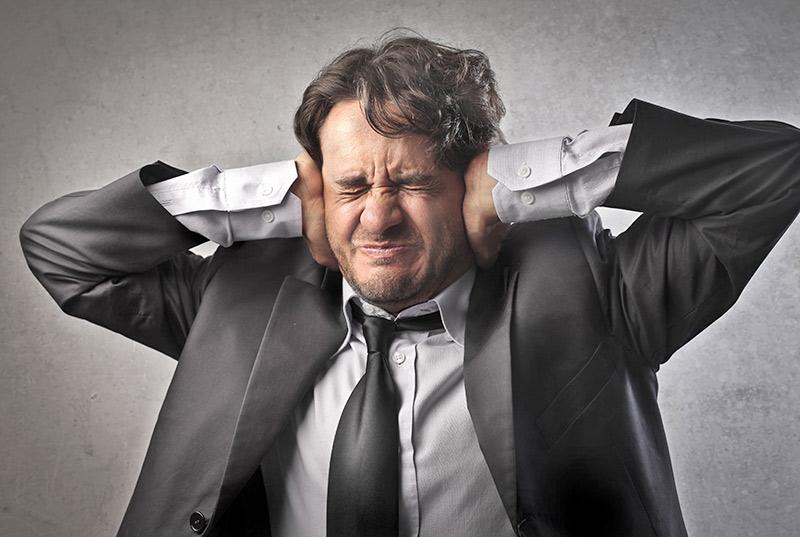
Noise can cause hearing loss, tinnitus, can have cardiovascular effects or psychological impacts like stress for humans and animals. Creating environments with high acoustic comfort by utilizing modern foam tapes can allow us a better acoustical experience and enjoy the sound of silence.
And if you like the song and prefer to listen to it loud, your neighbors will be thankful if the right foam tapes and other insulating materials have been used.