
How Tapes Can Give Headwind to Electric Aviation and eVTOL

Electric vehicles and other forms of mass transportation like aviation are at the center of the current shift to reduce the amount of combustion engines and use of fossil fuels. The tremendous achievements in battery technology and electric motors for electric cars has seen a big push in past years, paving the way for a transfer of technology to other transportation forms like aviation.
This can be seen in a first but fast-accelerating shift from conventional fossil fuel-based propulsion systems to electric solutions in aviation and eVTOL (Electric Vertical Take-off and Landing vehicle). Fasten your seatbelts, put the backrests vertically, make yourself comfortable and lift off on a journey with us on how special tapes for EV batteries can help reach new horizons in electric aviation.
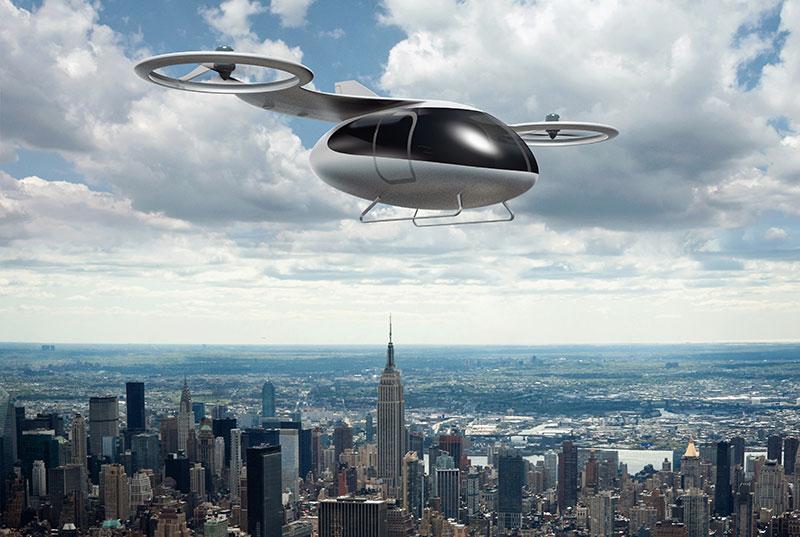
After a temporary decline due to COVID regulations, domestic, international, freight and passenger air traffic is one of the fastest-growing sectors today. In addition to making combustion-based aviation more efficient and safe fossil fuels, new technologies like electric aviation are getting bigger on the radar of manufacturers and airlines.
The main and most obvious reasons behind exploring electric aviation are environmental concerns. Alternative and bio-based fuels are seen as a transition technology, but also electric aviation can help reach the goal to switch to more environmentally friendly options than traditional fossil-fuel-powered aircrafts.
But there are other positive effects that make switching to electric aviation highly interesting for companies. Fewer moving parts and simpler construction of electric motors require less maintenance and the higher performance of electric motors compared to traditional engines could result in improved speed, range, and efficiency. In sum, these could lead to significant cost savings for airlines and manufacturers.
For passengers, people living and working near airports and nature, electric airplanes could have another significant advantage over traditional technologies: Noise reduction. Electric motors are much quieter, which could lead to reduced noise pollution and could allow airports to extend starting- and landing periods where currently strict regulations for noise prevention, like during the night limit airlines.
Unfortunately, there are still challenges that prevent electric aviation and eVTOL aircraft transport from overshooting into new heights as we will see in more detail in the next section.
Although battery-electric propulsion has enormous potential in future aviation, there are some challenges and limitations that are currently keeping implementation on the ground. In an airplane, every kilogram counts, and batteries are heavy which is contradictory to the efforts of reducing weight in aviation. Therefore, one of the biggest challenges is to develop lightweight batteries with extreme power density and the capacity to power aircrafts for extended periods or long-haul flights.
The risk of fire can be a serious threat in electric vehicles (EV), but the requirements for an airplane without the option of immediate embarkment are even more important. Engineers still need to develop ways to reconcile safety of passengers and the airplane with the extreme power density requirements of batteries for aircrafts.
And it takes time to charge and recharge such enormous batteries. Besides the need to design and install new charging infrastructure, the need for ultra-fast charging can become a hurdle as the time on the ground needs to be minimized for competitive efficiency.
We learned that electric aviation could save costs but as technology is still in its early stages, immense investments are required to develop and manufacture battery-electric aircrafts.
None of the above is entirely new, all these challenges existed for EVs as well — and have been solved with innovative materials and technologies. Learn how special materials helped to overcome battery-electric challenges on the ground and how they could help electric aviation reach new horizons.
Typical compression pads such as polyurethane based Norseal® PF Series are designed to optimize the CFD (Compression Force Deflection) curve and keep cells under ideal pressure during charging and discharging, allowing improved performance and lifetime of the battery pack. Silicone materials such as Norseal TRP1000 can help to mitigate thermal runaway (TRP) and enable batteries with higher power density and durability. FR1000 Mica Tape can also be used to protect areas of the pack where high temperature and flame resistance are required.
Our broad range of Thermal Interface Materials (TIM), Pack Seals and Thermal Runaway Propagation Protection (TRP) solutions are at the forefront of maximizing safety in EV batteries and the in-depth expertise our teams developed over years could help transition and tailor technologies into other markets like electric aviation and eVTOL aircraft.
As fast- and ultra-fast charging can have a significant impact on efficiency and profitability of electric aviation, our knowhow and unparalleled portfolio of solutions for EV charging equipment could help engineers in other industries solve issues around electric and high-current isolation, thermal management, shielding and other applications, allowing to minimize charging time and downtime of aircrafts.
To make sky the only limit in electric aviation of the future and not energy storage or charging infrastructure, manufacturers can rely on existing expertise and solutions from other areas. Of course, this new trend is just rolling onto the runway but our tape experts have already checked in to provide the necessary thrust for a successful lift-off. Now it’s your turn to save your ticket to new directions.