
Construction Under Pressure

Construction is considered a compelling economic indicator because it reacts early, strongly, and visibly to changes in the broader economy. Typically, it changes before the overall economy does. And we see a lot of economic changes today due to many reasons like geopolitical events, supply chain changes, political uncertainties, conflicts and many more. Therefore, it is not surprising that construction currently is under pressure and is not only dealing with volatility.
It is dealing with speed, labor constraints, and higher expectations around sustainability at the same time. New methods like automation and modular building promise progress, but they also raise the bar for consistency and reliability.
When projects run late, it is rarely because of one big failure. More often, small interface problems create rework, downtime, and cost surprises. In this article, we will take a closer look at five challenges with Richard Austin, Global Brand Manager Protection Tapes & Construction Market at Saint-Gobain® Tape Solutions, and practical ways advanced tapes and foams can help teams reduce risk and move faster with confidence.
In this article
The Saint-Gobain purpose brings it to the point: Making the world a better home.
For most people, home is closely connected to a building or environment where they feel comfortable and safe. In most regions worldwide, there is a growing demand for homes which puts the construction industry under pressure.
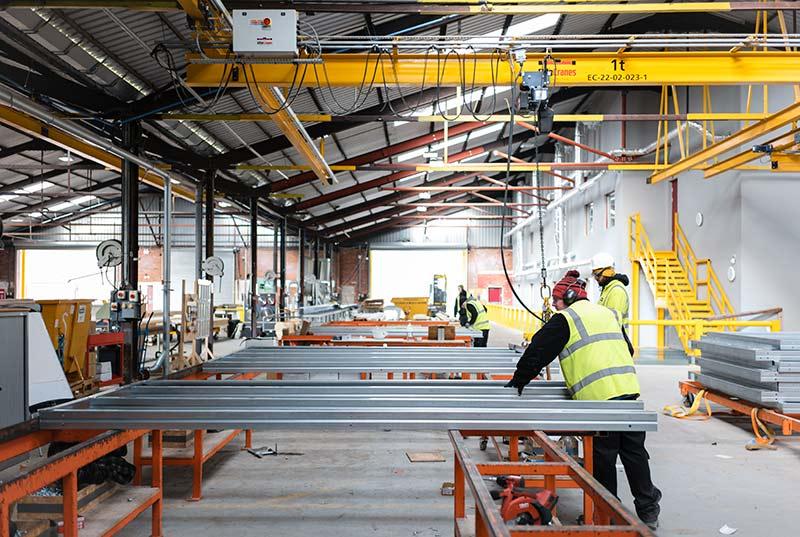
Not only that more homes are needed, they also need to fulfill the needs for safety and comfort of their inhabitants. But safety is not only key when the building is finished, it is becoming more and more important during the construction process and the industry has to find solutions to build faster and safer for their workers.
One solution is to reduce the need for manual and on-site work. Together with automation, robots and cobots improve construction speed and safety, which also increases efficiency and reduces costs. But how can tapes and foams help?
Richard, in construction projects, where do you see the biggest safety-to-productivity link today?
In construction, value often comes from solutions that are easy to apply, protect against moisture and vibration, and reduce labor time. This is one reason why engineered tape and foam solutions continue to gain share in building envelope and component applications.
In the rapid shift toward automated, off-site construction, adhesive tapes are playing a pivotal role alongside robotics and digital workflows. In high-throughput environments such as modular assembly and prefabrication, pressure-sensitive tapes, including acrylic foam, polyurethane (PU) foam, and PVC tapes, are increasingly replacing mechanical fasteners and liquid adhesives to unlock new levels of efficiency and safety.
Acrylic foam tapes, widely used for structural bonding of panels, trims, and façade elements, deliver immediate handling strength and uniform stress distribution, making them ideal for robotic application and continuous production lines.
Meanwhile, polyurethane foam tapes provide critical gap-filling, vibration damping, and thermal break capabilities in wall systems, ensuring consistent fit which is an essential requirement for automated assembly.
And PVC tapes also play a key role in bundling, insulation, surface protection, and sealing applications, where speed, flexibility, and durability are essential.
Another example is the use of extruded foam profiles, such as PVC, TPE, and butyl coated foam profiles, which are increasingly manufactured and integrated into building components such as window spacers, façade gaskets, sealing profiles, and structural insulation elements within automated, off-site production lines. These profiles are produced in continuous, highly controlled extrusion processes and then robotically cut, placed, and bonded into assemblies using foam and acrylic tape systems.
The combination of pre-formed foam geometries and pressure-sensitive tapes allows manufacturers to eliminate secondary machining, simplify alignment, and maintain precise tolerances at high production speeds. By eliminating cure times, reducing the need for drilling or welding, and simplifying application processes, these material systems align directly with the core benefits of automation: faster cycle times, improved worker safety, and higher build consistency.
As construction continues its transition toward automated and robotic manufacturing, the integration of engineered tape systems and extruded foam components is emerging as a critical enabler of both productivity gains and safer working environments.
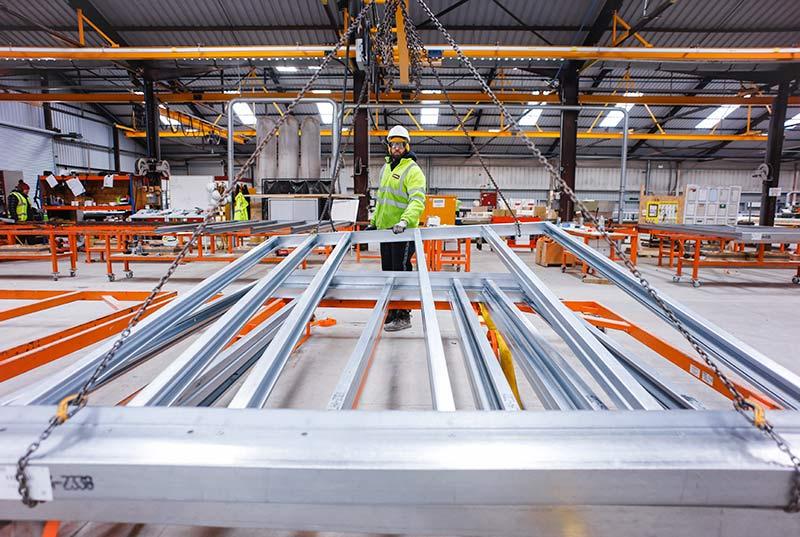
The need for new solutions is stress but has always been the strongest driver for innovation. That’s no different in construction. With construction under pressure, new processes, solutions and materials are being developed. New shapes and forms, building technologies and ways of thinking go hand in hand with the challenges the construction industry faces.
We see that more sustainable building materials are gaining broader use, from bamboo and reclaimed wood to recycled concrete and light steel solutions. This accelerates variation in substrates and surface conditions across projects.
While this is highly interesting, this variation makes it hard to standardize. It also increases the chance that a solution works on paper but fails in the field because the interface was not designed for real substrate conditions. In construction, customers rarely rely on one material class. They combine tapes, sealants, membranes, and hybrid systems depending on the joint, the surface, and the region.
However, engineered tapes and foams can add value when they simplify the solution landscape. A good example is when one component provides sealing plus damping, or sealing plus fire-related performance, so teams can reduce SKUs and reduce variability in installation quality.
Richard: Which new construction material trend do you see today?
Materials are no longer designed solely for performance; they are increasingly engineered for machine handling, tolerance variability, and rapid bonding, often replacing traditional mechanical fastening with tape-based solutions.
In this context, acrylic foam tapes, polyurethane foams, and extruded profiles play a critical role by enabling tool-less joining, simplifying automation, and supporting continuous, high-speed production. As a result, construction materials are evolving into assembly-ready systems optimized for factory environments rather than traditional job sites.
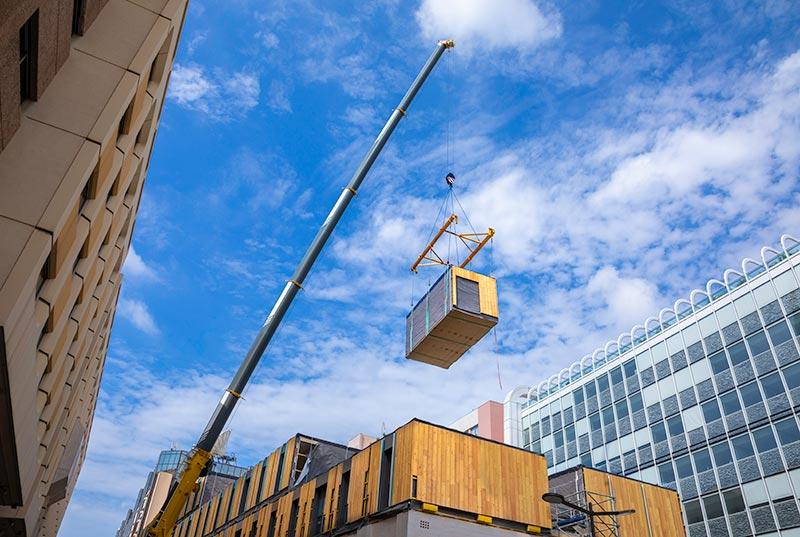
Modular or prefabricated construction changes how structures are built and can reduce build time significantly. It also improves workplace safety and can reduce the number of materials needed to erect a building.
Modular and prefab construction shifts the quality burden to the factory interface and the on-site assembly interface. Airtightness and long-term sealing performance become critical, because small gaps create energy loss, moisture ingress, and rework. At the same time, regional rules and substrate differences make it difficult to communicate one consistent value proposition.
Innovative tapes and foams can support modular building where fast, clean application and repeatability matter. They can improve air and water tightness, support bonding, and enable automation-friendly processes such as continuous application for complex shapes in some systems.
Richard: If you could standardize only one interface in modular projects to improve performance and installation quality, which one would you choose and why?
One interface in modular construction that demands standardization to create meaningful gains in performance and productivity, is the panel-to-panel or module-to-module joint. This connection point is where many of the industry’s most persistent challenges originate, directly affecting air and water tightness, thermal efficiency, acoustic performance, and long-term durability.
While factory-built modules themselves are typically produced with high precision and quality control, installation variability at the joints, often relying on field-applied sealants and mechanical fastening, introduces risk, rework, and inconsistency.
Standardizing this interface as an engineered system, incorporating pre-compressed foam profiles for tolerance management and acrylic foam tapes for simultaneous bonding and sealing, offers a clear path forward. Such an approach enables uniform compression, eliminates cure times, reduces dependency on skilled field labor, and supports faster, more repeatable installation processes.
Affordability is a major factor especially in the housing sector and the recent Iran conflict has put affordability on the agenda of many governments worldwide. There is a structural housing shortage currently and millions of additional homes are needed. This leads to a strong demand signal especially for lower cost buildings.
When budgets and timelines are tight, people avoid anything that slows installation or creates follow-up work. That is why solutions that install fast, reduce post-treatment, and limit damage during removal or replacement become increasingly valuable. At the same time, buyers and building owners expect long-term performance. So “fast” must still mean durable.
In this scenario, innovative multi-functional tape solutions can be answer. In building and construction applications, tape and foam solutions are often selected because they support fast assembly and provide consistent results. When designed correctly, they can deliver sealing and bonding without cure time, reduce labor, and help teams hit schedule targets.
Richard, where do you see the biggest gap between “installed fast, easy and cheap” and “performs for years” in construction today, and how could innovative tapes help?
The largest gap in construction today between “installed fast, easy, and cheap” and “performs for years” is apparent at the building envelope interfaces, particularly air/water sealing around joints, windows, façades, and penetrations.
These areas are often installed under schedule pressure using field-applied sealants, flashings, or mechanical methods that are highly dependent on workmanship and environmental conditions. While these approaches may be quick and low-cost at first, they often cause long-term issues. These issues include air leaks, water leaks, thermal bridging, and early wear. This makes the building envelope the top cause of performance callbacks. It also leads to higher lifecycle costs.
Innovative pressure-sensitive tapes, especially acrylic foam tapes, advanced sealing tapes, and engineered foam systems, can fundamentally close the gap. Unlike traditional sealants, tapes offer pre-engineered, controlled bond lines and immediate performance, eliminating cure time and reducing installation variability.
There are cities. And megacities. But there are projections that until 2030, there will even be gigacities with about 130 million people. And there will be smart cities.
A smart city is an urban model that leverages technology, human capital, and governance to improve sustainability, efficiency, and social inclusion, which are considered goals for cities of the future (source: Wikipedia). Smart cities focus on improving resource use etc. that include better water infrastructure management through data, improved energy planning that integrates renewables, and stronger real-time communication across stakeholders and systems.
This offers new opportunities but also challenges as i.e. small issues in water systems can escalate if not addressed early. Energy systems also require balance, because renewables are intermittent and cities need power availability across day and night.
For modern infrastructure and building systems, tapes and foams can support protection, sealing, insulation, and durability in harsh environments. They perform as reliable protection in water systems, electric shielding, (renewable) energy production, energy storage, transport and thousands of other applications in smart and conventional cities. These are often the quiet enablers that reduce service interruptions, simplify maintenance, and increase system reliability.
Richard, in smart city projects, where do you see the need for innovative tapes most, and how can material choices improve reliability and performance?
In smart city projects, the greatest need for innovative tape solutions lies in integrating sensors, sealing building envelopes, and supporting renewable energy and mobility systems, where long-term reliability must match rapid deployment.
Applications such as IoT (Internet of Things) device mounting, façade sealing, and EV or solar infrastructure require materials that can withstand environmental exposure, vibration, and thermal cycling without failure.
Advanced solutions like acrylic foam tapes and engineered sealing tapes provide strong adhesion and absorb stress. They also deliver consistent sealing in many environments across diverse substrates. This reduces reliance on mechanical fasteners that can corrode or loosen over time.
By using UV-stable adhesives, closed-cell foam, and pre-engineered bonding systems, teams can improve durability. They can reduce maintenance and speed up construction which supports faster, scalable building that meets smart city needs.

If your construction projects are under pressure to move faster while improving long-term performance, comfort and safety, our team can help you review the requirements and identify tape and foam solutions that reduce complexity and improve reliability of the buildings of the future.