
Building Envelopes That Endure: Integrated Tape Systems for Airtight, Fire‑Safe, and High‑Performance Construction

Some of the world’s most enduring buildings, from the Pantheon and Great Wall to modern icons like the Burj Khalifa or the Sydney Opera House, show that long‑lasting structures rely on resilient materials, precise detailing, and construction practices tuned to their environment. Whether built 2,000 years ago or in the last decade, these examples remind us that durability is never accidental.
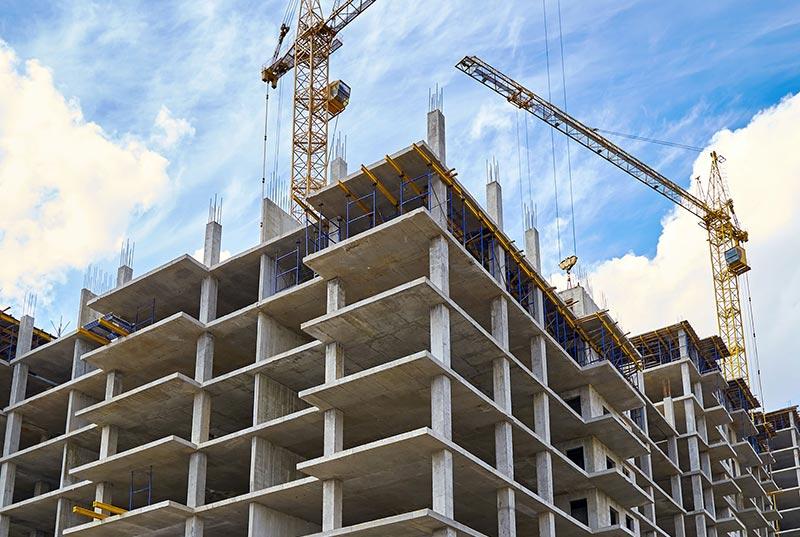
That same principle guides today’s building environment. As expectations for energy performance, fire safety, and climate resilience grow and as buildings become taller, tighter, and more complex, the demands placed on the building envelope rise significantly. At the same time, rapid adoption of modular, unitized, and off‑site construction increases the need for efficiency, consistency, and installation speed.
At Saint‑Gobain® Tape Solutions, we carry this tradition forward by engineering materials that last, protect what matters, and strengthen the performance of modern building envelopes.
In this article
- Today’s Building Envelope Requirements: Setting the Context
- What Does the Building Envelope Market Look Like Today?
- What Do the New Requirements Actually Mean?
- How Integrated Building Envelope Systems Deliver Continuous, Code‑Ready Performance
- Why Saint‑Gobain Tape Solutions Is the Right Partner
- What Benefit Do Tapes Bring that Other Materials Cannot
- How Do Trends Map to Tape Innovation?
- How We Deliver, from Technology to Execution
What can we do?
Our teams design tapes to function as coordinated system components, compatible with membranes, glazing assemblies, and key interface junctions, to support airtightness, moisture control, and long‑term durability across the entire building envelope.
And, in this blog, we’ve gathered the questions we hear most often about airtightness, fire performance, moisture management, off‑site installation, and system compatibility, and highlighted how various solutions point toward integrated tape and membrane systems.
What's really changing?
Modern building envelopes are engineered systems expected to deliver verifiable performance across climates and building types. Whether a project faces coastal wind, northern cold, or warm‑humid moisture loads, the building envelope must operate as an integrated whole.
As regulations tighten, specification‑driven systems, rather than standalone products, have become the most reliable path to compliance. Project teams now prioritize components with verified, tested performance that integrate seamlessly with surrounding building envelope layers and contribute to long‑term resilience.
The strongest demand is concentrated at façade transitions, roof‑edge details, and other high‑risk interfaces, where proven system behavior is essential. These are the areas where market growth continues to outpace general construction.
The market continues to grow, driven by renovation, stricter energy and safety expectations, and rising façade complexity.
Broader building‑envelope investment and energy‑efficiency priorities continue to underpin demand, particularly for façade and roof systems, within a global building envelope market expected to expand at roughly 5.5% CAGR this decade, as regulations and renovation programs emphasize thermal performance and airtightness (areas where high‑performance tapes play a role in system assembly).
Across European building and construction, adhesive tapes remain a leading auxiliary material. Europe represents the largest regional share of the global building and construction tapes market, and the category is projected to grow at roughly 5% CAGR through the medium term. Key applications span windows and doors, roofing, and other building envelope interfaces, where tapes are used for bonding, sealing, protection, insulation, glazing, and weatherproofing.
Expectations for verified airtight layers, sealed transitions, and durable weather protection continue to rise, and certification bodies and energy consultants now expect unambiguous evidence at joints, seams, and penetrations.
Meeting these requirements calls for solutions that come with data, documentation, and repeatable installation methods that can be executed consistently in both the field and the factory. These demands favor materials that can be audited, traced, and installed in a controlled, repeatable way, giving specifiers clearer assumptions and contractors fewer variables.
Fire performance has likewise moved rapidly to the foreground, reinforcing the need for coordinated, system‑level detailing.
Why is fire performance now front‑and‑center?
As façades incorporate combustible materials, ventilated cavities, and glazing, the connections between these elements, like transitions, linear joints, and perimeter seals, become critical to overall fire safety. Viewing these areas as part of a coordinated system, rather than treating them as isolated details, helps maintain fire integrity and reduces risk throughout design and installation.
To support this, many teams now specify Norseal® FS1000 at perimeter and linear joints. Its combination of intumescent, resilient, soft, airtight, watertight, and adhesive‑backed properties allows it to expand during fire while still accommodating movement and maintaining a dependable seal.
Selecting the correct tape, using a clear installation method, and confirming that each detail aligns with the appropriate façade or joint test standard helps ensure that performance is proven, not assumed.
How does indoor‑air quality factor in?
Airtight detailing is a health issue as much as an energy issue. Good airtightness helps keep indoor air clean and reduces the chance of moisture entering walls. Continuous, well‑sealed layers at joints and penetrations support healthier indoor environmental quality and improve long‑term durability.
Delivering this level of precision consistently is challenging in traditional field conditions, which is why the industry is increasingly turning to off‑site and modular construction. Factory‑controlled environments make it easier to achieve tight tolerances, consistent sealing, and repeatable quality. And the attributes that high‑performance building envelopes and indoor air quality goals depend on.
How does off‑site construction change expectations?
Factory workflows depend on predictable processes. Dimensionally stable spacers and clean, fast adhesives align with the precision and speed these environments demand.
In off‑site lines, dimensionally stable spacers and clean acrylic cores play an essential role, supporting repeatable sealing across temperature and humidity swings, common to controlled shop‑floor environments.
Off‑site manufacturers, curtain‑wall fabricators, and modular builders prioritize materials that eliminate variability, support consistent curing, and maintain stable performance across typical shop‑floor conditions.
Across airtightness, fire protection, indoor air quality, and off‑site fabrication, one theme is consistent: building envelope performance depends on system continuity and reliable detailing where materials meet.
In this context, Norseal Sealing Solutions help create continuous, airtight, and weathertight layers at window‑to‑wall, panel‑to‑panel, and perimeter joints (including fire‑relevant interfaces), while Norbond® Structural and Bonding Tapes provide clean, durable attachment for façade panels, glazing accessories, and modular assemblies.
For windows and doors, for example, Norbond T‑Series Tapes deliver durable muntin‑bar attachment and glazing‑partition bonding with OEM‑validated performance, supporting high‑volume factory lines and on‑site installers alike.
For roof interfaces, especially in cold climates, tape‑forward solutions such as Arctic Edge™ workflows and Norseal AST/Extreme Sealing approaches help teams maintain installation speed when primers or heat‑welding would otherwise slow production.
Our spacer, sealing, bonding, and fire‑resistant tapes align directly with the most demanding building envelope transitions.
We support customers with system‑ready materials, standards‑aligned documentation, and application support that helps reduce risk and accelerate approvals.
Our teams work closely with façade engineers, installers, and quality managers across Europe to help ensure details are workable on paper and achievable on site, bridging the gap between design intent and real‑world execution.
Where do tapes unlock the most value?
Certain segments are especially suited for tape‑driven innovation because they sit at the building envelope's “pressure points”, locations where airtightness, movement, moisture, or fire performance must be reliably demonstrated. These are also areas where fast, consistent installation brings clear advantages.
Many teams find that replacing multi‑step wet‑sealant assemblies with high‑performance tapes enhances repeatability and reduces dependency on weather windows or installer‑to‑installer variation.
Where do tapes provide the highest value today?
– Façades: Structural glazing spacing, ACM bonding, perimeter sealing, and air/water continuity.
– Windows & Doors: High‑volume, performance‑driven production and installation.
– Roof Interfaces: Long‑term resilience at high‑stress joints and penetrations.
These segments share a common requirement: the need for predictable, clean, and durable solutions that support both design precision and long‑term weather resistance.


Tapes deliver precision, speed, and predictable performance, consistently repeatable across sites and factories. They reduce interface risk by replacing multi‑step assemblies with single‑step, testable solutions. For architects, this means clearer design assumptions; for installers, fewer variables; and for building owners, greater confidence in long‑term performance.
How can the Tape Solutions portfolio align in this market?
Our portfolio is built for critical interfaces:
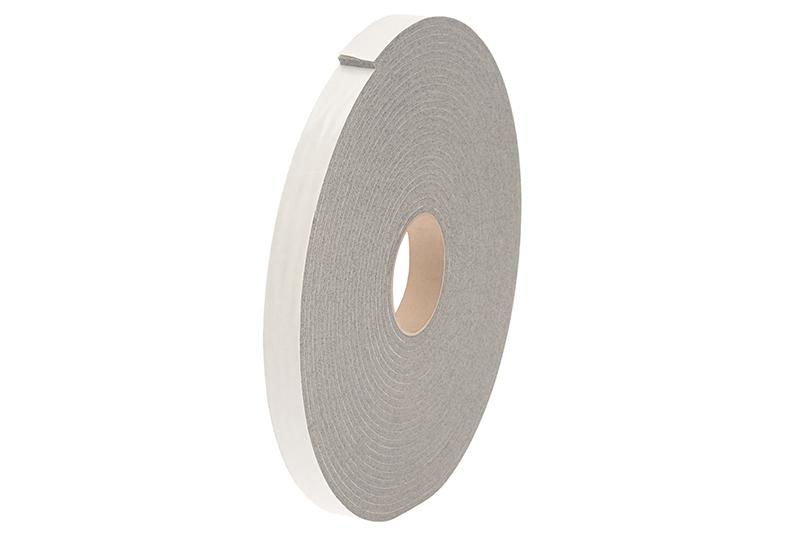
- Thermalbond® Spacer Tapes for structural glazing
- Norbond Bonding Tapes for panels and components
- Norseal Sealing Tapes for airtightness, watertightness & movement
- Norseal FS1000 & PS V-0 and co-developed products for fire performance
We pair these with documentation, detail reviews, and expertise of materials and applications, differentiators consistently cited by solution‑brand leaders. This support model helps ensure that façade transitions, module joints, and window perimeters achieve the performance levels set out in the specification, even as project timelines compress or site conditions fluctuate.
Four shifts are reshaping building envelope specifications, favoring solutions that do more with less, deliver factory‑grade consistency, document performance clearly, and come with hands‑on support. These include:
- Hybridization (one tape, several jobs). Multifunction tapes combine air tightness, weather sealing, movement accommodation, and, where required, documented fire performance in a single solution, reducing complexity and installation risk.
- Off‑site construction (factory precision). As more of the building construction market moves into controlled factories, materials must deliver dimensional stability, predictable behavior, and clean, fast installation.
- Policy‑driven performance (prove it, don’t promise it). Stricter energy and fire‑safety expectations require verifiable, standardized, aligned data to streamline submittals and approvals.
- Technical support (details decide outcomes). High‑performance building envelopes depend on correct installation at critical transitions. Our experts review details, support mockups, provide on‑site coaching, and set practical QC checks so what is specified is installed consistently and performs as intended.
Saint‑Gobain Tape Solutions strengthens building envelopes with systemized spacer, bonding, and sealing technologies across façades, modules, windows, doors, roofs, and transitions. We engineer details to be buildable and repeatable, support decisions with standards‑aligned data, and help teams with systemized kits and training to reduce rework and improve speed.
As part of the broader Saint‑Gobain construction ecosystem, we coordinate solutions across membranes, glazing, insulation, finishing, and construction chemicals.
The result is one partner delivering systems designed to perform, documented to comply, and installed with confidence over time. Connect with our teams to learn more today.