
EV Battery Recycling Trends
The switch to electric mobility is in full swing. As tremendous achievements have been made to increase range, charging speed, safety, performance and longevity of batteries, other areas come into focus for pioneering technologies. Even though innovative foam and tape materials help to maximize charging cycles and durability, even the best battery design today does not last forever. But what happens when an EV battery reaches its end of life?
This can be a challenge and a huge opportunity at once, therefore it is important to stay up to date with the latest trends, methods, challenges, and solutions in EV battery recycling and what is beyond. We talked with Elayne Thomas, Senior Research Engineer at Saint-Gobain®, about how a battery is treated at its end of life, which challenges occur and how these are currently addressed.
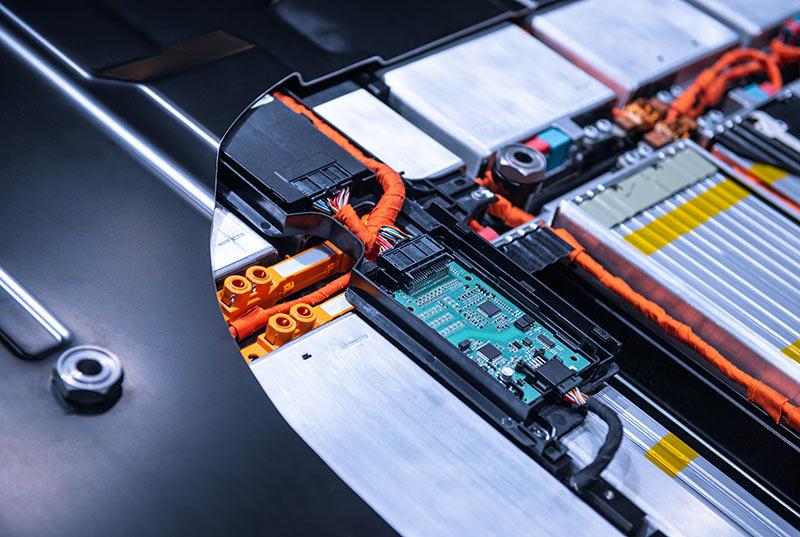
Batteries are the heart and soul of electric vehicles and when they reach their end-of-life, simply putting them to waste is not an option to reach ambitious sustainability goals. Instead, circularity and recycling are often-used terms, so let us see which current options exist at the end of an EV battery life.
Elayne, what options are available for an EV battery at its end of life?
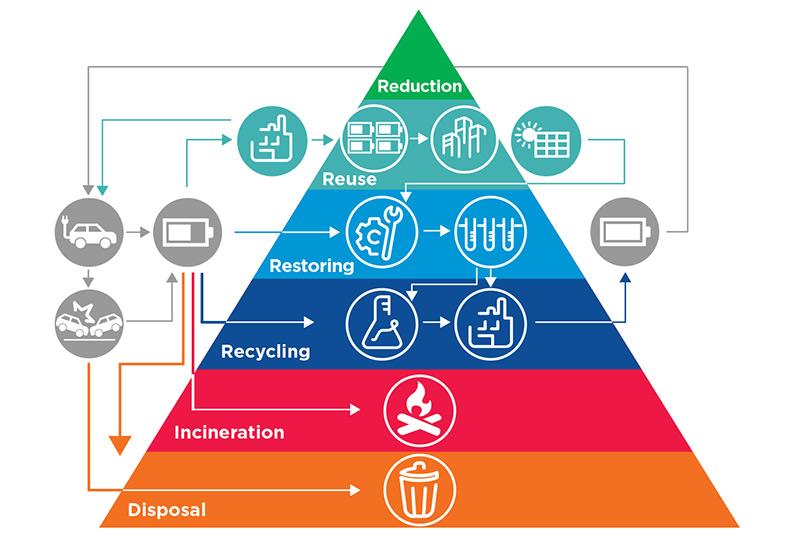
When batteries reach the end of their automotive life, there are many pathways depending on their state of health and the infrastructure available to treat the battery. Incineration and disposal are the least energy efficient and do not allow for any materials recovery. Recycling involves breaking down the battery into its individual components and extracting valuable materials for refinement and reuse. This process typically involves shredding the battery and separating the materials using energy-intensive chemical or physical processes to recover as much of valuable materials as possible. This process has been the most widely studied approach for EV batteries, and infrastructure is quickly growing in the US and EU as more batteries reach their EOL (End Of Life).
“Reusing” broadly refers to other approaches that enable a second life for the battery, including refurbishing or restoring. Second life can either be in another vehicle, or in less energy-intensive applications such as stationary energy storage. These applications not only involve less energy to treat the battery at its EOL, but it captures the manufacturing value of the battery as well as its materials value.
What are the key drivers behind battery recycling?
There are several drivers to consider for innovation in battery circularity. One of the most important drivers behind battery recycling is already included in words like “rare earth metals”: Many used high-end materials in batteries are rare. Declining deposits and mining are becoming increasingly difficult and cost intensive. Putting such limited resources to waste is therefore not an ideal option and saving money has always been a strong driver for innovation which is also true in regaining high-value materials from EV batteries.
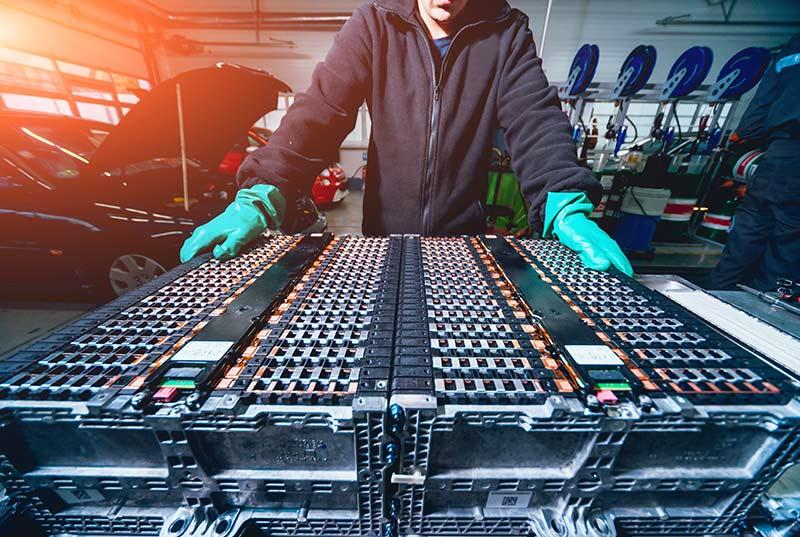
Most of these rare earth metals that are required for battery cathodes originate from Asia, Africa, and South America, making them expensive to mine and ship. The second driver involves the retention of critical battery materials in the value chain so that they can be used and re-used in the next generation of electric mobility solutions. Lastly, the EU Battery directive is being revamped to include stringent rules on battery manufacturing, traceability, collection, and recycling to improve the EOL process for EV batteries and make them easier for maintenance.
Why is EV battery circularity increasingly important for manufacturers and OEMs?
As of today, the body of the car has a higher carbon footprint than the EV battery. However, technology for green steel and recycling steel is rapidly maturing, meaning that the battery will soon be the highest contributor of carbon emissions within the EV. There is still quite a gap to efficient battery re-manufacturability and recycling, so that is why we need to develop new technologies for batteries now.
The trend towards battery-electric mobility is relatively fresh and as the focus is on developing higher-performing batteries with increased range and durability, battery recycling has not been a top priority as of today. Today, there are mainly three EV battery recycling methods: direct/mechanical, pyrometallurgical, or hydrometallurgical.
In direct or mechanical recycling, EV batteries are shredded into small pieces and further processed to separate different materials like copper, aluminum, cobalt, nickel or lithium to reuse them in battery manufacturing or other products. Direct or mechanical recycling doesn’t require the use of chemicals or high temperatures but with today’s methods, not all materials in the battery can be recovered. Also, it may not be suitable for all types of EV batteries and limited scalability of this technology can become an issue if EV battery volumes increase.
Like in mechanical recycling, EV batteries are shredded into smaller pieces also in hydrometallurgical and pyrometallurgical recycling processes. Pyrometallurgical recycling is a more mature technology where extreme heat is used to recover most of the rare earth metals to be purified and circulated back into new feedstocks. Hydrometallurgical methods use chemical solutions to separate and extract different materials, particularly metals such as cobalt, nickel, and lithium, which can be used in new batteries. Hydrometallurgical recycling uses less energy than pyrometallurgical recycling and can achieve a higher recovery rate of metals than direct mechanical recycling but can be more expensive as a significant amount of energy and resources is required and proper handling of hazardous chemicals can be challenging.
With more EV batteries reaching their end-of-life, battery recycling methods are becoming better and innovative approaches for second life applications of EV batteries, i.e. in energy storage systems, are evolving.
Thank you, Elayne, for these insights into battery recycling as this is becoming increasingly important with more EV vehicles on the roads worldwide and the increasing age and use of their batteries. Today, materials and products are mainly optimized for performance and safety but maybe recyclability and end-of-life of all components will become a major focus for engineers soon.