
Life Cycle Analysis (LCA) Drives Understanding
Customers increasingly demand that companies develop measurable plans to reduce their environmental footprint. Responding to these expectations in a responsible way ensures consumer trust and allows for access to global markets, especially with increasingly stringent environmental standards. By using methodologies such as Life Cycle Analysis (LCA), businesses can gain key insights into the environmental footprint of their products/solutions at all stages of their life cycle from raw material extraction to disposal.
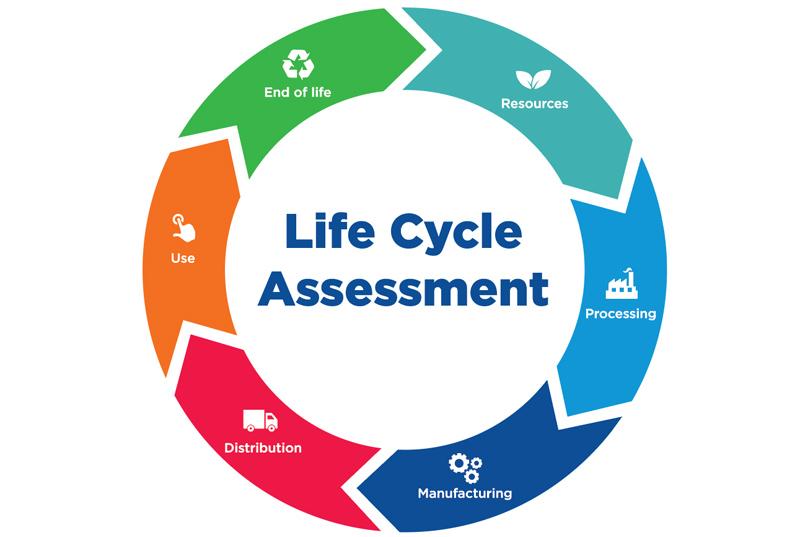
An LCA is an evaluation that helps businesses understand the entire environmental footprint of a product/solution. With an LCA, aspects of a product's life cycle that have the greatest effects on the environment can be identified. For example, if the LCA identifies that the most energy is consumed during production, then investments to improve equipment efficiency can be made. Alternatively, if the LCA identifies that products have large environmental footprints at end-of-life, more efforts could be made to improve repairability or recycling options.
LCA is a globally accepted methodology to communicate and quantify information regarding environmental footprint to different stakeholders. An LCA provides insight on numerous environmental impacts including energy consumption, greenhouse gas emissions and water usage.
“Take data and be sure about its quality, make calculations, challenge the results and see what you achieve. Then you can see where you are, and what the next step can be and start to communicate the story with your team or customers.”
— Michaël Medard, LCA Manager, Saint-Gobain
At Saint-Gobain, we carry out two types of LCAs:
- Cradle-to-gate (from raw materials extraction to our factory gate)
- Cradle-to-grave (from raw materials to disposal)
There are generally five steps in a product’s life cycle which include raw material extraction, manufacturing & processing, transportation, usage & retail and waste disposal. When a product footprint is assessed based on these five steps, this is often referred to as cradle-to-grave, with cradle being the inception of the product, (along with sourcing of raw materials) and grave being the disposal of the product. While transportation is usually step three, it often occurs in between all five steps. Cradle-to-gate only assesses a product to the point where it leaves the factory and before it gets transported to the customer. This cuts out the distribution, the use and disposal phase, reducing the complexity of the LCA, allowing for faster insights into internal processes. But this simpler approach comes with some risks, especially if you want to compare two products/solutions without making sure they perform the same (use phase).
To ensure we are proactively monitoring emissions of our products and process throughout the life cycle, our Tape Solutions teams are engaged in several active projects. One example is that we are participating in a worldwide CO2 dashboard to provide us with clear visibility to emissions resulting from all raw materials.
LCA comparisons on products and processes across all our manufacturing sites are being actively conducted. One example is a recent LCA comparison between solvent-based acrylic adhesives and UV curing of 100% solids acrylic adhesives. This comparison revealed significantly lower manufacturing Global Warming Potential (GWP) for the UV process. In this example, the UV process showed at least 66% lower GHG emissions than the solvent process.
Two key action items that resulted from the LCA review were as follows:
- The results were communicated to the R&D team to use as a tool during the next product development cycle. The intent is to evaluate lower-footprint ingredients, suppliers & design.
- The UV process for a new or updated manufacturing line is now being considered.
By 2030, our goal is for 100% of our product lines to be covered by Life Cycle Assessments, with all published results verified by a third party.
LCA is a powerful methodology that helps Saint-Gobain Tape Solutions make informed decisions, understand and reduce the environmental footprint of our products and solutions.