
How Germany’s Lithium Jackpot Could Redefine the EV Landscape
The discovery of recently validated reserves of 43 million tons of lithium carbonate equivalent in primarily geothermal brine in the German region of Altmark in September 2025 is poised to reshape the Lithium-Ion battery landscape globally.
With one of the largest deposits worldwide located right in the heart of Europe and close to major European automotive hubs in Germany, France and Italy, this article shines a light on potential effects for the electric vehicle and battery industry.
Will this new source be a unique opportunity for engineers to minimize environmental impact, speed up production, increase supply chain resilience and strengthen EV confidence among consumers?
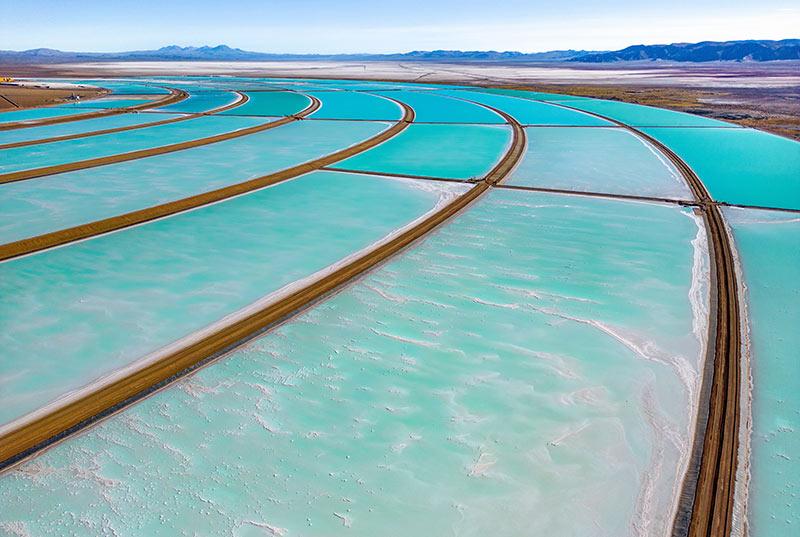
Lithium-ion technology has dominated battery-electric mobility in recent years, driven by significant advancements in safety, energy density, range, charging speed, and lifespan. Despite these achievements, the technology still holds considerable untapped potential, with further innovations on the horizon.
Although many major automakers are based in Europe, the worldwide primary sources for lithium used in EV batteries are outside the continent – Australia, Chile, Argentina and China produce over 90% of the world’s lithium. Therefore, Europe, the US or Japan depend almost entirely on imports and refinement from these countries. This not only increases the costs for lithium due to long transport routes and lead times; it also creates strong dependencies and supply chain risks.
Therefore, the EU aims to cover at least 10% of its lithium demand from domestic production by 2030. New geothermal brine sources in Altmark and the Upper Rhine play an important role in this project. The recent validated lithium source in Germany offers new potential for localized gigafactories, shorter logistic chains and investments in regional innovation hubs – economic boosters based on future technology.
And it can play a key role in the EU Green Deal and Europe’s carbon footprint reduction plans. Not only because of more localized sourcing and therefore reduced transportation needs. Also, because the source is primarily geothermal brine which allows for Direct Lithium Extraction (DLE).
Ten years ago, EVs had a higher manufacturing footprint compared to ICE vehicles because battery production was energy-intensive and grids were more fossil-fuel dependent. Today, the lifecycle emissions of EVs have dropped significantly thanks to:
- Cleaner electricity grids (more renewables in Europe and parts of the U.S.)
- Improved battery efficiency (higher energy density → fewer cells per kWh)
- Better recycling and second-life strategies emerging in the supply chain
On average, a medium-size EV now emits about 50% less CO₂ over its lifetime than an equivalent ICE car, compared to ~30–35% less ten years ago according to the EV battery supply chain sustainability report 2025 by the International Energy Agency IEA.
As the battery is the most important component of electric vehicles, current Li-Ion batteries account for 30-40% of an EV’s total lifecycle emission, mainly during mining and refining. As most lithium-ion batteries are made in China, where coal dominates electricity, EV’s carbon footprint get amplified.
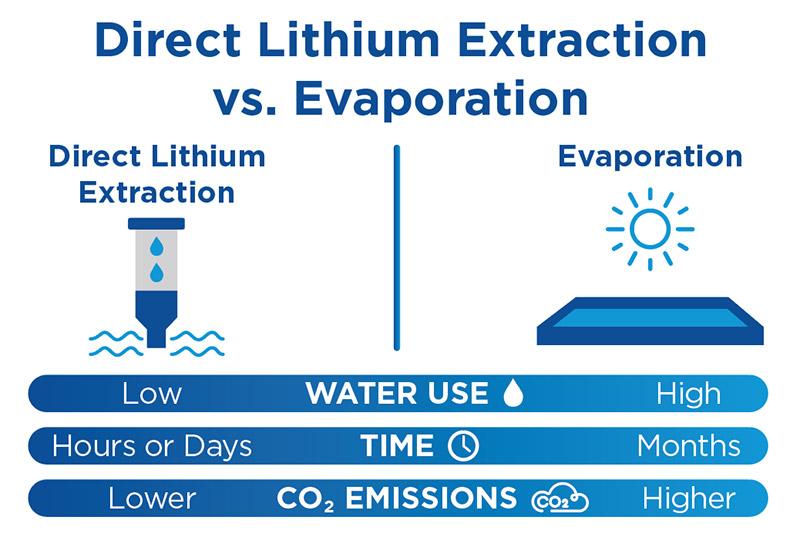
For engineers, new geothermal brine-based lithium sources in Europe offer tremendous benefits to cut battery-related emissions. Through Direct Lithium Extraction, lithium from brine sources can be produced in a more efficient and resource saving manner compared to traditional evaporation ponds.
Instead of evaporating large volumes of water over months, DLE uses selective adsorption, ion-exchange, or solvent extraction to pull lithium directly from brine. This extraction process can occur in hours or days, versus 12–18 months for evaporation ponds, consuming up to 90% less water, a critical advantage in arid regions. In addition, smaller land areas are required compared to massive salt flats. Modular systems that integrate renewable energy sources can further reduce the footprint. Overall, DLE could cut lithium extraction emissions by up to 50%, depending on the energy mix and technology used.
For European engineers, this helps to build high-performance batteries in shorter time, more regional and with significantly reduced carbon footprint. That, on the other hand, offers car manufacturers options to reduce vehicle costs and to improve acceptance within the population, which both can be an economical and competitive advantage.
Even though other EV battery technologies like all-solid-state batteries (ASSB) are currently under development as they promise various advantages, Li-ion technology is still the leading battery design and has seen tremendous development over the past few years. In combination with advanced materials like compression pads that apply consistent pressure on cells during charging and discharging cycles for increased safety, lifetime and performance or thermal interface materials that successfully dissipate heat from the battery pack, the full potential of Li-ion batteries is still to be unleashed.
Especially innovative Thermal Runaway Mitigation Protection materials like the Saint-Gobain® TRP Series provide good electrical resistance and mechanical cushioning during normal operations while providing excellent fire and temperature resistance during a thermal event for increased safety. Although the EV battery sector is highly innovative, Li-ion technology will most likely be used for many years to come – favorable circumstances to build strong regional Li–ion battery infrastructure in Europe based on new lithium sources.
These could also become the backbone of battery energy storage systems (BESS) that function as grid stabilizers, energy source and to buffer peaks and lows in grids with growing energy fluctuation due to more renewable energy sources. Therefore, the new lithium sources could push Europe’s Green Deal beyond mobility and help reduce energy costs from renewable sources even more. And with the potential of creating a battery hub outside of Asia, investments in battery technology could also foster further battery innovation, making the technology even more robust, efficient and cost effective and work as a job motor with high growth potential.
We have seen that the discovery of massive lithium sources in central Europe that can be extracted relatively easily via DLE has the potential to reshape the battery landscape worldwide. The coming years will tell how the use of this new source can lead to new battery infrastructure and ultimately accelerate the switch to more battery-electric use in mobility and energy supply.
Our experts and tape solutions are available to help maximize safety, performance and longevity of Li-ion batteries – let's design the battery-electric future together to make the world a better home.