

Photovoltaic and Solar Tape Solutions
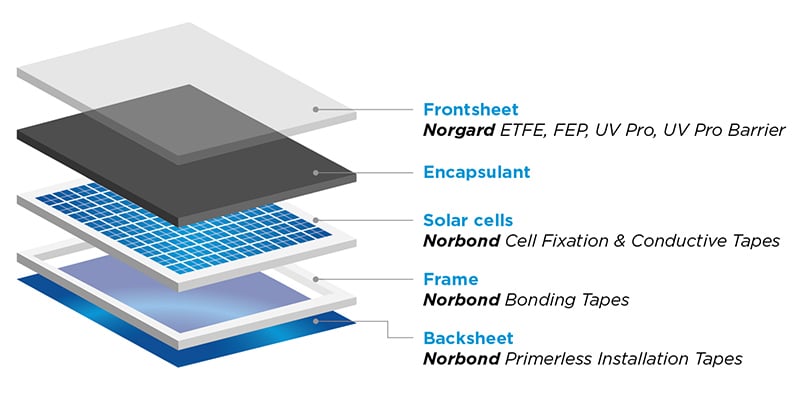
Norgard® Front Sheet ETFE and FEP Film is manufactured from a high-performance fluoropolymer resin. They provide high levels of resistance to chemicals and weathering as well as low flammability, stress crack resistance, and insulating properties. Superior light transmission and anti-reflective properties glare on both flexible and rigid modules.
Applications Within Photovoltaic & Solar
Moisture Barrier & Protection
Our front sheet ETFE and FEP film provides high levels of resistance to chemicals and weathering as well as low flammability, stress crack resistance, and insulating properties in solar photovoltaic panels.
The front sheet also serves as a protective barrier against environmental factors such as moisture, dust, and UV radiation. They encapsulate the solar cells, preventing physical damage and degradation caused by exposure to the elements.
Light Transmission & Anti-glare
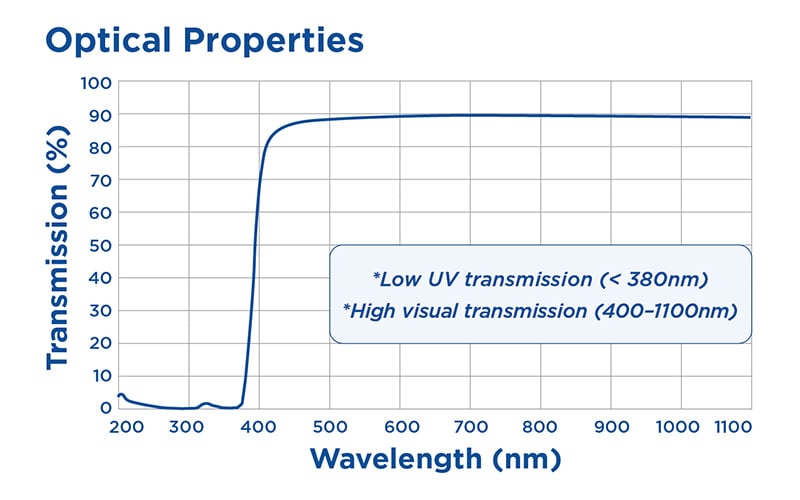
The low glare properties or anti-reflective coating contained in Norgard Films act to reduce the reflection of sunlight and enhance light absorption by the solar cells improving the overall efficiency of the solar module. The light transmission of the front sheet allows a high percentage of sunlight to pass through to reach the solar cells ensuring efficient absorption of sunlight and maximizing the electricity generated by the solar module.
Superior light transmission and low glare surface treatment make our ETFE and FEP film the right choice for flexible and rigid modules thanks to optimum energy generation and superior aesthetic integration.
Benefits of Norgard Films in Solar Infrastructure
Improved Efficiency & Cost Savings
- Improved efficiency: Films can be used to modify the surface of the solar cell, which improves the efficiency of charge transfer and reduce energy losses due to recombination. This results in higher overall efficiency and better performance in low-light conditions.
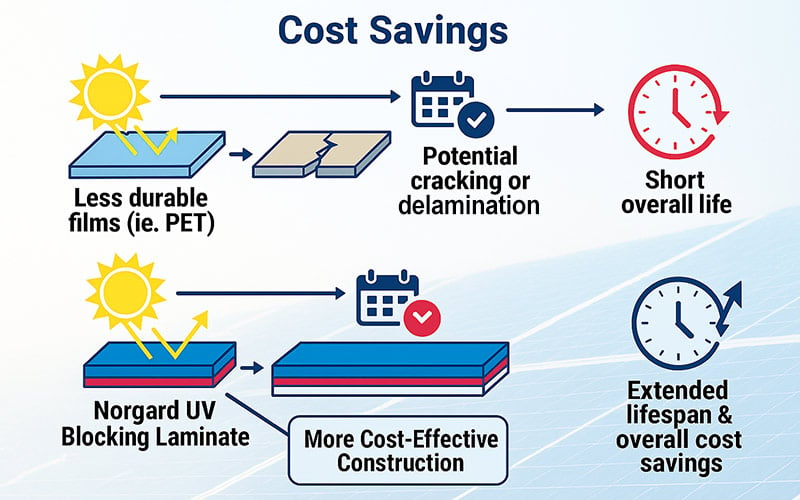
- Cost savings: Norgard Films UV blocking laminate construction is cheaper than a pure fluoropolymer film of an equivalent thickness. Our long-term films offer better lifetime (therefore less module replacement is needed), contributing to long-term cost savings.
Versatility & Durability
- Versatility across multiple applications: Films are applied to a variety of materials, including glass, plastics, and metals, making them a versatile option for a range of applications. These films are adaptable to different environments, applications, and design requirements
- Durability that enables long life: Films provide a protective layer for the solar cell, which can help to extend its lifespan and reduce maintenance costs. The film combats a wide range of environmental stresses, mechanical forces, and chemical interactions that can lead to deterioration.
Scalability
- Scalability to meet growing demand: Films are produced in large quantities using cost-effective manufacturing methods, making them a scalable solution for a wide range of solar photovoltaic applications. As the demand for renewable energy continues to grow, the scalability provided by composite films can help meet this demand by expanding the production and deployment of solar panels on a larger scale.
Why Saint-Gobain Tape Solutions?
Saint-Gobain Tape Solutions is part of a world-class manufacturing organization drawing from over 350 years of history. We use technical and applications engineering to solve the most demanding applications and help customers meet their unique challenges. We put significant focus and investment in developing solutions for photovoltaic and solar technology and our close cooperation with universities and research institutions is dedicated to that aim.
Product Development & Innovation
Research and co-development are at the heart of everything we do at Saint-Gobain. Working with our industrial partners, we are always looking to harness the latest innovations to improve our products to provide specialized solutions to the challenges they face.
Our solutions are improving the manufacturing processes, energy production efficiency, and service life of photovoltaic cells. Working with our partners across the renewables sector, we are helping them increase their competitive advantage and use module encapsulation to reach grid parity.
FAQ
What is Norgard Film?
Norgard is a high-performance, flexible, transparent film typically used as a barrier layer in various applications, including fuel cells. Norgard films are engineered to provide a range of properties, such as high gas and moisture barrier, chemical resistance, thermal stability, and optical clarity. They can be tailored to meet specific performance requirements based on the intended use and application.
These films are customizable to meet the specific needs of solar applications.
What materials are Norgard Films made from, with reference to solar photovoltaic applications?
Norgard ETFE Film is a type of polymer film made from a material called ethylene tetrafluoroethylene (ETFE). A fluorine-based thermoplastic polymer, it is known for its high strength, excellent transparency, and resistance to corrosion, UV radiation, and extreme temperatures.
ETFE film is typically produced using a process called extrusion, where the ETFE polymer is melted and then forced through a die to form a thin, continuous film.
The film can be produced in a range of thicknesses and can be transparent, translucent, or opaque, depending on the specific application. Norgard Film has become increasingly popular in solar photovoltaic applications as a transparent and insulative material for encapsulating and protecting solar cells.
How are Norgard Films used in improving solar PV performance?
- Anti-reflective properties: Films can be designed to have anti-reflective properties, which reduce the amount of light reflected away from the surface of the solar cell. This property ensures low glare and also means that more light is absorbed by the solar cell, increasing its efficiency.
- Texturing: Films can be used to create a textured surface on the solar cell, which increases the surface area and enhances light absorption.
- Protection: Films can provide a protective layer for the solar cell, shielding it from environmental factors such as moisture and dust, and our UV blocking laminate eliminates UV radiation. This can help to extend the lifespan of the solar cell and improve its performance over time.
- Insulation: Norgard films possess a combination of electrical, surface, weather, and thermal insulation properties that make them well-suited for use in solar photovoltaics, providing reliable electrical insulation and protection for the solar cells and associated components.
How do Norgard films work in solar photovoltaics?
- Absorption: Films can be used to enhance the absorption of sunlight in solar cells. For example, anti-reflective films can be applied to the surface of solar cells to reduce reflection and increase the amount of light that is absorbed. This improves the overall efficiency of the solar cell.
- Encapsulation: Films can be used to encapsulate or seal the solar cell to protect it from moisture, dust, and other environmental factors that can damage the cell. Encapsulation films can also improve the durability of the solar cell, allowing it to last longer.
- Carrier transport: Thin-film solar cells can also act as the semiconductor layer in a solar cell. These films can transport charge carriers (electrons and holes) generated by the absorption of sunlight, allowing them to be collected and converted into electricity.

