
New Product Spotlight: Norgard® 2555 PFAS‑Free* Composite Molding Tape
The composite molding market is transforming manufacturing across industries, from automotive and aerospace to marine and renewable energy. Composites are now the go-to choice for lighter, stronger, and more efficient parts. This shift is driven by the need for better fuel efficiency, lower emissions, and strict sustainability rules.Valued at nearly $30 billion by 2025 with a 10.4% CAGR, this market is accelerating thanks to advanced automation and manufacturing innovations.
Technologies like Automated Fiber Placement (AFP) and Automated Tape Laying (ATL) can deliver up to 8× higher throughput. This is compared to traditional methods.
Resin transfer molding (RTM) and thermoplastic composites can also speed up cycles. They can also improve recyclability. Aerospace now uses composites in over 50% of aircraft structures, wind turbines rely on composite blades for strength and weight reduction, and construction and marine sectors benefit from durability and corrosion resistance.
As sustainability becomes a requirement, OEMs and Tier 1 suppliers are investing in bio-based resins.
Sustainability is no longer just a goal.
It is now a mandate. They are also investing in recyclable thermoplastics and closed-loop recycling systems. Digital tools like embedded sensors, digital twins, and AI‑driven design are optimizing performance and reducing development time.
Meanwhile, new materials like CFRP and ceramic matrix composites are expanding high‑temperature uses. Additive manufacturing also enables complex shapes with shorter lead times.
These trends show the need for advanced, PFAS‑free* options that resist high heat, support faster cycles, and meet environmental standards. Norgard 2555 delivers exactly that. In this blog, we’ll explain what PFAS‑free* means. We’ll also share the unique features and benefits of our newest composite molding tape solution.
In this article
- Understanding PFAS‑Free* Materials in Composite Manufacturing
- What Is Composite Molding? Why It Matters for Aerospace, Automotive & Industrial Applications
- Where Norgard 2555 Fits In: PFAS‑Free* High‑Temperature Release Tape for Composite Molding
- Competitive Advantages of Norgard 2555 vs. PTFE Tape in High‑Temperature Composite Applications
Our PFAS‑free* designation means we do not intentionally add PFAS to our formulations during the manufacturing of the product. However, due to environmental factors, trace presence cannot be entirely ruled out. The asterisk (*) reflects our commitment to transparency and scientific integrity, rather than making absolute claims that cannot be guaranteed or verified.
Composite molding is the backbone of innovation in modern manufacturing. Composite molding involves forming reinforced materials like carbon fiber, CFRP, or polymer composites into precise shapes. These components are essential for applications where strength, weight reduction, and thermal resistance are non-negotiable. The right tape or film plays a vital role in:
- Protecting surfaces during curing
- Providing clean release without residue
- Maintaining integrity under high heat and pressure
It’s a process that combines liquid plastic resin with high-strength fibers, such as carbon fiber, to create lightweight yet extremely durable parts. These components reduce weight without sacrificing strength, improve fuel efficiency, and lower emissions.
In aerospace, composite molding is used to fabricate parts with exceptional strength‑to‑weight ratios for aircraft, spacecraft, and missile structures. Marine and industrial sectors use composites for corrosion resistance and durability.
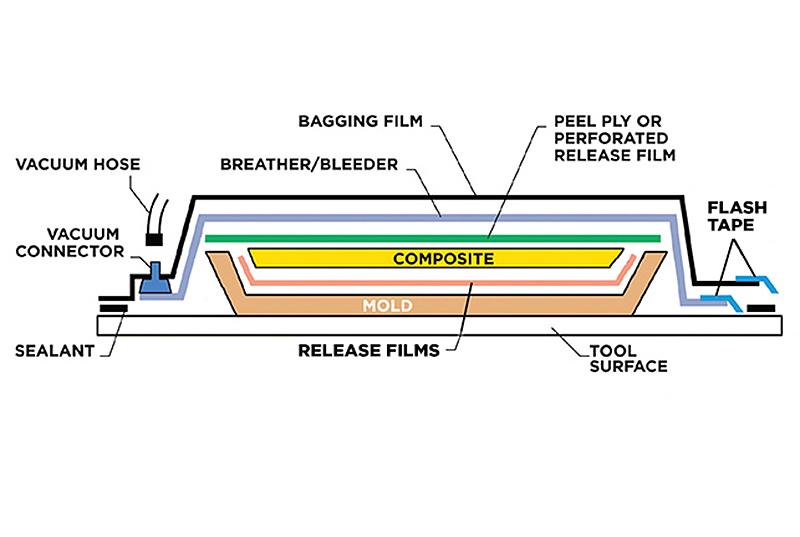
The process involves placing composite materials into a mold lined with special release tapes. These tapes ensure clean release, protect surfaces, and maintain accurate dimensions. Once prepared, technicians cure the part in an autoclave or heated pressure vessel at high temperature and pressure. Without the right tape, manufacturers risk surface defects, contamination, and costly rework.
Traditionally, PTFE-based tapes have been the go-to choice for these uses. They have excellent non-stick properties and can withstand extreme heat. However, PTFE belongs to the PFAS chemical family, which is now under regulatory scrutiny. As sustainability becomes a priority, manufacturers are seeking PFAS‑free* alternatives.
They want the same performance in a more sustainable way.
Enter Norgard 2555, our newest innovation designed to meet these evolving challenges. This PFAS‑free* composite molding tape combines the proven benefits of silicone adhesive technology with a formulation that eliminates intentionally added PFAS materials. It withstands high temperatures, delivers reliable release during curing, and protects molds and composite surfaces from damage, all while supporting sustainability goals and regulatory compliance.
Key technical specifications of Norgard 2555 include:
- Clear color
- Total thickness: 0.15 mm (6 mil)
- Adhesive thickness: 0.06 mm (2.5 mil)
- Smooth surface texture
- Adhesion to steel: 3.3 N/cm
- Tensile strength: 14 lb/in
- Temperature limit: 230°C (446°F)
- Widths: 6 mm to 955 mm (0.25 in to 38 in)
- Roll length: 33 m (36 yd)
- Shelf life: 1 year at room temperature
Applications for Norgard 2555 include composite molding, roller wrapping, heat sealing, and other high-temperature processes.
Norgard 2555 offers the same key benefits as traditional PTFE tapes.
These include clean release, dimensional stability, and heat resistance.
It delivers these benefits without PFAS. Its silicone adhesive ensures strong adhesion to tooling surfaces while maintaining clean removability, even under vacuum and heat. The tape’s clear release liner and smooth finish help prevent surface imperfections, reducing the need for post-processing and improving productivity.
Samples and data sheets are now available for evaluation.
At Saint-Gobain® Tape Solutions, we manufacture many of our own films, which allows us to customize features like color, liner options, and other specifications. This flexibility supports co-development opportunities, where we work closely with customers to solve unique challenges.
As Richard Austin, Global Market Manager noted:

Why does composite molding invite co-development? Because every application is unique.
Aerospace programs may need tapes that withstand extreme autoclave conditions. Marine or industrial applications might focus on cost efficiency and easy handling. Tooling sizes vary, cure cycles differ, and surface finish requirements range from ultra-smooth to textured.
These variables create opportunities for customization, whether it’s adjusting tape width to minimize seams, modifying surface texture, or tailoring adhesive systems to specific materials.
Norgard 2555 fits perfectly into this collaborative approach. It is designed not only as a PFAS‑free* alternative to skived PTFE tapes but also as a platform for customization.
With our in-house film manufacturing and adhesive expertise, we can adapt color, liner options, and dimensions to meet customer-specific needs. This flexibility, combined with sustainability leadership, positions Norgard 2555 as a future-ready solution for composite molding challenges.